‘The Saguaro’ Celebration Packed El Crisol with Cactus and Book Lovers

February 26 2020

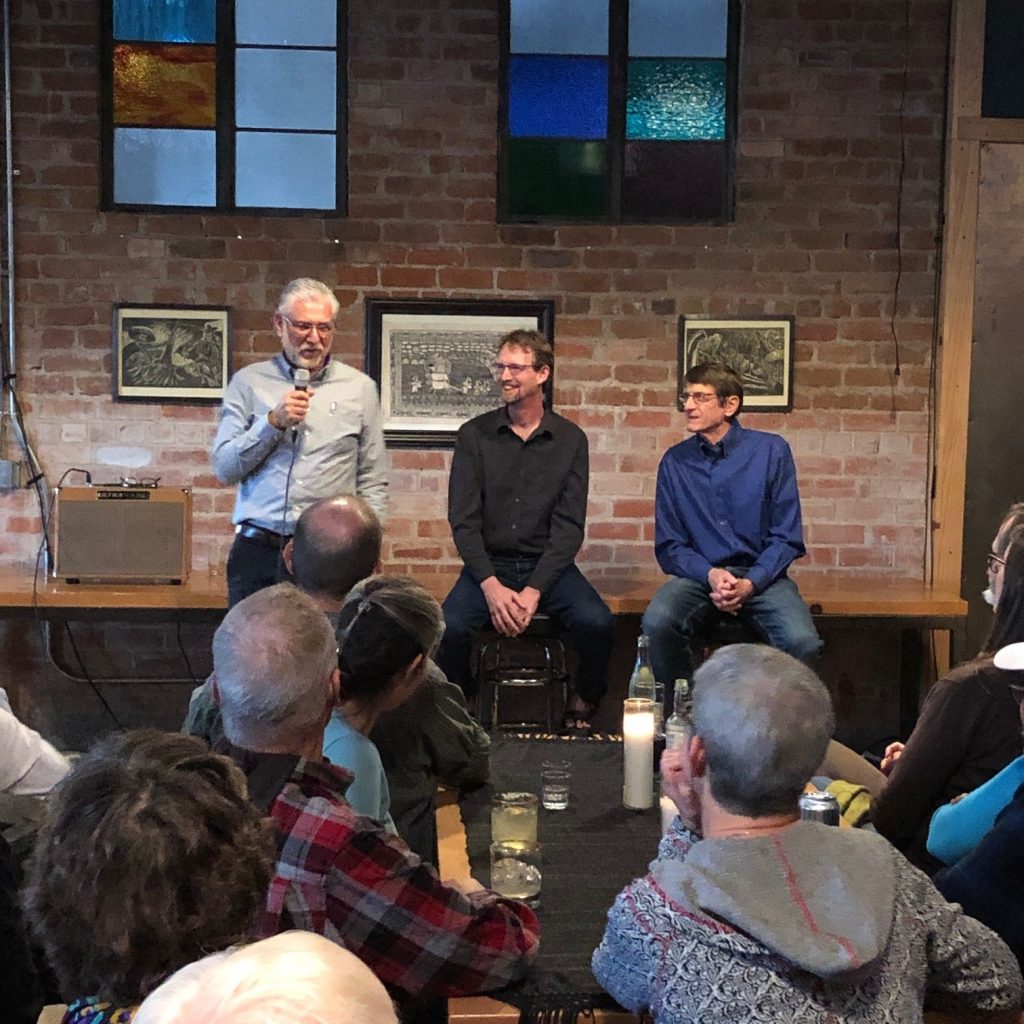
The book release celebration for The Saguaro Cactus: A Natural History, brought together more than 80 people to El Crisol on Sunday, February 23 to hear scholar-authors David YetmanAlberto Búrquez, and Kevin Hultine talk about their research, admiration, and share folklore of the Sonoran Desert’s iconic cactus.

The evening, first in the new Arts and Letters series presented by the University of Arizona Press and hosted by El Crisol, was also co-hosted by The Southwest Center. A live-stream of the author conversation is on the Center’s YouTube channel available here. The Saguaro Cactus is part of a book series published in partnership with the The Southwest Center and the University of Arizona Press that focus on a variety of fields, especially history, anthropology, geography, natural history, ethnobiology, and borderlands studies.

Kristen Buckles, University of Arizona Press editor-in-chief, welcomed guests and authors, explaining the importance of books such as The Saguaro Cactus, and the ongoing relationship with The Southwest Center. Buckles introduced The Southwest Center director, Jeffrey Banister, to talk further and introduce the authors.

Co-authors Hultine and Yetman will be at the University of Arizona Press tent at the Tucson Festival of Books for book signing on Sunday, March 15, 12-12:30 p.m. Books will be available for purchase at the tent. Other upcoming events for The Saguaro Cactus: March 5 at Desert Botanical Garden in Phoenix and March 16 at the 2020 Libraries Annual Luncheon in Tucson.

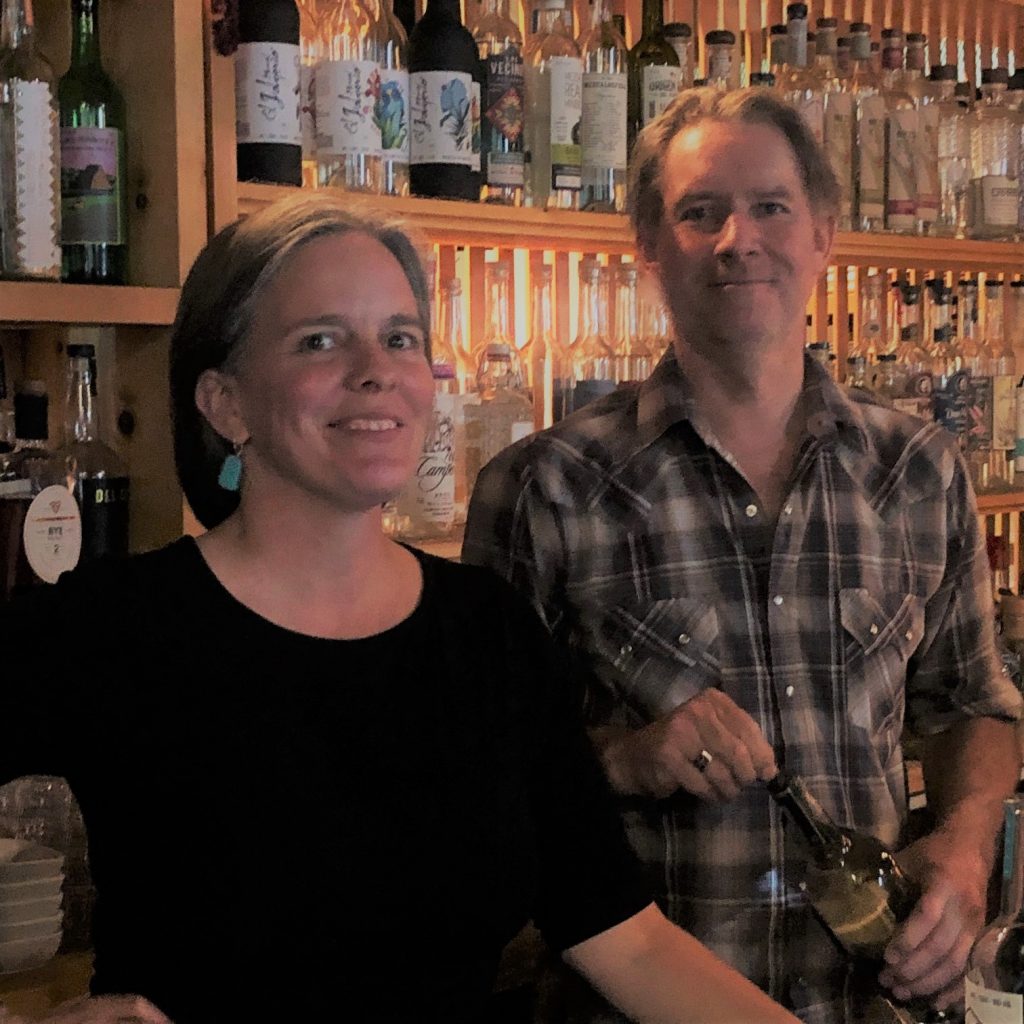
Special thanks to El Crisol owners Amy and Doug Smith for welcoming us and creating a special space for our authors; La Indita restaurant for always going that extra mile for our events; and Carlos Quintero, outreach coordinator with The Southwest Center.

The Saguaro Cactus: A Natural History co-authors Alberto Búrquez, Kevin Hultine, and David Yetman, discuss their research and knowledge of the beloved cactus of our Sonoran Desert.
El Crisol owners Amy and Doug Smith.
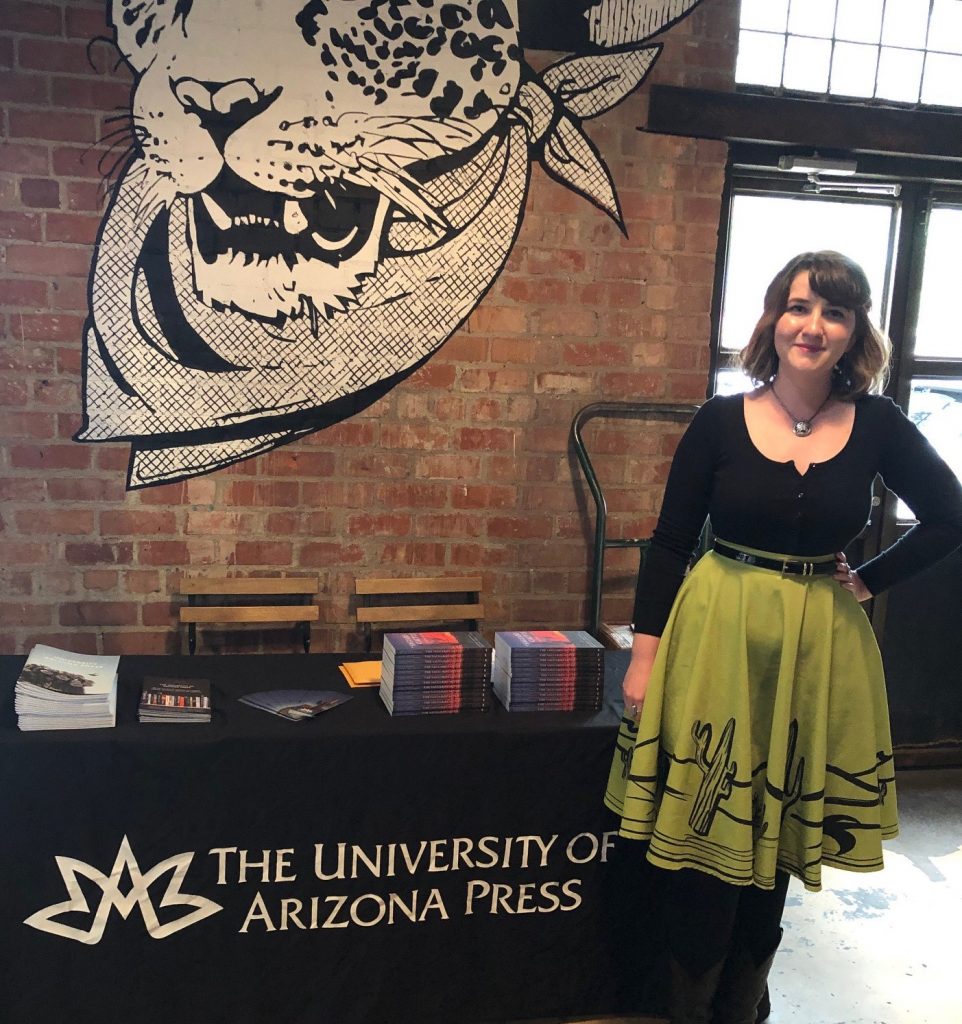
Savannah Hicks, University of Arizona Press marketing assistant, ready for all things saguaro at the book celebration event.

An Excerpt From ‘The Saguaro Cactus: A Natural History’

February 17, 2020

This book offers a complete natural history of an enduring and iconic desert plant. Enjoy this excerpt, published by the Tucson Weekly on January 30, and help us celebrate the book and this iconic symbol of our desert.

From “A Saguaro Primer
By David Yetman

The saguaro, with its great size and characteristic shape—its arms stretching heavenward, its silhouette often resembling a human—has become the emblem of the Sonoran Desert of southwestern Arizona. This is rightly so, for it is by far the largest and tallest cactus in the United States and our tallest desert plant as well. In this volume, we present a summary of current information about this, the desert’s most noteworthy plant.

Saguaros occasionally reach 12 meters (40 feet) in height, and individuals over 15 meters (50 feet) tall appear from time to time. The record height is 23 meters (78 feet), a well-known plant of a single stalk growing near Cave Creek, Arizona, which was toppled by winds in 1986. Photos of that plant are elusive, but it was clearly a very tall cactus, perhaps the tallest of any cactus ever recorded. While other cactus species may produce individuals taller than the average saguaro, none has been documented of that stupendous height. In 1907 William Hornaday reported a saguaro between 55 and 60 feet in height. He was leader of a 1907 scientific expedition to Pinacate Volcanic Range in Mexico near the border with southwestern Arizona and was in the company of distinguished researchers. The saguaro’s sole competitor for tallness in the deserts of the United States is the Joshua tree (Yucca brevifolia), a native of the Mohave Desert, a yucca that only rarely reaches 9 meters (30 feet) in height.

Saguaros are among the tallest cacti in terms of average height. They are also among those with the greatest mass. Neobuxbaumia mezcalaensis of southern Mexico, a single-stalked columnar cactus and distant relative of the saguaro, probably reaches greater average height, with individuals reaching in excess of 18 meters (60 feet). Other columnar giants include Pachycereus weberi and Mitrocereus fulviceps of southern Mexico and Pachycereus pringlei, the cardón sahueso of the Sonoran Desert in Baja California and the coastal regions and islands of central Sonora. Pachycereus pringlei and the truly massive P. weberi routinely exceed the mass of the saguaro. While columnar cacti are widespread in South America, none reaches the height or mass of the larger saguaros.

The most famous incident involving cacti of any kind occurred in 1982. The episode featured a saguaro growing near Phoenix, Arizona, and an unfortunate drunk named David Grundman, a hapless chap. Grundman, having imbibed an excess of strong drink, decided to knock over a saguaro with his jeep. He failed, succeeding only in damaging his vehicle. In a fit of rage at the unobliging saguaro, he fired both barrels of a shotgun at its base. The blast weakened the trunk, and the great plant toppled, crushing Grundman beneath. Few observers shed tears over the vandal’s demise. A published ballad commemorates his folly.

Scholar-Authors Bring Hearts and Stories to Special Collections Event

February 7, 2020

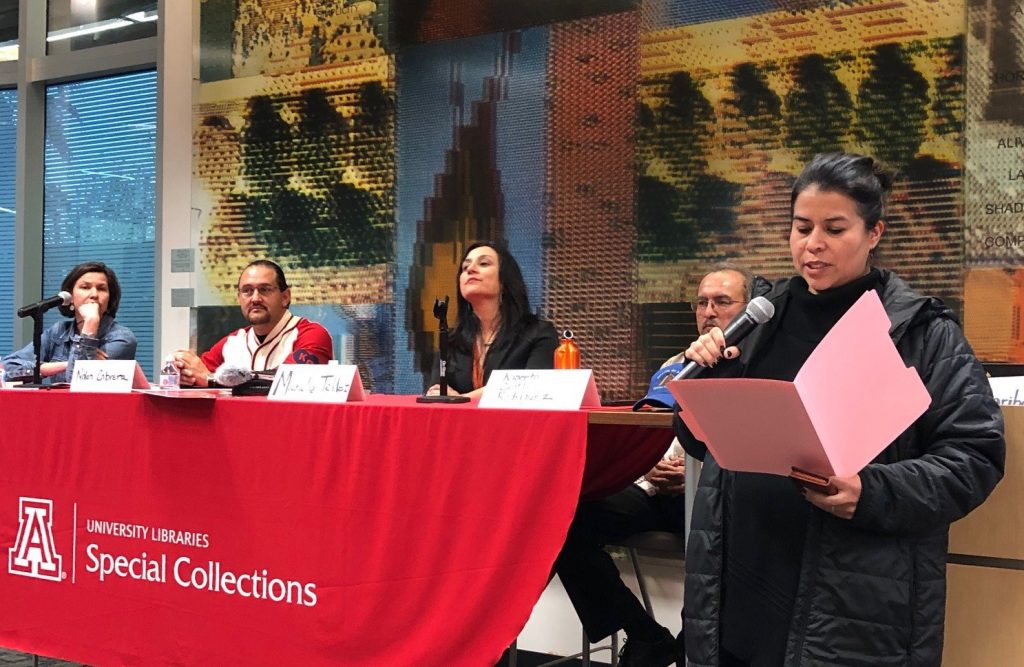
Associate Professor Roberto “Dr. Cintli” Rodriguez, author of Yolqui, a Warrior Summoned from the Spirit World: Testimonios on Violence with University of Arizona Press, always dreamed of bringing together fellow colleagues to talk about their work as scholars, and how community matters in their research and authorship.

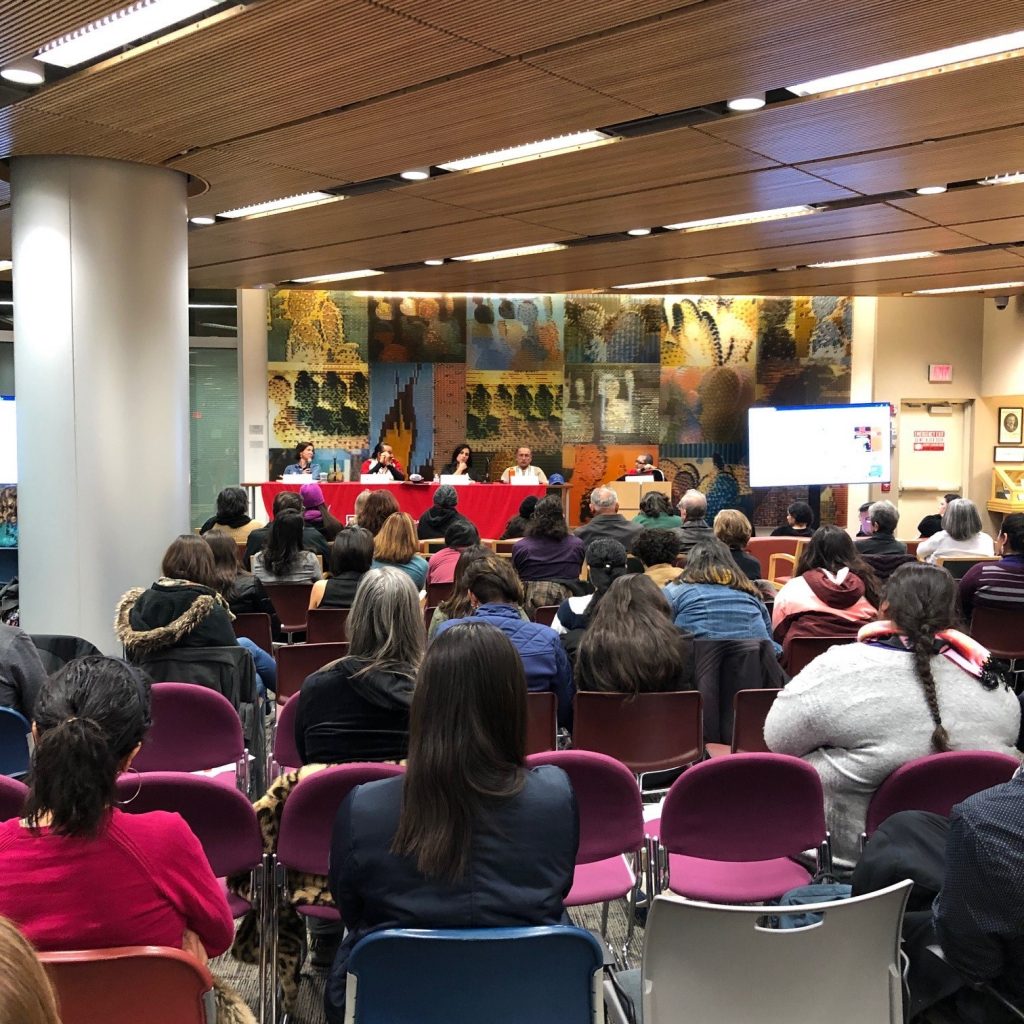
His dream became reality Wednesday, February 5, with “Documenting Scholarship and Community,” at University Libraries Special Collections. Veronica Reyes, the Katheryne B. Willock Head of Special Collections, noted in her welcome that this particular program came together because of Rodriguez’s efforts when he approached her about hosting a panel with Latinx scholars.

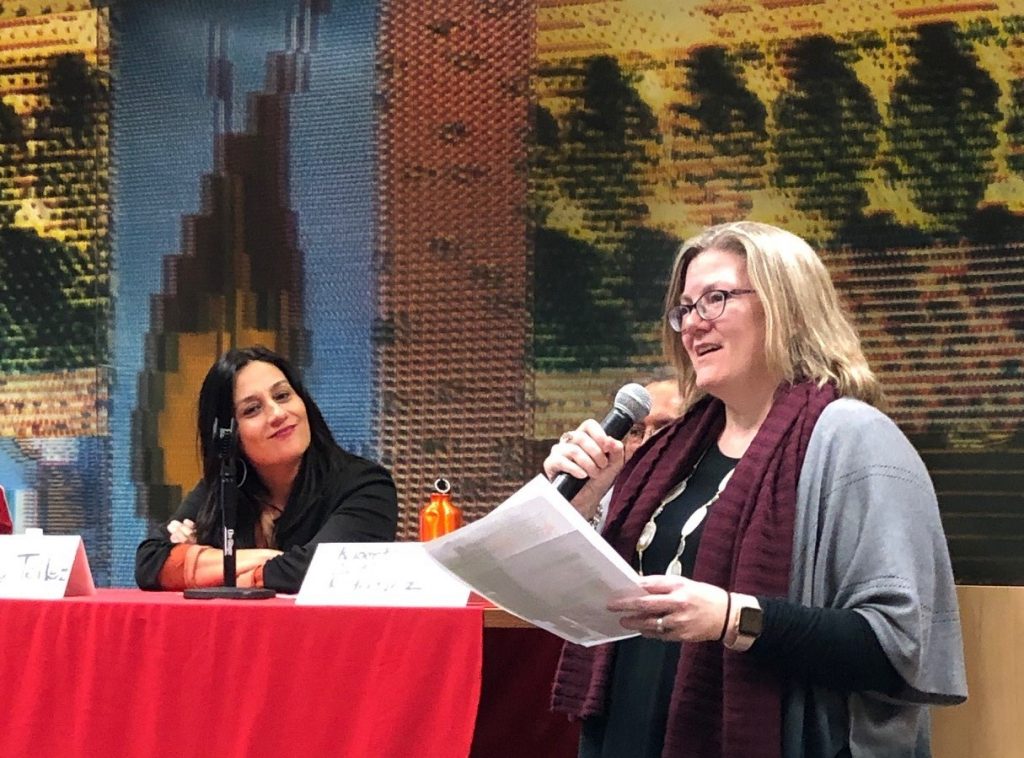
Co-sponsored by Special Collections and the University of Arizona Press’s Open Arizona project, the conversation was guided by moderator Maribel Alvarez, Associate Dean for Community Engagement in the College of Social and Behavioral Sciences and Jim Griffith Chair in Public Folklore with The Southwest Center.

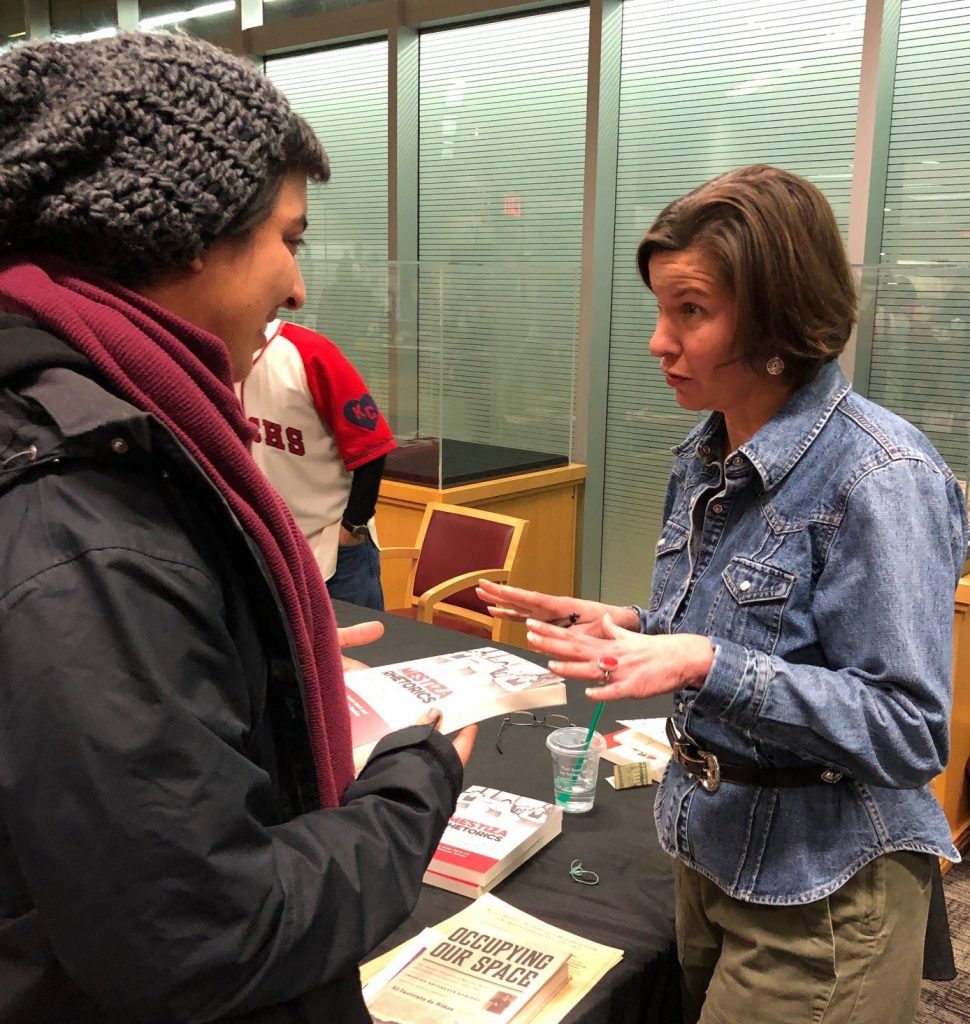
Rodriguez, an associate professor with Mexican American Studies, was joined by the following scholar-authors and editors: Michelle Tellez, an assistant professor and co-editor of The Chicana Motherwork Anthology; Cristina D. Ramirez, an associate professor, author of Mestiza Rhetorics: An Anthology of Mexicana Activism in the Spanish Language Press, 1887-1922, and Program Director for the Rhetoric, Composition, and the Teaching of English; and Nolan Cabrera, an associate professor in the Center for the Study of Higher Education and author of White Guys on Campus.

If you didn’t have a chance to attend, you can listen to the panel discussion here.

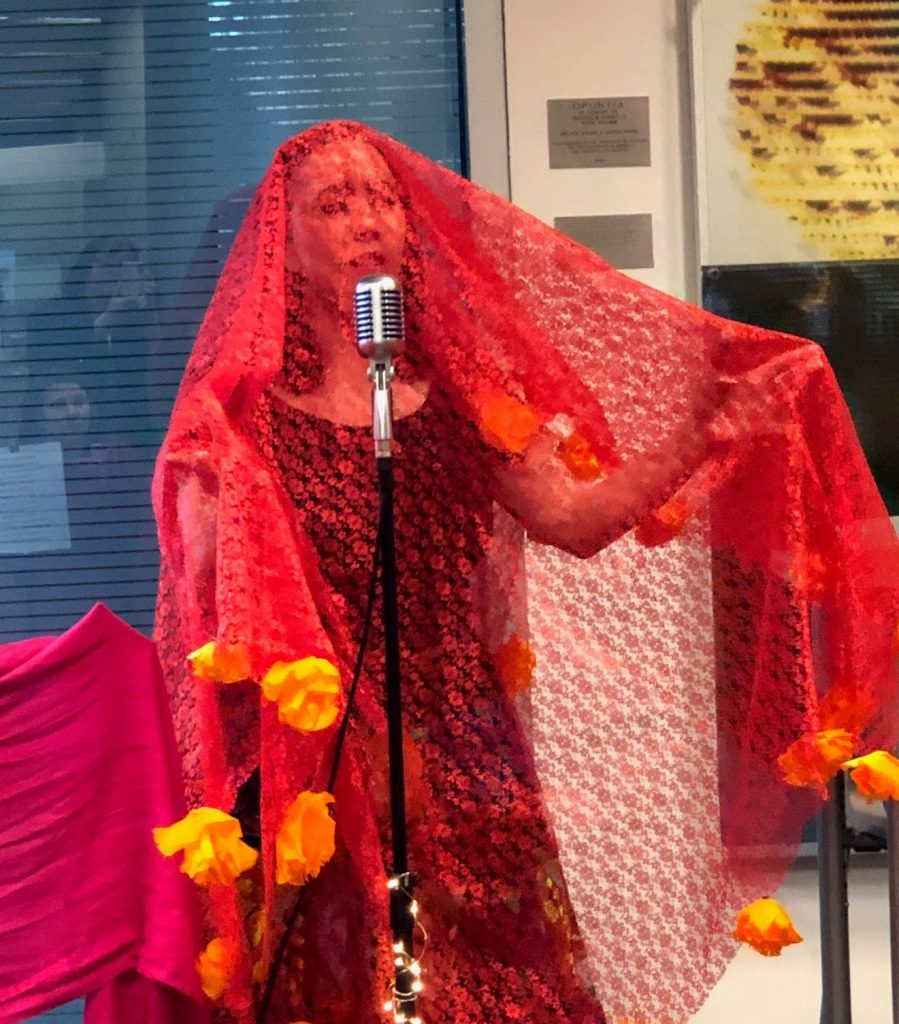
Miroslava Alejandra opened the event with a song that includes a mother’s prayer for her son, which was published in Roberto Cintli Rodriguez’s new book, Yolqui, a Warrior Summoned from the Spirit World: Testimonios on Violence.
Verónica Reyes-Escudero, the Katheryne B. Willock Head of Special Collections, welcomes more than 80 people who gathered at the event. She shared her connection with Rodriguez and the inspiration for the evening, which was to bring together Latinx scholars to discuss their work.
Kathryn Conrad, University of Arizona Press director, introduced moderator Maribel Alvarez and explained Open Arizona, a collection of open-access University of Arizona Press titles. Michelle Tellez, co-editor of The Chicana Motherwork Anthology, is on the left.
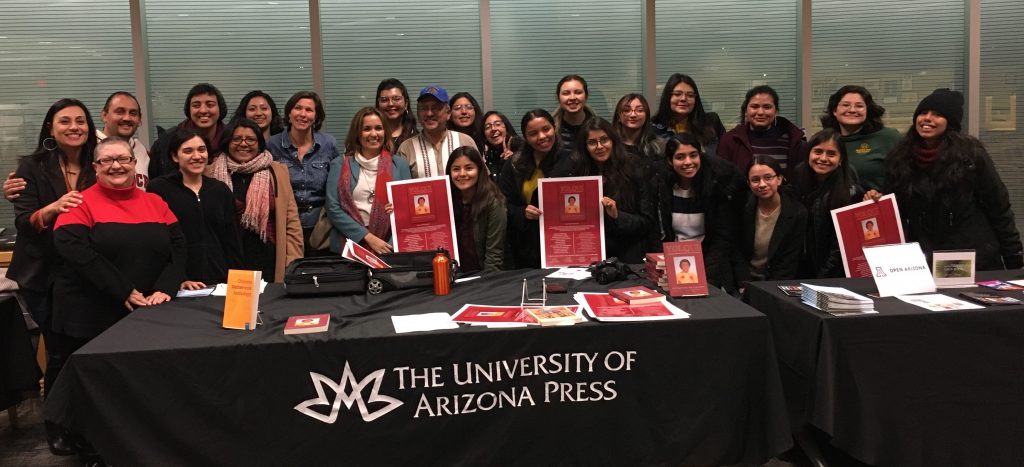
The event attracted more than 80 people, including a large group of students who traveled from Mexico to Tucson to attend “Giving Women in STEM a Voice” at the university.
Cristina D. Ramirez connecting with one of the undergraduate students from Mexico.
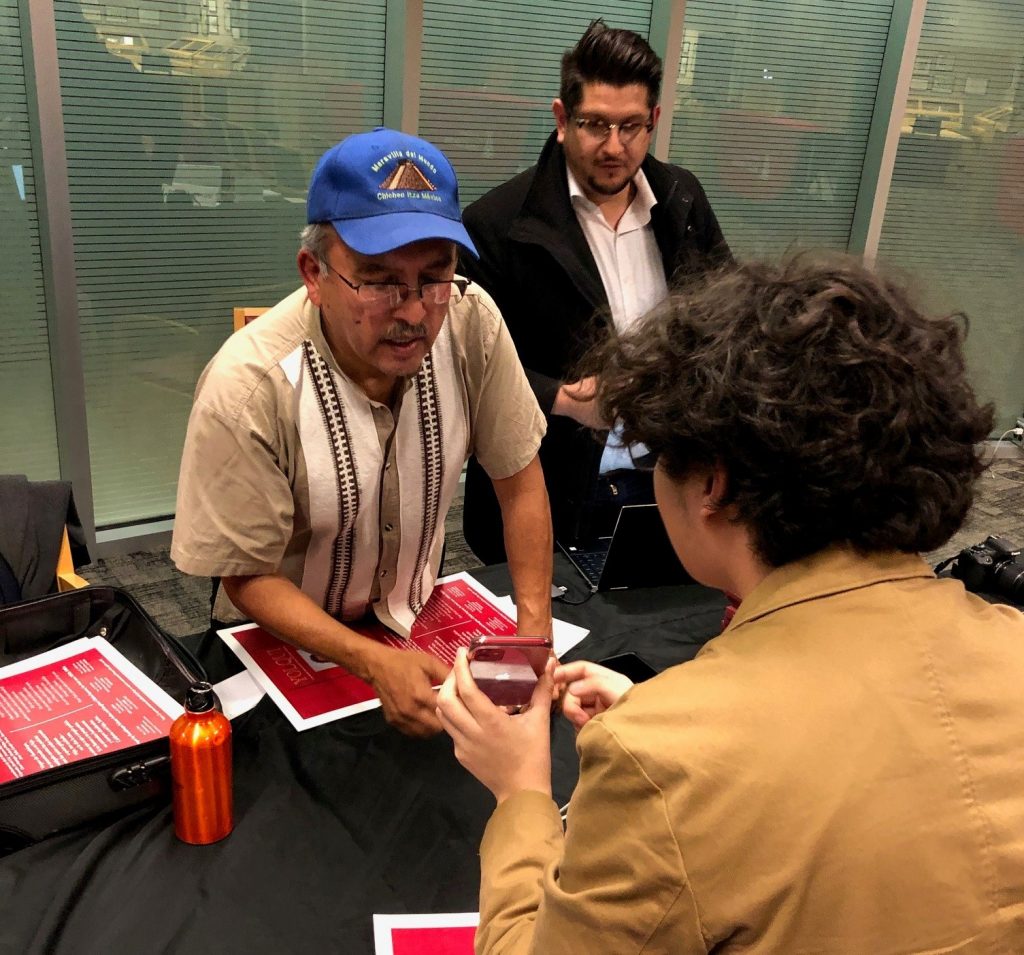
Roberto Cintli Rodriguez connecting with students.
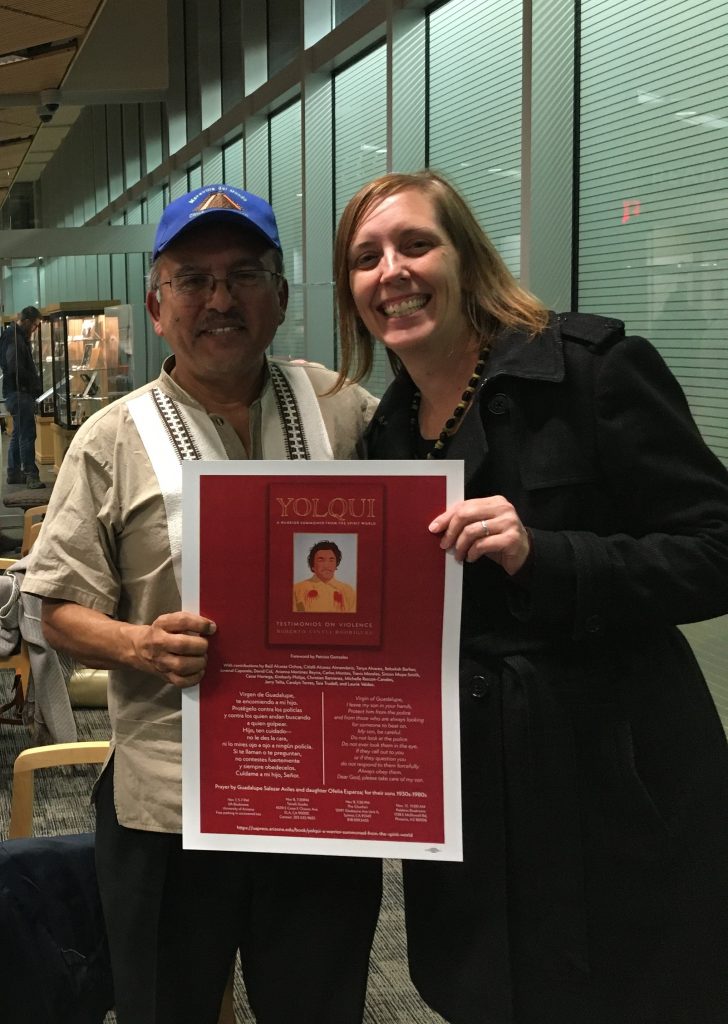
Roberto Cintli Rodriguez with Kristen Buckles, University of Arizona Press Editor-in-Chief.
Event panelists and moderator Maribel Alvarez with the undergraduate students from Mexico.

Voices from Bears Ears Chosen as a Finalist for the 2020 Oregon Book Award

February 7, 2020

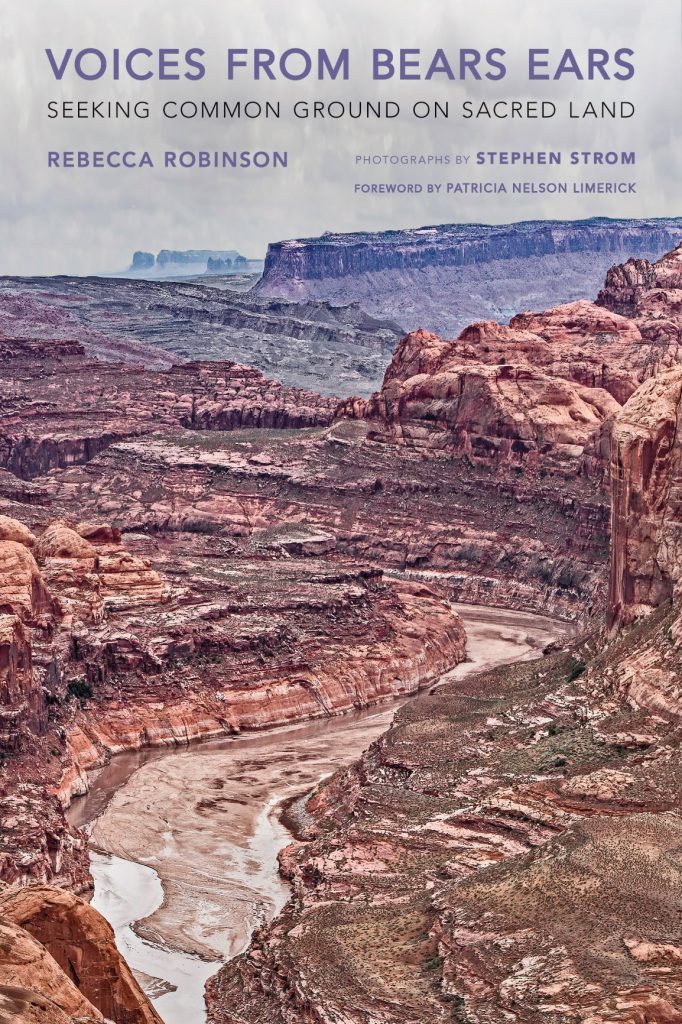
We are thrilled to announce that Voices from Bears Ears by Rebecca Robinson and Stephen Strom is a finalist for the Frances Fuller Victor Award for General Nonfiction, a section of the 2020 Oregon Book Awards!

Literary Arts‘ Oregon Book Awards program honors the state’s finest accomplishments by Oregon writers who work in genres of poetry, fiction, graphic literature, drama, literary nonfiction, and literature for young readers. In addition to financial support, the program produces the Oregon Book Awards Author Tour to connect local writers and literary organizations in all parts of Oregon. Each year, Oregon Book Awards finalists and winners travel to towns across Oregon for readings, school visits, and free writing workshops.

Through the stories of twenty individuals, and informed by interviews with more than seventy people, Voices from Bears Ears captures the passions of those who fought to protect Bears Ears and those who opposed the monument as a federal “land grab” that threatened to rob them of their economic future. It gives voice to those who have felt silenced, ignored, or disrespected. It shares stories of those who celebrate a growing movement by Indigenous peoples to protect ancestral lands and culture, and those who speak devotedly about their Mormon heritage. What unites these individuals is a reverence for a homeland that defines their cultural and spiritual identity, and therein lies hope for finding common ground.

Portland-based journalist Rebecca Robinson provides context and perspective for understanding the ongoing debate and humanizes the abstract issues at the center of the debate. Interwoven with these stories are photographs of the interviews and the land they consider sacred by photographer Stephen E. Strom. Through word and image, Robinson and Strom allow us to both hear and see the people whose lives are intertwined with this special place.

Congratulations to all of the finalists! The winners will be announced live at the Oregon Book Awards Ceremony on Monday, April 27 at the Portland Center Stage at the Armory.

University Presses Are a Wise Investment for Scholarship and Community

February 5, 2020

Inside Higher Ed featured an opinion piece on the value university presses offer their parent institutions, and how that value uplifts scholarship, and community.

Written by Kathryn Conrad, director of the University of Arizona Press and president of the Association of University Presses, and Jennifer Crewe, associate provost and director of Columbia University Press and the association’s immediate past president, the editorial points out that some institution leaders are unfamiliar with the role their presses play in scholarly publishing, and the important role presses play in advancing the values of their home institutions.

More than 100 North American universities choose to invest in a university press, including nearly 70 percent of leading research institutions and almost 80 percent of Association of American Universities members. Publishing scholarship of the highest quality in an environment driven by mission, and not profit, is an endeavor that top universities heartily endorse. Our daily work as scholarly publishers is firmly grounded in the foundational beliefs and goals of our parent institutions. While the publishing mix of individual university presses may vary, as do our universities’ areas of strength, our purpose is the same: the advancement of knowledge.

Looking back on a year that has included soul-searching at both Stanford University, an elite private institution, and the University of Western Australia, a vital public university, we are reminded that leaders at our home institutions sometimes are unfamiliar with what university presses do or with their own integral role in supporting scholarly publishing. Misunderstanding can lead to hasty or inaccurate judgments. …

Please read the entire op-ed here.

Biennial Southwest Symposium Recap

February 3, 2020

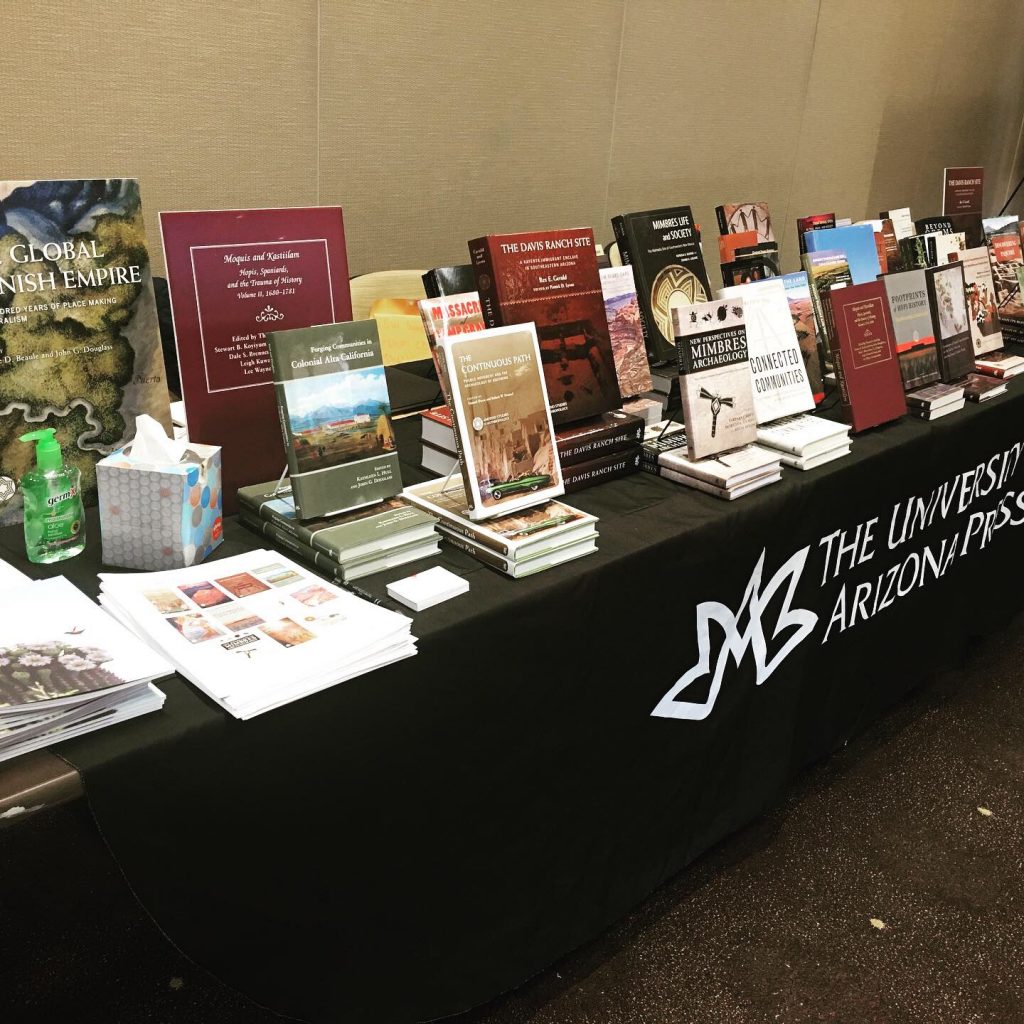
On Friday, January 31st and Saturday, February 1st, University of Arizona Press Senior Editor Allyson Carter attended the 17th Biennial Southwest Symposium in Tempe. The Southwest Symposium organization was founded in 1988 to promote new ideas and new directions in the archaeology of the U.S. Southwest and Mexican Northwest. The theme this year was “Thinking Big: New Approaches to Synthesis and Partnership in the Southwest/Northwest.”

Allyson was thrilled to catch up with many of our authors while she attended the conference, and she was able to snap a few great photos as well.

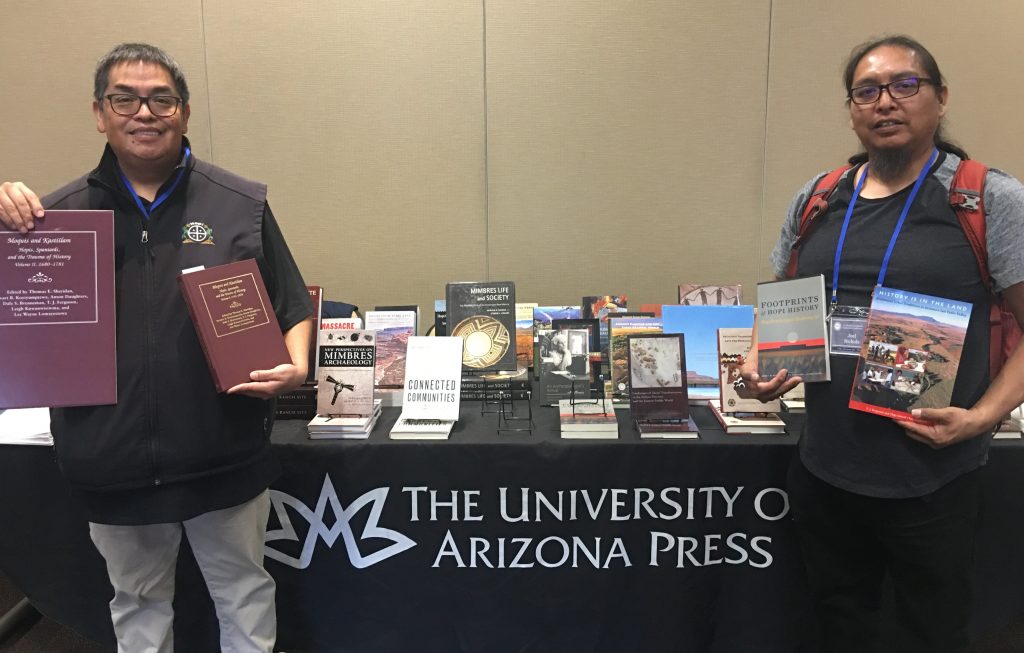
Stewart Koyiyumptewa, co-editor of Moquis and Kastiilam and contributor to Footprints of Hopi History, and Joel Nichols, contributor to History is in the Land.
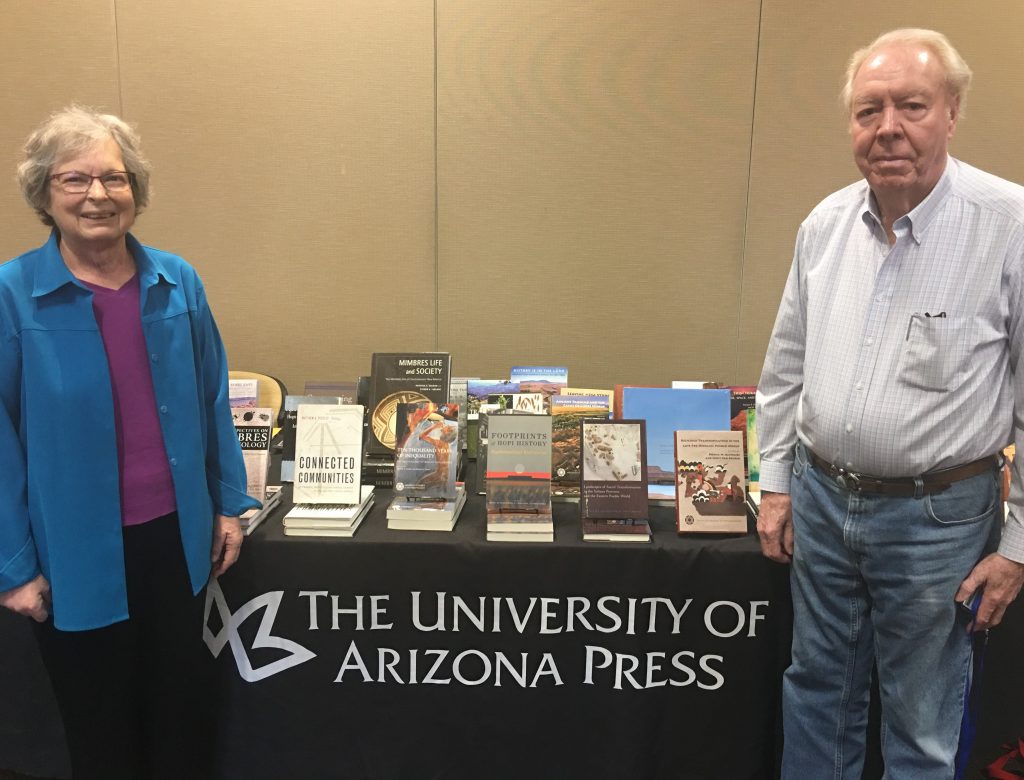
Nancy Parezo and Don Fowler, authors of a forthcoming book which will be published in Fall 2020. Nancy Parezo is also co-editor of Paths of Life, and Don Fowler.
We love sharing our archaeology list with scholars and experts!

Our Border Heart: Reflections from Our Authors on ‘American Dirt’

January 31, 2020

As an academic press situated near the Arizona-Mexico border, when a flash point like the American Dirt controversy occurs, it’s hard to ignore voices from the books that line the University of Arizona Press bookshelves.

After all, as some University of Arizona Press authors have explained recently in national interviews and op-eds, university presses have long been home to many Latinx and Indigenous authors of fiction, poetry, and scholarship focused on social justice, anthropology, popular culture, gender studies, and the borderlands.

Chicano author David Bowles, who translated the late beloved Francisco X. Alarcón’s poems in the University of Arizona Press’s 2019 edition of Snake Poems: An Aztec Invocation, pointed this out in an NPR interview on Monday, January 27 —that indie and university presses have committed to publishing authors and scholars of color. Bowles offered further analysis in the New York Times.

The University of Arizona Press is not alone in publishing Latinx and Indigenous authors. Other university presses and independent publishers doing similar work: Arte Publico, Bilingual Press, University of Texas Press, University of New Mexico Press, and Cinco Puntos.

In the University of Arizona Press’s sixty years, publishing Latinx and Indigenous authors was purposeful and remains a priority. The Sun Tracks series, which publishes work by Indigenous authors, began in the early 1970’s as a journal and then individual titles. The first book, When it Rains: Tohono Oodham and Pima Poetry was edited by University of Arizona professor and linguist Ofelia Zepeda, a Tohono O’odham poet who remains editor of the series.

Camino del Sol, a series dedicated to Latinx authors, started in 1994, two years before Oprah’s Book Club kicked off. The series, initiated by author Ray Gonzalez, its first editor, has had a number of awards bestowed on its titles: the PEN/Beyond Margins Award to Richard Blanco’s Directions to the Beach of the Dead; Before Columbus Foundation American Book Awards to Diana Garcia’s When Living Was a Labor Camp and Luis Alberto Urrea’s Nobody’s Son; International Latino Book Awards to Pat Mora’s Adobe Odes and Kathleen Alcalá’s The Desert Remembers My Name; the Premio Aztlán literary prize to Sergio Troncoso’s The Last Tortilla; and the PEN Oakland-Josephine Miles National Literary Award to Kathleen de Azevedo’s Samba Dreamers. The first National Book Critics Circle Award for a Chicana/o went Juan Felipe Herrera’s Half of the World in Light, also published by the University of Arizona Press.

University of Arizona Press authors who have weighed in on the controversy:

Frederick Luis Aldama, University Distinguished Professor at Ohio State University, is a leading Latinx cultural scholar with three important titles in the University of Arizona Press’s Latinx Pop Culture series. From his January 24 essay Brownface Minstrelsy; or a Defense of Our Freedom in the Art of Latinx Storytelling? on Latinx Spaces:

Wiping windows clean of roadkill, let me focus attention on this point about a non-Mexican or non-Latinx author writing this book. Of course, authors different from her run deep, including D.H. Lawrence, Valle Inclán, Kerouac, Nabokov, Boyle, and Theroux, among many others. Here, however, we return to Sánchez Prado’s point that a non-Mexican author can create fictions about Mexico, if they do the work for it to represent and cohere well. In other words, none of this cutting corners to get away with caca because you know your main audiences will be white and not be Mexican or Latinx.

University of Arizona author Daniel A. Olivas offered further perspective in an opinion piece published recently in The Guardian:

American Dirt is an insult to Latinx writers who have toiled – some of us for decades – to little notice of major publishers and book reviewers, while building a vast collection of breathtaking, authentic literature often published by university and independent presses on shoestring budgets. And while the folks who run Flatiron Books have every right to pay seven figures to buy and publish a book like American Dirt, they have no immunity from bad reviews and valid criticism.

​And that’s why more than ninety Latinx and other writers signed an open letter to Oprah Winfrey asking her to rethink the much-publicized inclusion of American Dirt in her renowned book club. I signed on to this letter with the hope Winfrey will do the right thing.

You can read the letter Olivas refers to here. Another University of Arizona Press author, poet Vickie Vértiz, signed the letter. Her collection, Palm Frond with Its Throat Cut, won the 2018 PEN America Literary Poetry award. Other authors who signed the letter include Luis Alberto Urrea (also a University of Arizona Press author), Wendy C. Ortiz, and Vanessa Angélica Villarreal.

Near the top of the University of Arizona Press website are the words: Books that make a difference, enrich understanding, and inspire curiosity. The exceptional Latinx and Indigenous voices from University of Arizona Press books accomplish that, and guide us through an entire universe, too.

Raymond H. Thompson (1924-2020)

January 31, 2020

Raymond Harris Thompson, Jr., PhD, director emeritus of the Arizona State Museum and a co-founder of the University of Arizona Press died peacefully on January 29 in Tucson, surrounded by family and enveloped in the affection of so many who held him in high esteem. He was 95.

Thompson served the University of Arizona with dedication and distinction for 41 years, from July 1, 1956 to June 30, 1997. For 32 of those years, he served as director of the Arizona State Museum. For the first 16 of those years, he served simultaneously as head of the Department (now School) of Anthropology. In 1980 he was appointed… read the complete appreciation shared by The School of Anthropology and the Arizona State Museum.

How ‘Indians’ Think Author on New Books Podcast

January 21, 2020

New Books Network recently featured Gonzalo Lamana‘s new book, How “Indians” Think: Colonial Indigenous Intellectuals and the Question of Critical Race Theory.

Lamana, a University of Arizona Press author and associate professor in the Department of Hispanic Languages at the University of Pittsburgh, shines light in his book on Indigenous perspectives through a novel interpretation of the works of the two most important Amerindian intellectuals in the Andes, Felipe Guaman Poma de Ayala and Garcilaso de la Vega, el Inca.

Departing from the predominant scholarly position that views Indigenous-Spanish relations as the clash of two distinct cultures, Lamana argues that Guaman Poma and Garcilaso were the first Indigenous activist intellectuals and that they developed post-racial imaginaries four hundred years ago. Their texts not only highlighted Native peoples’ achievements, denounced injustice, and demanded colonial reform, but they also exposed the emerging Spanish thinking and feeling on race that was at the core of colonial forms of discrimination. These authors aimed to alter the way colonial actors saw each other and, as a result, to change the world in which they lived.

Listen to the podcast here.

Gonzalo Lamana Featured on New Books Network Podcast

January 14, 2020

University of Arizona author Gonzalo Lamana was featured on a recent episode of New Books Network to discuss his new book, How “Indians” Think.

“In his new book, How “Indians” Think: Colonial Indigenous Intellectuals and the Question of Critical Race Theory (University of Arizona Press, 2019), Dr. Gonzalo Lamana carefully investigates the writings of Indigenous intellectuals of the Andean region during Spanish colonialism. By delving into and reinterpreting the work of Guaman Poma de Ayala and Garcilaso de la Vega, Lamana effectively articulates the development of critical race theory from its outset in colonial Latin America. By sharing these centuries old texts, Lamana gives important context to today’s social climate while reinvigorating voices from the past. As Lamana points out, “Indians” lived in an upside down world – a world of lies that Indigenous intellectuals were unable to expose. Through the work of Lamana and others, that lie is finally being exposed.

Gonzalo Lamana is an associate professor in the Department of Hispanic Languages and Literatures at the University of Pittsburgh. His teaching and research explores themes of subalternity and indigeneity, race and theology, and meaning-making in the colonial period through a comparative, cross-area and time study of colonial and postcolonial dynamics. Some of his previous publications include Domination without Dominance. Inca-Spanish Encounters in Early Colonial Peru and Pensamiento colonial crítico

Listen to the podcast and read more here.

For Authors

The University of Arizona Press publishes the work of leading scholars from around the globe. Learn more about submitting a proposal, preparing your final manuscript, and publication.
Inquire

Requests

The University of Arizona Press is proud to share our books with readers, booksellers, media, librarians, scholars, and instructors. Join our email Newsletter. Request reprint licenses, information on subsidiary rights and translations, accessibility files, review copies, and desk and exam copies.
Request

Support the Press

Support a premier publisher of academic, regional, and literary works. We are committed to sharing past, present, and future works that reflect the special strengths of the University of Arizona and support its land-grant mission.

Give