Saguaros, Justice, Poetry, and Rum, Spring 2020

December 20, 2019

Every season at the University of Arizona Press has its own unique personality, yet you can always count on the Press publishing Indigenous and Latinx literature you won’t find elsewhere. You’ll find those gems in our Spring 2020 catalog, along with Southwest titles, cutting-edge books on the borderlands, Chicanx, and Indigenous studies; and other important work in anthropology, archaeology, environmental studies, and space science.

Here are several highlights to give you an idea of what Spring 2020 has to offer:

The Saguaro Cactus: A Natural History, by David YetmanAlberto BúrquezKevin Hultine, and Michael Sanderson

The saguaro cactus is an iconic symbol of our region, and this book gets to the heart of that with essays on our ongoing fascination and the plant’s unusual characteristics.

Out in February, paperback.

Sown in Earth: Essays of Memory and Belonging by Fred Arroyo

In this collection of essays, Arroyo shares personal and heart-wrenching memories that speak to the larger experiences of hardworking migratory men, such as Arroyo’s father.

Out in March, paperback.

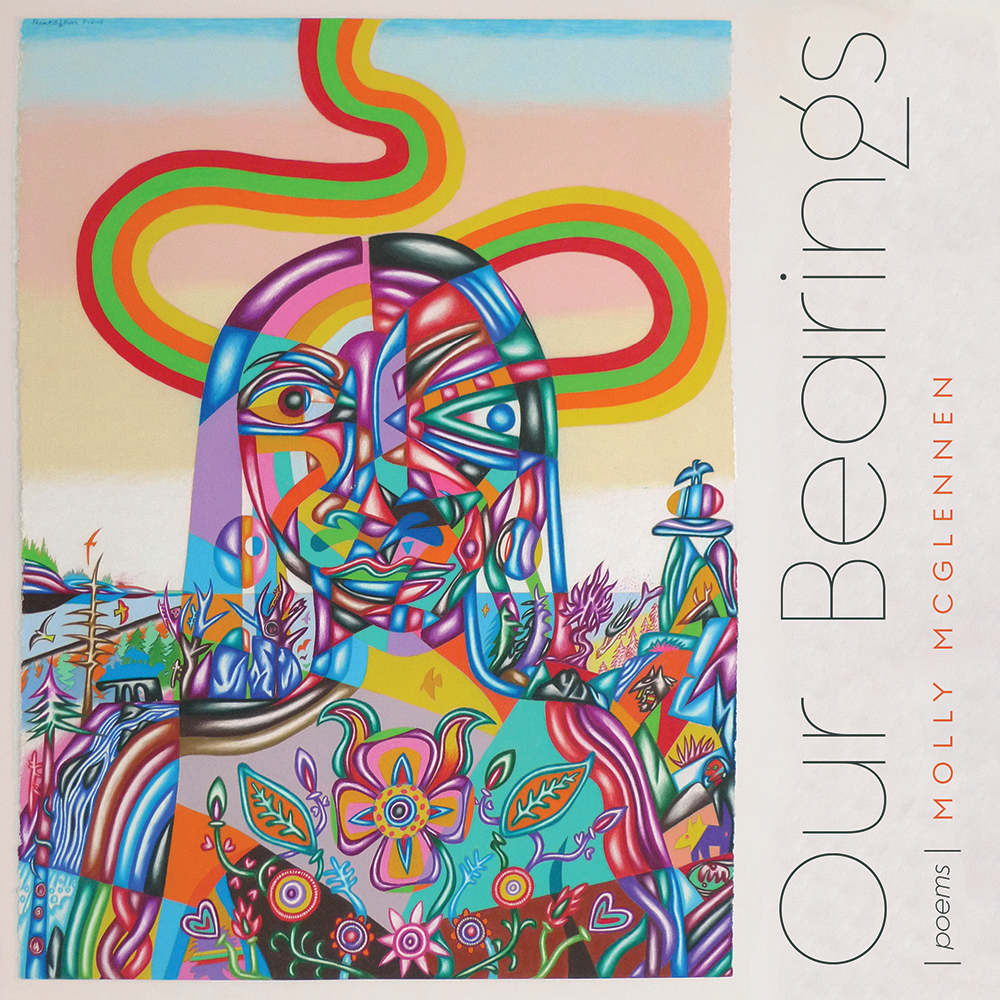
Our Bearings: Poems by Molly McGlennen

In Our Bearings, McGlennen examines and celebrates Anishinaabe life in modern Minneapolis through this collection of narrative poetry. The narrative poetry of Our Bearings, redefines what it means to be an urban Indian.

Out in March, paperback.

To the Last Smoke: An Anthology by Stephen J. Pyne

In this book, Pyne, considered a leading authority and historian on wildland fire, offers a series of his most recent essays on fire region by region in the United States. Each essay provides a glimpse at how wildland fires differ from state to state, and what some regions are doing right.

Out in April, paperback.

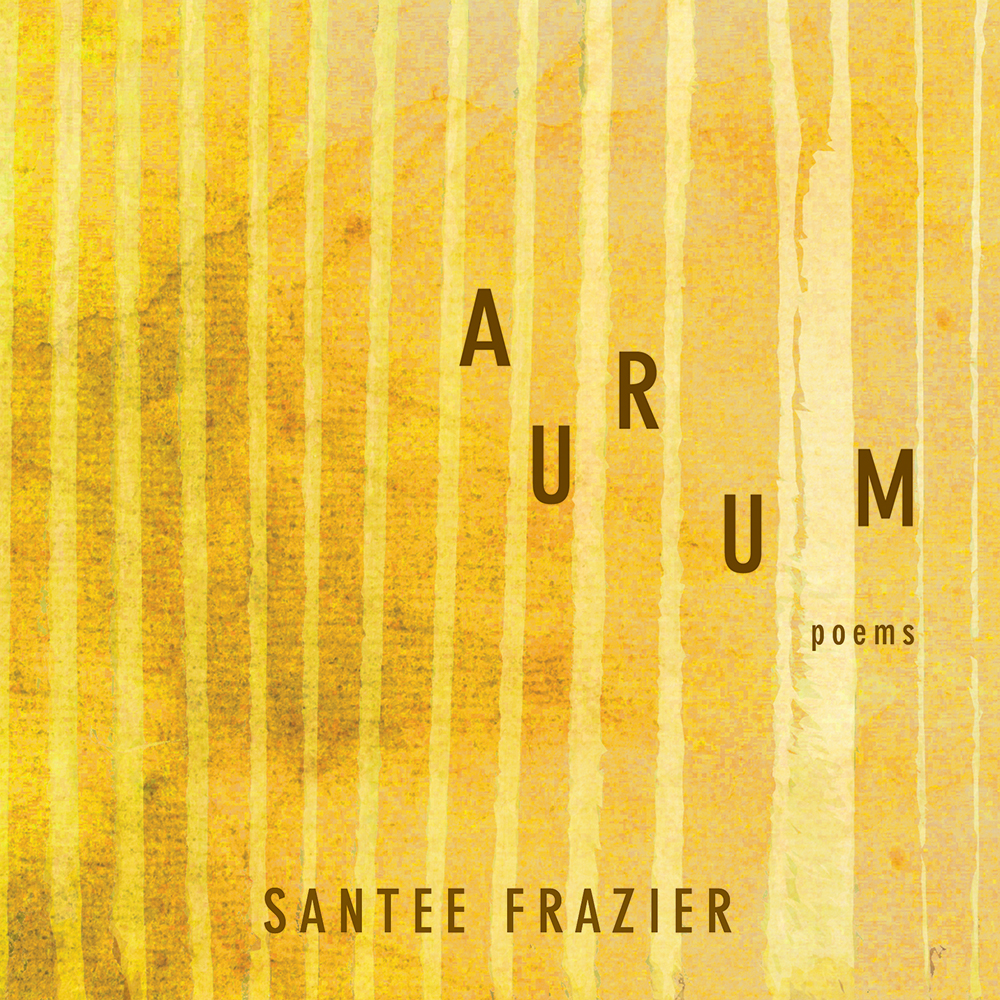
Sugarcane and Rum: The Bittersweet History of Labor and Life on The Yucatán Peninsula by John R. Gust and Jennifer P. Mathews

Gust and Mathews weave together ethnographic interviews and historical archives with archaeological evidence to bring the daily lives of Maya workers into focus. The workers were part of the sugarcane and rum production of the Yucatán .

Out in April, paperback.

Diné Identity in a Twenty-First-Century World by Lloyd L. Lee

This is a distinctive and personal book from Lee, offering his perspective on Diné  identity in the twenty-first century. It is a mixture of traditional, customs, values, behaviors, technologies, worldviews, languages, and lifeways.

Out in May, paperback.

See you in 2020, dear readers.

Science Be Dammed Gaining Media Attention

December 6, 2019

Even though Science Be Dammed was officially released in late November, buzz about the University of Arizona Press book grew months before its pages were printed. After all, in this age of climate catastrophe and growing discussions around water resources throughout the country, a book about how Colorado River policy makers ignored science in favor of growth offers a glimpse of reality folks often suspected was true. The book also offers a path forward, providing a new way to look at allocation and water policy.

The writers, Eric Kuhn and John Fleck, are also getting in front of new policy makers with their book in hand at regional conferences, meetings, and doing interviews on the book. Both authors bring important experience to share–Kuhn worked for the Colorado River Water District for more than four decades; while Fleck, a longtime journalism covering water, is now an academic with the University of New Mexico’s Water Resources Program.

Besides getting on two great seasonal reads lists from Outside Magazine and The Revelator, and doing a handful of radio interviews, here are few examples of recent media coverage for Science Be Dammed:

Naveena Sadasivam from independent news outlet Grist, recently wrote a story with a Q&A interview with Kuhn and Fleck.

In 1916, six years before the Colorado River Compact was signed, Eugene Clyde LaRue, a young hydrologist with the U.S. Geological Survey, concluded that the Colorado River’s supplies were “not sufficient to irrigate all the irrigable lands lying within the basin.” Other hydrologists at the agency and researchers studying the issue came to the same conclusion. Alas, their warnings were not heeded.

I caught up with Fleck and Kuhn to learn why LaRue and others were ignored and what history can teach us about the decisions being made on the river today. This interview has been condensed and edited for clarity.

Q. When did you both realize that the conventional wisdom about the framers of Colorado River law using bad data was incorrect? Was there an “aha” moment?

A. Fleck: The “aha” moment for me was when I found the transcripts of LaRue’s 1925 congressional testimony, when he said, as clear as could be, that there’s not enough water for this thing they were trying to do. It erased any doubt I had that the reports were too technical and people didn’t really understand them. He was there testifying before Congress, and they just chose to ignore it. None of the senators followed up. They were clearly choosing to willfully ignore what LaRue was saying.

Kuhn: He wasn’t alone. There was USGS hydrologist Herman Stabler, an engineering professor from the University of Arizona, and a very high-level commission appointed by Congress, headed by a famous Army Corps of Engineers’ lieutenant general, and they came to the same conclusion. The surprise to me was how widespread the information was among the experts at the time. There was never even enough water in the system for what we wanted to do before climate change became an issue.

This week, the Tucson Weekly featured Science Be Dammed on their cover, with an author interviews and an excerpt:

Kuhn and Fleck argue in the book that the greatest failure of river management institutions in the 20th century is a lack of plan B in the face of less water. And of course, there is now less water.

“Climate change and many other factors have basically said that there’s no stationarity in the river; we can’t use the last 100 years to predict what’s going to happen in the next 100 years,” Kuhn said. “Now that every drop of water in the river is used, the cushion is gone. And I think that’s one of the messages: You can’t rely on future generations to fix a mess.”

Even if the compact’s framers hadn’t selected the “rosiest scenario possible,” the Southwest’s current 19-year drought would still cause tightening for the Colorado River’s allocations. This has led to updated rules around water use, such as Arizona’s recently ratified Drought Contingency Plan.

“The Drought Contingency Plan is a band-aid, designed to get us through the next five or 10 years. There needs to be a more sustainable, long-term solution,” Kuhn said. “Those Drought Contingency Plans will give us some breathing room, but what the river will look like in 20 years, I think we’ll look back at our Drought Contingency Plan and say, ‘Those were the good days.'”

Fleck and Kuhn are not without hope, however. Not only is science advancing to offer new methods of water conservation, but the populations of many Southwestern cities are living more sustainably as well. For instance, Tucson’s water demand has continually lowered in the past two decades, despite an increase in population. In 2000, Tucson used 133,000 acre feet of water annually; in 2017, it was 110,000; and 104,000 is projected for 2025.

The True History of Navajoland

December 5, 2019

Authors Klara Kelley and Harris Francis have crafted a sweeping history of the Diné that is foregrounded in oral tradition. The authors share Diné history from pre-Columbian time to the present, using ethnographic interviews in which Navajo people reveal their oral histories on key events such as Athabaskan migrations, trading and trails, Diné clans, the Long Walk of 1864, and the struggle to keep their culture alive under colonizers who brought the railroad, coal mining, trading posts, and, finally, climate change. For Diné readers, A Diné History of Navajoland offers empowering histories and stories of Diné cultural sovereignty. “In short,” the authors say, “it may help you to know how you came to be where— and who— you are.”

Below, read an excerpt from Kelley and Francis’ new book, A Diné History of Navajoland.

Of the 145 allotments in the Chambers Checkerboard townships, 56 are canceled or relinquished, but most allotments of the wealthy Silversmith extended family remain intact. Though many of the allottees were children when the allotment applications were first taken (mainly in 1909), those allottees are now adults. Therefore, the 56 relinquishments and cancellations represent about that many households, an estimated 250-300 people.

For allottees, these miseries come on top of Washindoon’s livestock reduction program. So at the very time when Washindoon is telling the People that the reservation lands can only support half the livestock that people own, it is forcing more families with whatever livestock they can salvage onto those same lands.

In 1998 Diné former residents of the Chambers Checkerboard described the miseries of relinquishment (Kelley and Francis 1998b, condensed from the original Navajo).

Consultant 1 (In English)

My mom was born in 1904. When she was about age six, she and her sister went to school at Saint Michaels. They were raised by their grandmother [father’s mother]. And Father [Anselm] came down here, and my mom said a whole group of people were following him around, asking for allotments. So my great-grandmother [who received an allotment] asked for land for my mom and her sister. But the guy who was interpreting for Father refused my great-grandmother’s request because of the interpreter’s relationship with a certain family. So I blame him for why my mom did not get an allotment. And also, I blame her father— he was working on the railroad at the time, he could have requested land. He had two wives, and he liked the other wife better than my mom’s mother. So he pushed my mom and her sister aside.

Before our family was driven off, one man came around to collect the papers— those were the papers with the Teddy Roosevelt signature and the eagle. He said it was for copying, then they would be returned. But my grandma refused to give up the paper. One time at a chapter meeting [probably 1960s], Little Silversmith spoke there, something about getting land for himself. And my mom got up and accused him of not helping when we were all chased off. She said that white people were driving Little Silversmith out now [he seems to have been in debt and was selling to a Bilagaana rancher], but where was he when white people were driving us out?

My mom told me that we left our chickens, our wagons. She went back with my grandfather to our home to get our things, and saw them dumped like trash. Men formed a posse in Springerville, went through Saint Johns, camped someplace between Saint Johns and Sanders. Early in the morning they attacked Diné families around [the spring near the great-grandmother’s allotment], drove them out at gunpoint.

Then, the site where we moved after we were driven out: my dad dug a hole, and we lived there through the winter. Then he built a hogan north of Sanders. First, we went across the [Puerco] river and tried to settle there, then were told to keep moving north, because that was allotted land, go farther north past where the allotments are. So we kept going and we went on land claimed by [certain relatives].

Consultant 2 (In Navajo)

We had many sheep, horses, and cattle. We’d plow the fields and plant a lot, too. We grew a lot of beans, put them in gunny sacks. Someone, I don’t know if they were Bilagaanas, would buy them from us. We also used to live at another place over the hill with my maternal grandparents. There were several lakes where the livestock were watered. We lived in several places…

We would hear people say that we pay for the land [taxes or railroad lease payments]. And one day we were told to move out toward the railroad [north]. They had been saying this to us for a few years now. There was a man named Big Schoolboy, who went around with the Bilagaanas and told everyone to move out. He said that if we didn’t move, they would take us back to Fort Sumner. They all carried guns. We were afraid they might shoot us all.

This was two years after my mother died that they told us to move. My father had to take care of us children then. So we moved out. We put only a sewing machine and other little things in a wagon and left. We left with our sheep, many horses, the rams, and the cows. We just left with our clothes and went to a place called Graywater [about 10 miles away]. The horses were tired out by that time, but there was no grass, only a pond.

When we got the horses back [after the eviction], they were starved almost to death. There was sand sage, silvery sage, wormwood there. We got only 20 horses back— the others died— and never found the cattle. We took some cows with us when we left, but we left a lot there. The sheep we took, but we lost a lot of them too, some to thirst and starvation. We survived on the sheep but our horses died, even the one we used for the wagons. We barely got water. We had to use bottles. We had a very hard time. Then my maternal grandfather became ill. His kidneys wouldn’t work, so they had to carry him around a lot. I don’t know how many years it was, but he passed away too.

When we left our home, my little sister and I would go back to pick up some of our belongings now and then. We noticed that they [the Bilagaanas] had pushed our wagons off a cliff and they were all smashed up at the bottom. We had a small wagon, a big wagon, different types, also a well down there. They shot it up, too. We don’t know where they took our personal belongings and our clothes or what they did with them. They were all gone.

We barely bought this [current homesite] from a lady [a tract next to her father’s lieu allotment]. They used to live over there at the railroad. We got a wagon too that we used to get water with. She gave us some horses that we traded some sheep for. That’s what we used to get water.

So we came out here. My grandmother was herding them at Graywater [about eight miles away]. We’d run out of water, our only water source was at [a spring away from the homesite]. We’d get water at night, fill the barrel and bring it back. Me, I’d cut logs at Graywater, and I’d bring them back here. That’s how we built a house.

We had no water, but there used to be Bilagaanas who lived around here but they moved out. They used to have windmills here and there, so we asked one to take a windmill out for us. I traded some sheep for it, and they came here and installed a windmill. We settled here permanently after that. We had to herd rams for people, and they would give us a few sheep for it, and eventually we managed to fill our corral again.

An Excerpt from Yolqui, A Warrior Summoned From the Spirit World by Roberto Cintli Rodriguez

November 5, 2019

In Nahuatl yolqui is the idea of a warrior brought back from the dead. For University of Arizona associate professor Roberto Cinctli Rodríquez, it describes his own experience one night in March 1979 after a brutal beating at the hands of L.A. sheriffs.

In his new University of Arizona Press book, Yolqui, a Warrior Summoned from the Spirit World: Testimonios on Violence, Rodriguez revisits that day and brings forward contributors who offer their own important and timely testimonios on state violence.

Here is an excerpt from the Preface of the book, which goes further on to explain how Rodriguez chose Yolqui as the title of the book:

Sometime close to midnight on March 23, 1979, on Whittier Boulevard and McDonnell Avenue in East Los Angeles, California, I died. On March 24, 1979, at a little past midnight, I willed myself back to life on that cold and bloody intersection.

I did not actually die, but I was killed that night: attacked, then beaten over and over again with riot sticks wielded by at least four members of the Special Enforcement Bureau, an elite tactical unit of the Los Angeles County Sheriff ’s Department, who struck my body and head repeatedly with their sticks until my skull fractured and my blood pooled in the street.

To the average person, that statement may not make any sense; for many years it didn’t make sense to me, either, until one night the explanation came to me in a dream. But it would be many more years before I was able to comprehend its message.

Hopefully, what I write here will explain both the above statements and how I came upon the title Yolqui for my memoir/testimonio.


In the middle of a cornfield in Huitzilac, Morelos, Mexico, I am given aguamiel, the juice of the maguey plant, to drink. That night, presumably, it prompts a dream.

I am hovering above a sprawled body.

Suddenly, I realize that the body is mine.

My spirit and my consciousness are outside of my body.

But how can this be possible? How can I be here, looking down at my own body?

I observe my bloodied body sprawled on the ground below me. I know it is me because those are my pants, my jacket, my hair.

I am not struggling. I am not moving. I am lifeless. A cold realization sets in, but it doesn’t make sense.

If my spirit and my consciousness are outside of my body, what does this mean?

I know I am not awake. This must be a dream. How else could this be happening?

The only other explanation is that I am no longer alive . . . that I am dead. No. This must be a mistake. There must be another explanation. I’m not going anywhere—I’m not ready to go!

At that, I am startled awake. I am in shock, trying to understand what I just saw.

For the past twenty years I’ve not had any dreams nor nightmares; either I
was not dreaming, or I was unable to remember my dreams. Either way, something changed that day in the cornfield, and that night I finally had a dream that I could remember. I was very disturbed by the dream, knowing full well there was meaning attached to it.

In the dream I’d been conscious of observing myself. It was the night of March 23–24, 1979, in East L.A., the night I was assaulted while photographing the brutal beating of a young man on Whittier Boulevard. Once I understood what I was looking at and where I was, my mind forced me to wake up.

That long-ago night resulted in my being arrested and charged with attempting to kill the four deputies who almost took my life. It took nine months to win that trial and another seven years to win the lawsuit I filed against those same deputies and the Los Angeles County Sheriff ’s Department.

Even as I write this, I realize that something else happened to me all those years ago, beyond the constant harassment and death threats, beyond having to live in fear and operating on survival instincts. Something was taken from me that night in 1979: the trauma to my brain and skull also had a long-term impact on my ability to process my thoughts in the dreamworld. I lost the ability to recall my dreams. A psychologist could probably comment about that; I know our ability to dream is a critical part of what makes us human. Dreams permit us to process our thoughts, our emotions, and our experiences, and dreams are what connect us to that other world. That was taken from me that weekend. Many Indigenous healers whom I am close to believe that our dream state is as important, if not more so, as our awakened state, and most view the inability to dream as unhealthy. I am also conscious as I write this that I am providing a psychological portrait of my mind and my spirit some forty years after that night in 1979 in East Los Angeles.

What was the meaning of the dream I had in Huitzilac? At the time, I was unsure, and that was disconcerting. In subsequent days, I internalized the idea that I had died that night in East L.A. Was that a nightmare, or was it a memory of what had happened to me that weekend? Regardless, I realized I had become a spirit walking outside of my body.

Sometime later, when I was living in San Antonio, Texas, I discussed that disturbing dream with a good friend, Enrique Maestas, who is also an Azteca/Mexica danzante. I told him I remembered having had recurring bouts of fear between 1979 and 1986, fear that I was going to be killed. “The dream is nothing to worry about,” Enrique told me.

All warriors have to die.

Okay. I got that. I now understand that I died on March 23, 1979, and on March 24, 1979, I was resuscitated. But why?

So that as warriors, we can come back and fight again.

Perhaps that was the answer I was looking for, though Enrique’s explanation did not sink in right away.


Roberto Cintli Rodríguez is an associate professor in the Department of Mexican American Studies at the University of Arizona. He writes for Truthout’s Public Intellectual Page and is a longtime award-winning journalist, columnist, and author. His first book with the UA Press is Sacred Maíz Is Our Mother: Indigeneity and Belonging in the Americas.

Read. Think. Act.

November 4, 2019

This week, November 3 through 9, is University Press Week. UP Week, as we call it, has its roots in a 1978 proclamation by President Jimmy Carter “in recognition of the impact, both here and abroad, of American university presses on culture and scholarship.” It has grown into a worldwide celebration.

This year our theme for UP Week speaks to the current moment: “Read. Think. Act.” Citizens around the globe are engaging in important debates that will influence vital decision-making in the months ahead. University presses offer the latest peer-reviewed research on issues that affect our present and future. By reading widely about politics, economics, climate science, race relations, and more, we can all better understand these complex issues and appreciate university presses’ important contributions to our world.

UA Press Director Kathryn Conrad

From the University of Arizona Press alone you can find books to better understand the fires raging in California, like Stephen Pyne’s California: A Fire Survey, or to go beyond pundits’ sound bites to explore the very human issue of immigration through books like The Border and Its Bodies.  Science Be Dammed offers a cautionary narrative in the age of climate change about the risks of ignoring scientific research and Yolqui offers a deeply personal meditation on the culture of violence against Red-Black-Brown communities in the United States.

And we are just one of the Association of University Presses’ 151-member presses, which together publish more than 13,000 books each year—books that advance knowledge and encourage thoughtful action. You can learn more about our work as it’s celebrated during University Press Week—and download a copy of our “Read. Think. Act. Reading List”—at universitypressweek.org.

—Kathryn Conrad, UA Press Director

Conrad currently serves as the President of the Association of American University Presses board of directors. Listen to Conrad explain more about UP Week in a podcast interview she did recently with New Books Network:

Yvette Saavedra Awarded the WHA-Huntington Library Martin Ridge Fellowship

October 29, 2019

In recognition of Martin Ridge’s long service to both the Western History Association and The Huntington Library, the WHA-Huntington Library Martin Ridge Fellowship is a one-month research fellowship at The Huntington Library. The 2019 winner of the fellowship is University of Arizona Press author, Yvette Saavedra.

Yvette Saavedra’s recent book, Pasadena Before the Roses, examines a period of 120 years to illustrate the interconnectedness of power, ideas of land use, and the negotiation of identity within multiple colonial moments. By centering the San Gabriel Mission lands as the region’s economic, social, and cultural foundation, she shows how Indigenous, Spanish, Mexican, and American groups each have redefined the meanings of land use to build their homes and their lives. These visions have resulted in competing colonialisms that framed the racial, ethnic, gender, and class hierarchies of their respective societies.

Congratulations, Yvette, on receiving this honor!

An Excerpt from Postcards from the Chihuahua Border by Daniel D. Arreola

October 23, 2019

In Postcards from the Chihuahua Border, Daniel D. Arreola provides a colorful and dynamic visual history of Mexico’s northern border. Drawing on more than three decades of archival work, Arreola invites the reader to time travel, to revisit the first half of the twentieth century, when the border towns of Ciudad Juárez, Ojinaga, and Palomas, were framed and made popular through picture postcards. Arreola provides a visual journey through the borderlands neighboring west Texas and New Mexico.

Below, read an excerpt written by Daniel D. Arreola from the introduction of Postcards from the Chihuahua Border.

“Arguably, the Mexico-United States border has been one of the most overlooked places on earth.  We now know, perhaps all too well, that the border is part of political consciousness although not necessarily understood through careful observation or experience and that some want to construct a wall at this boundary where, ironically, one already exists.  Too many of us don’t understand that the borderline itself is a nineteenth-century political agreement while the fence in all its many iterations is a twentieth century phenomenon, or that the first permanent fence along this international boundary between an Arizona town and a Sonora town is just now at this writing a century old.  Even fewer of us recognize the echoes resounding from this borderland that should remind us why the original monuments were planted along the divide without a fence.

Daniel D. Arreola

“The towns of the Chihuahua border, part of the system of cities that dot the Mexican side of the boundary, are the subjects of this book, the third installment in a series of writings about the visual historical geography of these forgotten places.  The purpose of Postcards from the Chihuahua Border as in my previous explorations of the Río Bravo border and the Sonora border is to caste a new eye on an old subject and bring light to a way of seeing the border that has been overlooked.

Looking, it turns out, is not the same as seeing.  We look at the world daily, but seeing the world engages the mind beyond the surficial glance.  In Postcards from the Chihuahua Border, I ask readers to contemplate what geographer Christopher L. Salter said about documents and the geographer’s point of view, to wit, “The cultural landscape—that is, landscape which has been modified and transformed by human action—is the oldest primary document in our possession.” As document, the landscape is worthy of reading, analysis, and understanding.  Unlike a book bound between two covers, the landscape is a leafless palimpsest, a surface partly erased but with relics still visible.  Yet, like a book, a landscape can be read if we ask the right questions. In that spirit, the book you hold in your hands is a kind of testimonial to landscape interpretation but not one limited to written evidence so common to historical investigation.  Rather, the focus of this work is reading and seeing visual representation of landscape as document, especially through the popular postcard both in its photographic and mechanical print forms.

Admittedly, a postcard view of the world is not a common vantage point.  Yet, the postcard is both a literary and visual document that can shed light on cultural understanding.  Anthropologists Patricia Albers and William James suggest that the postcard has largely been overlooked as a document, especially its utility to explore the relationship among photography, ethnicity, and travel.  Their research describes some of the qualitative approaches for using postcards, relates photographic communication in postcards to a wider ideological discourse, and discusses the interplay of ethnic appearance and photographic expression in world tourism. In a similar vein but with enhanced elegance, Rosamond Vaule’s As We Were: American Photographic Postcards, 1905-1930, serves as a model chronicle, informing how postcards are both documentary history and revealing witness to our past lives and places.”

Daniel D. Arreola is a Professor Emeritus in the School of Geographical Science and Urban Planning at Arizona State University. His research focuses on cultural landscapes, place-making, Mexican-American borderlands, and Hispanic/Latino Americans. In 2016 he was presented with the Preston E. James Eminent Latin Americanist Career Award by the Conference of Latin American Geographers.

Saints, Statues, and Stories feted at Tucson Meet Yourself

October 15, 2019

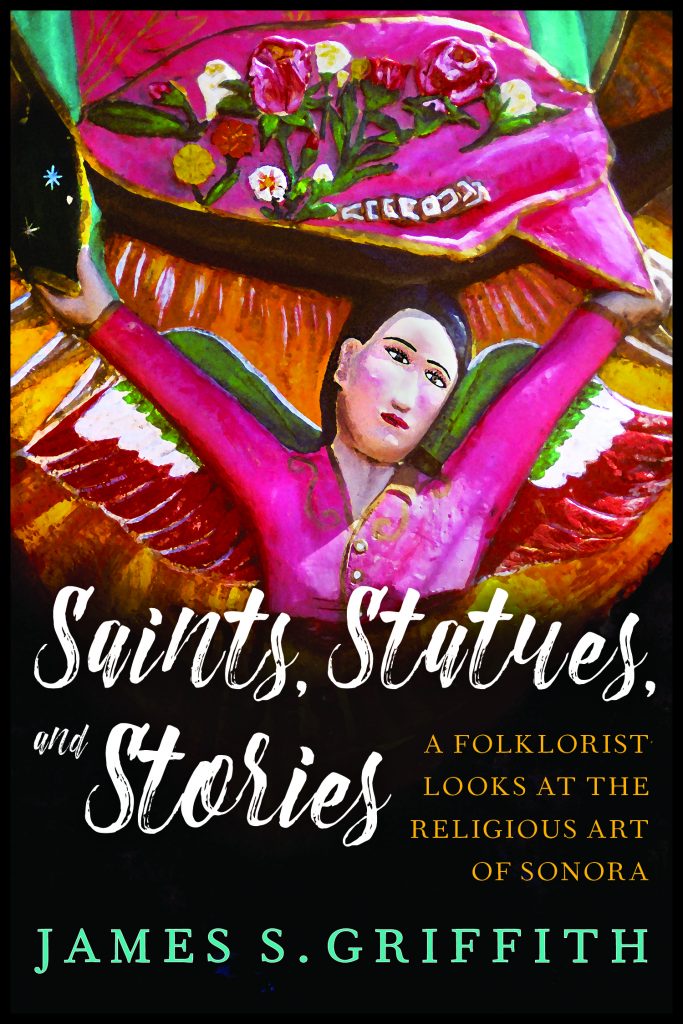
The 46th Tucson Meet Yourself this past weekend was a great way to continue celebrating Saints, Statues, and Stories, a new book by James “Big Jim” Griffith, recently published by the University of Arizona Press. The founder of Tucson Meet Yourself signed copies of his new book to followers eager to read about Griffith’s travels through Sonora, documenting religious art and traditions.

A big thank you to Tucson Meet Yourself for inviting Griffith and providing a space to help promote the book and give readers a chance to talk with the legendary folklorist.

Shortly after the release party at San Xavier Mission del Bac on September 28, Griffith’s book was the featured cover story by Margaret Regan in the October 10th Tucson Weekly. On October 12, another story on Griffith’s new book was published in the Arizona Daily Star by Johanna Eubank.

Keep checking back with us for additional Saints, Statues, and Stories events.

Poet Carmen Giménez Smith Is National Book Foundation Finalist

October 9, 2019

The National Book Foundation recently announced the 2019 National Book Award finalists. UA Press author Carmen Giménez Smith is among those selected for poetry.

Giménez Smith’s Be Recorder, published in August by Graywolf Press is the nominated collection. Winners will be announced on Nov. 20.

About Giménez Smith’s last book published with the UA Press, Milk and Filth, a National Book Critics Circle Award Finalist:

Giménez Smith’s poetic arsenal includes rapier-sharp wordplay mixed with humor, at times self-deprecating, at others an ironic comment on the postmodern world, all interwoven with imaginative language of unexpected force and surreal beauty. Revealing a long view of gender issues and civil rights, the author presents a clever, comic perspective. Her poems take the reader to unusual places as she uses rhythm, images, and emotion to reveal the narrator’s personality. Deftly blending a variety of tones and styles, Giménez Smith’s poems offer a daring and evocative look at deep cultural issues.

University Press Week: Read. Think. Act.

October 7, 2019

According to Publisher’s Weekly, this year’s theme for University Press Week is, Read. Think. Act.

From Sunday, November 3 through Saturday, November 9, the Association of University Presses encourages readers to dive into publications about the issues that affect our present and future.

The theme, the AUPresses said in its statement, is timely in that “many citizens around the globe continue to engage in important debates that will influence vital decision-making in the months ahead; in fact, this year’s UP Week will begin exactly one year to the day before the 2020 Election Day in the U.S.” The organization added: “AUPresses members worldwide seek to encourage people to read the latest peer-reviewed publications about issues that affect our present and future—from politics to economics to climate change to race relations and more—and to better understand academic presses’ important contribution to these vital areas of concern.”

UA Press Director Kathryn Conrad, who currently serves as president of the Association of University Presses, said this in the same statement:

“Many of us choose to work for university presses because we believe in the UP mission of bringing the latest research and ideas to diverse audiences of readers, [and] the success of recent university press books such as White Fragility by Robin DiAngelo (Beacon Press) and Cyberwar by Kathleen Hall Jamieson (Oxford University Press) make it clear that there is a hunger for these books,” Kathryn Conrad, AUPresses president and director of the University of Arizona Press, said in a statement “In the last few years many people have found it difficult to have effective conversations about the most serious and important issues facing our communities, nations, and world. We hope that by encouraging readers to explore university press works on topics that affect everyone—and to reflect on their reading—our publications might help stimulate positive conversations and actions.”

To kick off your celebration, AUPresses put together a reading list from all of its membership that you can download and share. Recommended from the UA Press is a new book edited by Thomas E. Sheridan and Randal H. McGuire, The Border and Its Bodies.

The Border and Its Bodies examines the impact of migration from Central America and México to the United States on the most basic social unit possible: the human body. It explores the terrible toll migration takes on the bodies of migrants—those who cross the border and those who die along the way—and discusses the treatment of those bodies after their remains are discovered in the desert.

Read. Think. Act.

For Authors

The University of Arizona Press publishes the work of leading scholars from around the globe. Learn more about submitting a proposal, preparing your final manuscript, and publication.

Inquire

Requests

The University of Arizona Press is proud to share our books with readers, booksellers, media, librarians, scholars, and instructors. Join our email Newsletter. Request reprint licenses, information on subsidiary rights and translations, accessibility files, review copies, and desk and exam copies.

Request

Support the Press

Support a premier publisher of academic, regional, and literary works. We are committed to sharing past, present, and future works that reflect the special strengths of the University of Arizona and support its land-grant mission.

Give