Video: Stephen Pyne on the To the Last Smoke Series

April 2, 2020

Stephen J. Pyne and the University of Arizona Press have just completed an 11 book opus series that explains the fire history of the United States. The series started with Between Two Fires and concludes this month with To the Last Smoke: An Anthology. In between are nine regional looks at localized fire history. Together, Steve has captured the environmental and human history of wildfire in America. In this short video Steve discusses his approach.

Stephen J. Pyne is an emeritus professor at Arizona State University. He is the author of more than 30 books, mostly on wildland fire and its history but also dealing with the history of places and exploration, including The Ice, How the Canyon Became Grand, and Voyager. Most recently, he has surveyed the American fire scene with a narrative, Between Two Fires: A Fire History of Contemporary America, and a suite of regional reconnaissances, To the Last Smoke, all published by the University of Arizona Press.

Andrew Flachs Discusses Anthropology and Agriculture in a New Book Lecture

March 25, 2020

A single seed is more than just the promise of a plant. In rural south India, seeds represent diverging paths toward a sustainable livelihood. Development programs and global agribusiness promote genetically modified seeds and organic certification as a path toward more sustainable cotton production, but these solutions mask a complex web of economic, social, political, and ecological issues that could be as dire as death.

Below, anthropologist and University of Arizona Press author Andrew Flachs discusses topics that are covered in his new book, Cultivating Knowledge.

Andrew Flachs is an assistant professor of anthropology at Purdue University. Trained as an environmental anthropologist, his research spans sustainable agriculture, food studies, the anthropology of knowledge, and political ecology.

‘The Saguaro’ Celebration Packed El Crisol with Cactus and Book Lovers

February 26 2020

The book release celebration for The Saguaro Cactus: A Natural History, brought together more than 80 people to El Crisol on Sunday, February 23 to hear scholar-authors David YetmanAlberto Búrquez, and Kevin Hultine talk about their research, admiration, and share folklore of the Sonoran Desert’s iconic cactus.

The evening, first in the new Arts and Letters series presented by the University of Arizona Press and hosted by El Crisol, was also co-hosted by The Southwest Center. A live-stream of the author conversation is on the Center’s YouTube channel available here. The Saguaro Cactus is part of a book series published in partnership with the The Southwest Center and the University of Arizona Press that focus on a variety of fields, especially history, anthropology, geography, natural history, ethnobiology, and borderlands studies.

Kristen Buckles, University of Arizona Press editor-in-chief, welcomed guests and authors, explaining the importance of books such as The Saguaro Cactus, and the ongoing relationship with The Southwest Center. Buckles introduced The Southwest Center director, Jeffrey Banister, to talk further and introduce the authors.

Co-authors Hultine and Yetman will be at the University of Arizona Press tent at the Tucson Festival of Books for book signing on Sunday, March 15, 12-12:30 p.m. Books will be available for purchase at the tent. Other upcoming events for The Saguaro Cactus: March 5 at Desert Botanical Garden in Phoenix and March 16 at the 2020 Libraries Annual Luncheon in Tucson.

Special thanks to El Crisol owners Amy and Doug Smith for welcoming us and creating a special space for our authors; La Indita restaurant for always going that extra mile for our events; and Carlos Quintero, outreach coordinator with The Southwest Center.

The Saguaro Cactus: A Natural History co-authors Alberto Búrquez, Kevin Hultine, and David Yetman, discuss their research and knowledge of the beloved cactus of our Sonoran Desert.
El Crisol owners Amy and Doug Smith.
Savannah Hicks, University of Arizona Press marketing assistant, ready for all things saguaro at the book celebration event.

Voices from Bears Ears Chosen as a Finalist for the 2020 Oregon Book Award

February 7, 2020

We are thrilled to announce that Voices from Bears Ears by Rebecca Robinson and Stephen Strom is a finalist for the Frances Fuller Victor Award for General Nonfiction, a section of the 2020 Oregon Book Awards!

Literary Arts‘ Oregon Book Awards program honors the state’s finest accomplishments by Oregon writers who work in genres of poetry, fiction, graphic literature, drama, literary nonfiction, and literature for young readers. In addition to financial support, the program produces the Oregon Book Awards Author Tour to connect local writers and literary organizations in all parts of Oregon. Each year, Oregon Book Awards finalists and winners travel to towns across Oregon for readings, school visits, and free writing workshops.

Through the stories of twenty individuals, and informed by interviews with more than seventy people, Voices from Bears Ears captures the passions of those who fought to protect Bears Ears and those who opposed the monument as a federal “land grab” that threatened to rob them of their economic future. It gives voice to those who have felt silenced, ignored, or disrespected. It shares stories of those who celebrate a growing movement by Indigenous peoples to protect ancestral lands and culture, and those who speak devotedly about their Mormon heritage. What unites these individuals is a reverence for a homeland that defines their cultural and spiritual identity, and therein lies hope for finding common ground.

Portland-based journalist Rebecca Robinson provides context and perspective for understanding the ongoing debate and humanizes the abstract issues at the center of the debate. Interwoven with these stories are photographs of the interviews and the land they consider sacred by photographer Stephen E. Strom. Through word and image, Robinson and Strom allow us to both hear and see the people whose lives are intertwined with this special place.

Congratulations to all of the finalists! The winners will be announced live at the Oregon Book Awards Ceremony on Monday, April 27 at the Portland Center Stage at the Armory.

University Presses Are a Wise Investment for Scholarship and Community

February 5, 2020

Inside Higher Ed featured an opinion piece on the value university presses offer their parent institutions, and how that value uplifts scholarship, and community.

Written by Kathryn Conrad, director of the University of Arizona Press and president of the Association of University Presses, and Jennifer Crewe, associate provost and director of Columbia University Press and the association’s immediate past president, the editorial points out that some institution leaders are unfamiliar with the role their presses play in scholarly publishing, and the important role presses play in advancing the values of their home institutions.

More than 100 North American universities choose to invest in a university press, including nearly 70 percent of leading research institutions and almost 80 percent of Association of American Universities members. Publishing scholarship of the highest quality in an environment driven by mission, and not profit, is an endeavor that top universities heartily endorse. Our daily work as scholarly publishers is firmly grounded in the foundational beliefs and goals of our parent institutions. While the publishing mix of individual university presses may vary, as do our universities’ areas of strength, our purpose is the same: the advancement of knowledge.

Looking back on a year that has included soul-searching at both Stanford University, an elite private institution, and the University of Western Australia, a vital public university, we are reminded that leaders at our home institutions sometimes are unfamiliar with what university presses do or with their own integral role in supporting scholarly publishing. Misunderstanding can lead to hasty or inaccurate judgments. …

Please read the entire op-ed here.

Our Border Heart: Reflections from Our Authors on ‘American Dirt’

January 31, 2020

As an academic press situated near the Arizona-Mexico border, when a flash point like the American Dirt controversy occurs, it’s hard to ignore voices from the books that line the University of Arizona Press bookshelves.

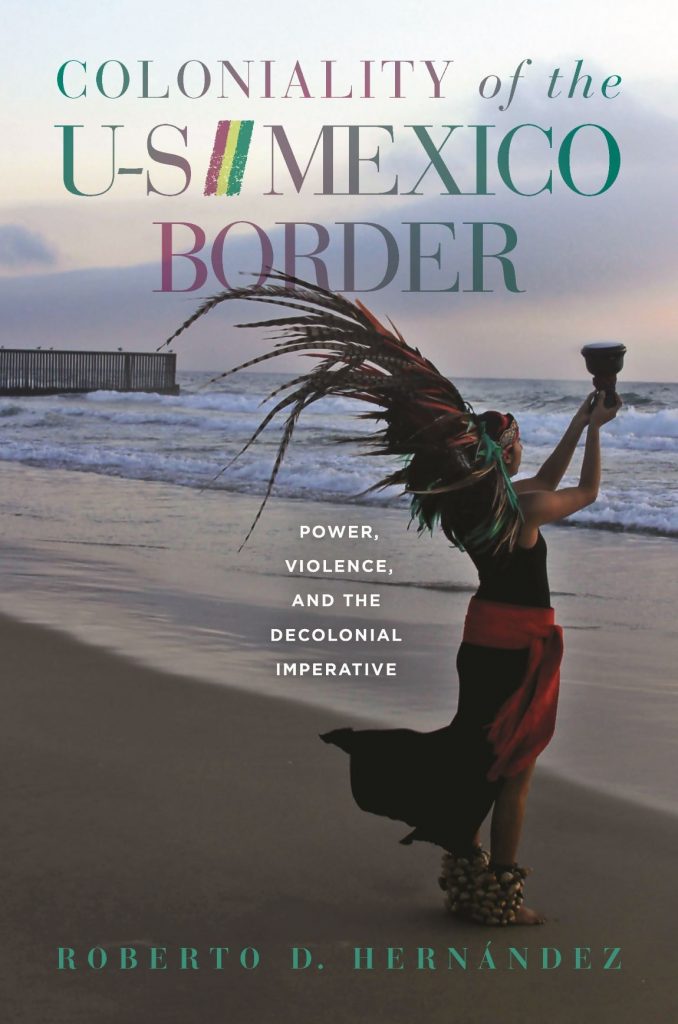
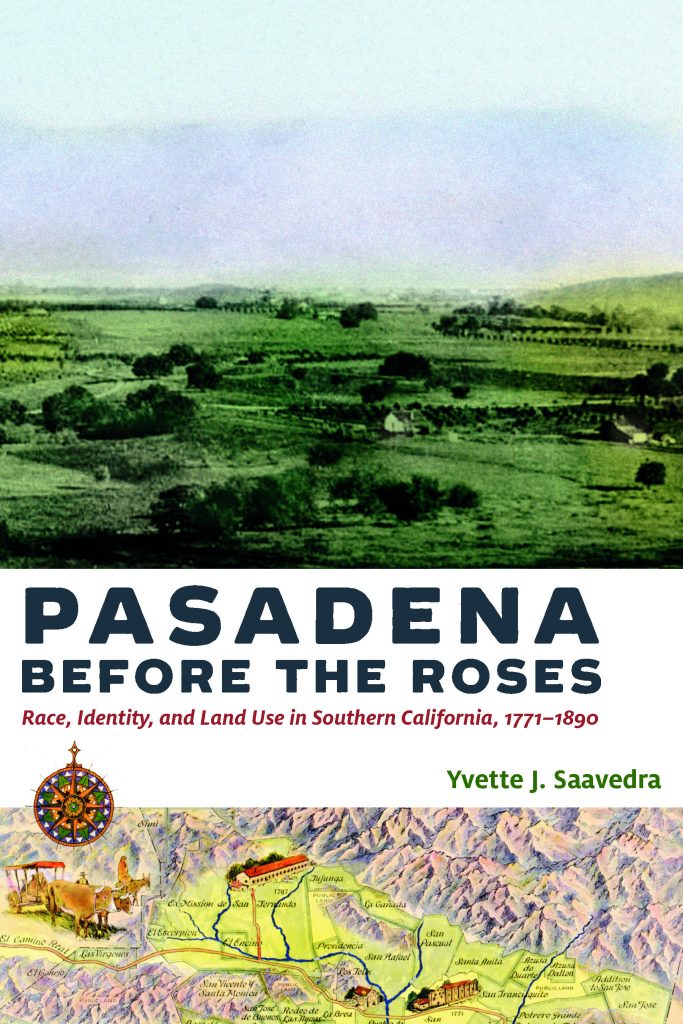
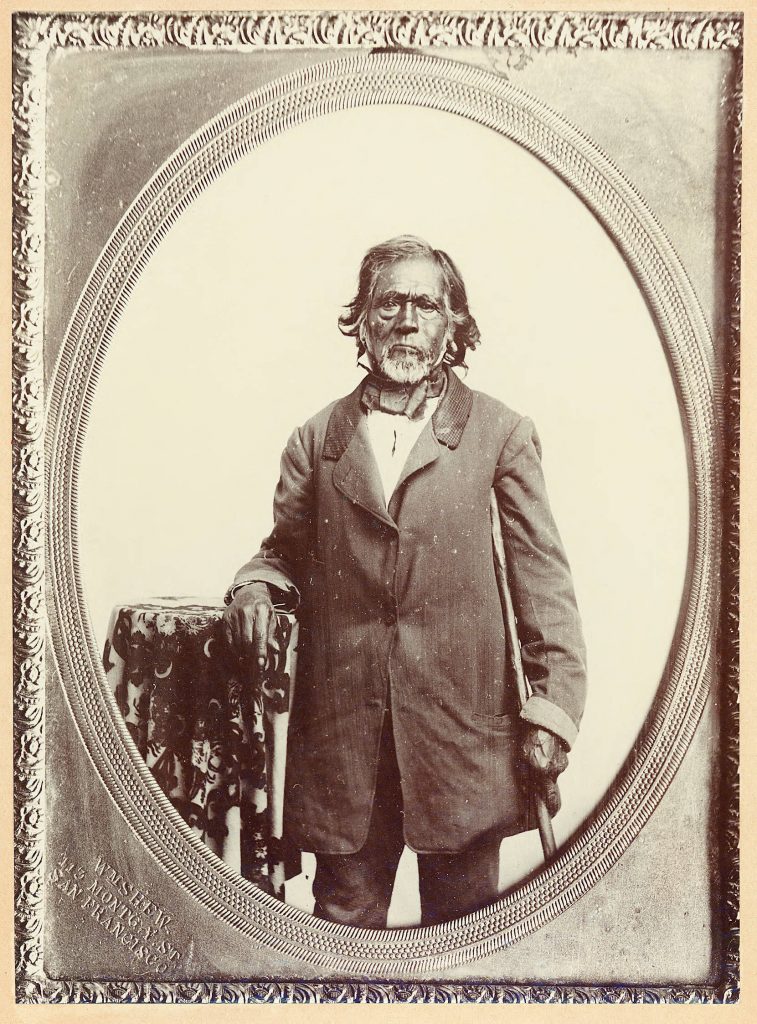
After all, as some University of Arizona Press authors have explained recently in national interviews and op-eds, university presses have long been home to many Latinx and Indigenous authors of fiction, poetry, and scholarship focused on social justice, anthropology, popular culture, gender studies, and the borderlands.

Chicano author David Bowles, who translated the late beloved Francisco X. Alarcón’s poems in the University of Arizona Press’s 2019 edition of Snake Poems: An Aztec Invocation, pointed this out in an NPR interview on Monday, January 27 —that indie and university presses have committed to publishing authors and scholars of color. Bowles offered further analysis in the New York Times.

The University of Arizona Press is not alone in publishing Latinx and Indigenous authors. Other university presses and independent publishers doing similar work: Arte Publico, Bilingual Press, University of Texas Press, University of New Mexico Press, and Cinco Puntos.

In the University of Arizona Press’s sixty years, publishing Latinx and Indigenous authors was purposeful and remains a priority. The Sun Tracks series, which publishes work by Indigenous authors, began in the early 1970’s as a journal and then individual titles. The first book, When it Rains: Tohono Oodham and Pima Poetry was edited by University of Arizona professor and linguist Ofelia Zepeda, a Tohono O’odham poet who remains editor of the series.

Camino del Sol, a series dedicated to Latinx authors, started in 1994, two years before Oprah’s Book Club kicked off. The series, initiated by author Ray Gonzalez, its first editor, has had a number of awards bestowed on its titles: the PEN/Beyond Margins Award to Richard Blanco’s Directions to the Beach of the Dead; Before Columbus Foundation American Book Awards to Diana Garcia’s When Living Was a Labor Camp and Luis Alberto Urrea’s Nobody’s Son; International Latino Book Awards to Pat Mora’s Adobe Odes and Kathleen Alcalá’s The Desert Remembers My Name; the Premio Aztlán literary prize to Sergio Troncoso’s The Last Tortilla; and the PEN Oakland-Josephine Miles National Literary Award to Kathleen de Azevedo’s Samba Dreamers. The first National Book Critics Circle Award for a Chicana/o went Juan Felipe Herrera’s Half of the World in Light, also published by the University of Arizona Press.

University of Arizona Press authors who have weighed in on the controversy:

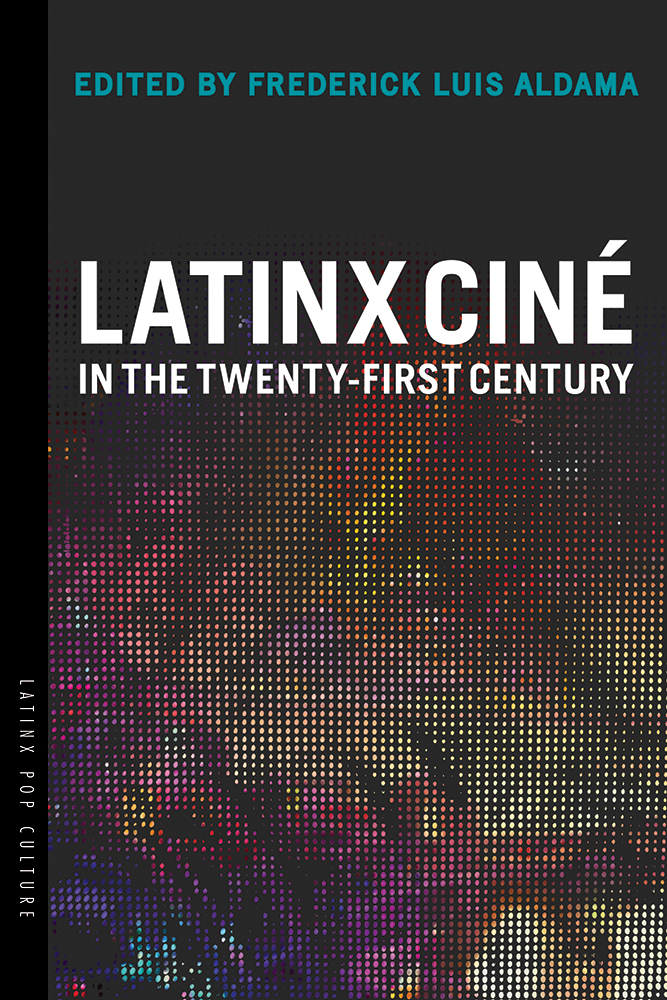
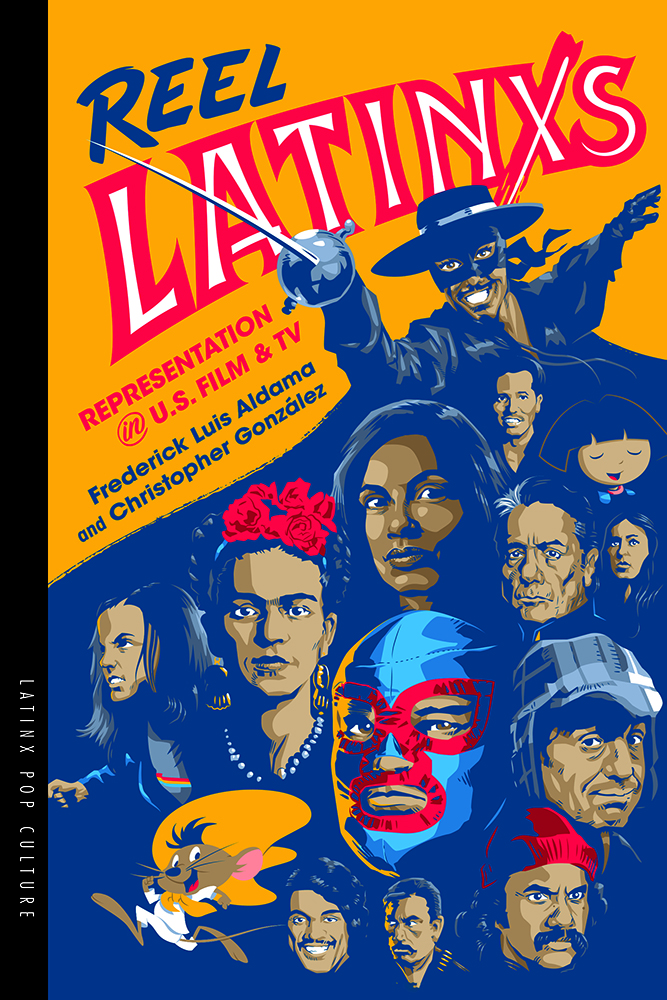
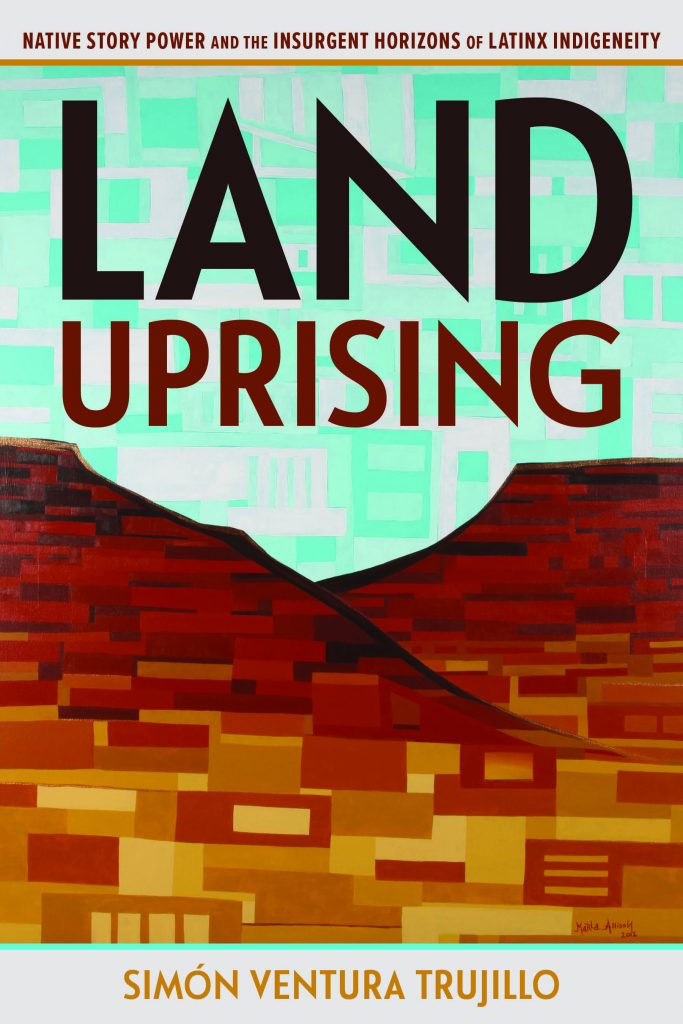
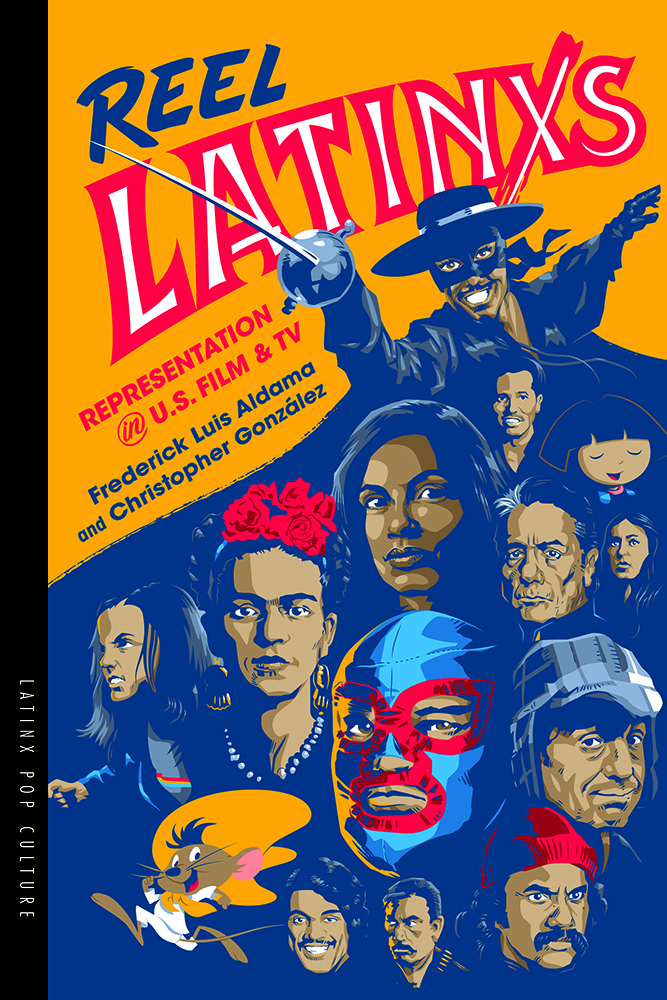
Frederick Luis Aldama, University Distinguished Professor at Ohio State University, is a leading Latinx cultural scholar with three important titles in the University of Arizona Press’s Latinx Pop Culture series. From his January 24 essay Brownface Minstrelsy; or a Defense of Our Freedom in the Art of Latinx Storytelling? on Latinx Spaces:

Wiping windows clean of roadkill, let me focus attention on this point about a non-Mexican or non-Latinx author writing this book. Of course, authors different from her run deep, including D.H. Lawrence, Valle Inclán, Kerouac, Nabokov, Boyle, and Theroux, among many others. Here, however, we return to Sánchez Prado’s point that a non-Mexican author can create fictions about Mexico, if they do the work for it to represent and cohere well. In other words, none of this cutting corners to get away with caca because you know your main audiences will be white and not be Mexican or Latinx.

University of Arizona author Daniel A. Olivas offered further perspective in an opinion piece published recently in The Guardian:

American Dirt is an insult to Latinx writers who have toiled – some of us for decades – to little notice of major publishers and book reviewers, while building a vast collection of breathtaking, authentic literature often published by university and independent presses on shoestring budgets. And while the folks who run Flatiron Books have every right to pay seven figures to buy and publish a book like American Dirt, they have no immunity from bad reviews and valid criticism.

​And that’s why more than ninety Latinx and other writers signed an open letter to Oprah Winfrey asking her to rethink the much-publicized inclusion of American Dirt in her renowned book club. I signed on to this letter with the hope Winfrey will do the right thing.

You can read the letter Olivas refers to here. Another University of Arizona Press author, poet Vickie Vértiz, signed the letter. Her collection, Palm Frond with Its Throat Cut, won the 2018 PEN America Literary Poetry award. Other authors who signed the letter include Luis Alberto Urrea (also a University of Arizona Press author), Wendy C. Ortiz, and Vanessa Angélica Villarreal.

Near the top of the University of Arizona Press website are the words: Books that make a difference, enrich understanding, and inspire curiosity. The exceptional Latinx and Indigenous voices from University of Arizona Press books accomplish that, and guide us through an entire universe, too.

How ‘Indians’ Think Author on New Books Podcast

January 21, 2020

New Books Network recently featured Gonzalo Lamana‘s new book, How “Indians” Think: Colonial Indigenous Intellectuals and the Question of Critical Race Theory.

Lamana, a University of Arizona Press author and associate professor in the Department of Hispanic Languages at the University of Pittsburgh, shines light in his book on Indigenous perspectives through a novel interpretation of the works of the two most important Amerindian intellectuals in the Andes, Felipe Guaman Poma de Ayala and Garcilaso de la Vega, el Inca.

Departing from the predominant scholarly position that views Indigenous-Spanish relations as the clash of two distinct cultures, Lamana argues that Guaman Poma and Garcilaso were the first Indigenous activist intellectuals and that they developed post-racial imaginaries four hundred years ago. Their texts not only highlighted Native peoples’ achievements, denounced injustice, and demanded colonial reform, but they also exposed the emerging Spanish thinking and feeling on race that was at the core of colonial forms of discrimination. These authors aimed to alter the way colonial actors saw each other and, as a result, to change the world in which they lived.

Listen to the podcast here.

Gonzalo Lamana Featured on New Books Network Podcast

January 14, 2020

University of Arizona author Gonzalo Lamana was featured on a recent episode of New Books Network to discuss his new book, How “Indians” Think.

“In his new book, How “Indians” Think: Colonial Indigenous Intellectuals and the Question of Critical Race Theory (University of Arizona Press, 2019), Dr. Gonzalo Lamana carefully investigates the writings of Indigenous intellectuals of the Andean region during Spanish colonialism. By delving into and reinterpreting the work of Guaman Poma de Ayala and Garcilaso de la Vega, Lamana effectively articulates the development of critical race theory from its outset in colonial Latin America. By sharing these centuries old texts, Lamana gives important context to today’s social climate while reinvigorating voices from the past. As Lamana points out, “Indians” lived in an upside down world – a world of lies that Indigenous intellectuals were unable to expose. Through the work of Lamana and others, that lie is finally being exposed.

Gonzalo Lamana is an associate professor in the Department of Hispanic Languages and Literatures at the University of Pittsburgh. His teaching and research explores themes of subalternity and indigeneity, race and theology, and meaning-making in the colonial period through a comparative, cross-area and time study of colonial and postcolonial dynamics. Some of his previous publications include Domination without Dominance. Inca-Spanish Encounters in Early Colonial Peru and Pensamiento colonial crítico

Listen to the podcast and read more here.

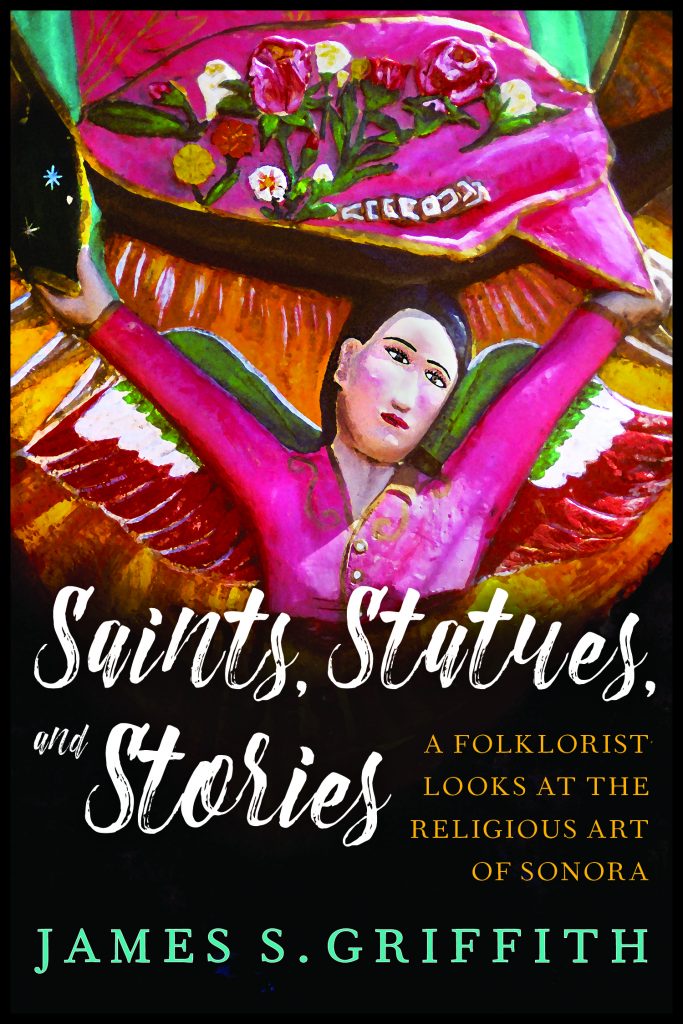
Saints, Statues, and Stories Honored as a Southwest Book of the Year

January 13, 2020

We are thrilled to announce that Saints, Statues, and Stories by James S. “Big Jim” Griffith was selected as a Panelist Pick for two panelists in Pima County Library’s 43rd annual Southwest Books of the Year! Southwest Books of the Year is a highly-anticipated publication that influences readers throughout the Southwest.

Saints, Statues, and Stories was picked by Vicki Ann Duraine, the Programming Librarian for Apache Junction Public Library, and Christine Wald-Hopkins, a former literature and composition instructor who has been a book critic for national, regional, and local newspapers since 1989.

About the book, Christine Wald-Hopkins stated: “Folklorist James S. Griffith, beloved in Southern Arizona for his active promotion of all folk arts and cultures, focuses in this little volume on material he’s gathered in more than fifty years of studying religious art and legend in Sonora, Mexico. With photographs and personal anecdotes, Griffith discusses the introduction of religious art into Sonora, its preservation, its role in the spiritual life of the people, and direct impact of saints in the lives of individuals and the community. Best of all, the voice in Saints, Statues, and Stories is that of a consummate storyteller.”

Congratulations, Big Jim!

January 7, 2020

Travel often evokes strong reactions and engagements. But what of the ethics and politics of this experience? Through critical, personal reflections, the essays in Detours, edited by M. Bianet Castellanos, grapple with the legacies of cultural imperialism that shape travel, research, and writing.

Contemplating the ethics and racial politics of traveling and doing research abroad, the essays in Detours call attention to the power and privilege that permit researchers to enter people’s lives, ask intimate questions, and publish those disclosures. Focusing on Latin America and the Caribbean, they ask, Why this place? What keeps us coming back? And what role do we play in producing narratives of inequality, uneven development, and global spectacle?

Below, read an excerpt from Detours by Misha Klein:

Prior to living in Brazil, I had believed that empirical evidence (“facts”) and personal experience provided people with the ability to appraise their circumstances and a capacity and fierce desire to chart their own path to freedom. Though I had never really thought about it consciously, I also apparently believed that there was some lower limit beyond which human dignity would not allow people to sink, and that they would rise up against their oppressors when that limit was breached.

The first time that I went to Rio de Janeiro all of those assumptions were thrown into turmoil. I accepted the invitation of a student who was taking private English classes with me and who wanted me to accompany her on a visit home. In contrast to the spacial segregation of the poor neighborhoods in the city where I lived, rich and poor in Rio are intertwined, in public space, in private space, and in the very layout of the city, where planned portions of the city displaced the previous residents only to be reoccupied by new poor people building in the newly reconfigured spaces. The self-constructed neighborhoods known as favelas fill the fissures and other empty spaces created by urban development schemes in Rio, rather than being on the outskirts as in Latin America and elsewhere, favelas begin when poor people build fragile structures made of found materials in any available space: under overpasses, along roadways, on steep hillsides, and on the edges of some of the wealthiest neighborhoods in Brazil.

I have been asked by Brazilians whether we have favelas in the United States. While we certainly have poor people and poor neighborhoods, the very poor either cannot find housing or cannot afford the rent of public housing or are not well off enough to keep a job or stay in one place. Furthermore, construction regulations make illegal the “auto-construction” that is a defining feature of favelas. Even tent cities or the temporary and visible conglomerations like the “Hoovervilles” of the Great Depression are illegal, though the reasons today usually reference safety codes rather than a recognition of these gatherings as a condemnation of and shameful reflection on politicians in a rich nation. Instead of favelas, we have homeless people, who fall through the cracks instead of filling them.

Toward the end of that first trip to Rio, we drove past Rio’s massive landfill, and I was shocked to see that it was teeming with people evidently scouring the mountain of garbage for reusable and recyclable materials. I realized that abject poverty is not radicalizing or empowering, and that those who must struggle day to day for enough to eat do not have the luxury of planning to overthrow the system. Their dignity is clearly shown in the documentary film Waste Land (2010), about the cooperative of catadores (trash pickers) who live coincidentally at that same municipal landfill and who worked with Brazilian artist Vik Muniz to create beautiful renditions of famous works of art from trash collected by the catadores. Dignity is a state or quality that is quite apart from external conditions.

There is no way to live in such a starkly class-divided social world and not be a participant, not be implicated in it. This is just as true in the United States as it is in Brazil. As a society, we walk past homeless people on the street, forget about Indigenous peoples living in poverty on reservations, avoid certain neighborhoods. We all become numb to the injustices around us, ignoring them so that we can go on about our lives. Seeing the injustices is easier when we step outside of the familiar. When I have returned to Brazil for short stays, I break the rules, disrupting the social fabric in ways that I cannot easily afford to do when I am there for longer periods of time (and often relying on the goodwill of friends and other hosts). I sit in the front seat with taxi drivers and ask about economic changes and consumption patterns rather than sitting in the back, absorbed with my phone and isolated. I chat with the security guards in the apartment buildings of well-heeled friends and engage in discussions about the education system. Inevitably, I get the confused question, “Why are you different?” A quick read of my color, my style of dress, and the circumstances of our encounter puts me in one social category, one that my behavior does not fit. In other words, why do I not stay on my side of the class divide? However, I cannot so easily break these social rules during longer stays because continually confronting or resisting the system is an exhausting endeavor. Breaking with these social norms also causes discomfort or even problems for other people. Of course, those in the working classes are not necessarily eager to get cozy with the privileged classes (of which I am presumed to be a part) and are often uncomfortable with my flouting of the norms. That kind of trust takes time to build. On the other hand, those who are privileged do not appreciate having the comfort of their world disturbed and exposed as flimsy, and they are often quick to chide— or worse.

I learned this lesson when visiting the extended family of my fiancé in the northeastern city of Fortaleza, a region known for “traditional” social rules, rooted in the slave economy and corronelismo, the corrupt and violent boss system that dominated the agricultural Northeast, the legacy of which is still felt today. Theirs was a landholding family, what might be considered “slumlords” in another context. They still lived in a single-family residence, surrounded by a garden and high wall. I counted nine people in their employ, between full- and part-time: a cook, two maids, a chauffeur, a passadeira (a woman whose sole job was to do the ironing), a night guard, a gardener, a manicurist, and a houseboy to whom fell anything that was not covered by the other employees. Between the nine employees, they did not earn even six minimum salaries, nor did they receive any of the common benefits, such as transportation costs, that became required compensation under new labor laws that took effect not long after my visit. The son of the family was being groomed to step into his father’s shoes and was already responsible for making the rounds to collect rent. It was to him that the guard appealed for an income increase. My fiancé and I were not supposed to hear the conversation, but it took place right outside the window of the bedroom where we were sleeping. The guard’s job was to sit up all night in the garden with a loaded weapon, ready to protect the sleeping family. Rather than make his request face to face, he stood outside the son’s window (adjacent to ours) to ask whether we could receive an increase to cover the cost of transportation to and from work. His request was denied. Even more poignant was the situation of the houseboy, a young man from a desperately poor family who lived in what looked like a pile of blankets in a corner of the garage and worked not for a salary but for the cost of his epilepsy medication. Even under these miserable circumstances he was better off than he would have been without the job (as the father of the family explained), if this could really be considered a form of employment as opposed to indentured servitude. Since he picked up the slack around the house, the bulk of the extra work of our stay fell to him, so to thank him we gave him the official jersey of the local Ceará soccer team, of which he was an avid fan. We were roundly chided for this act of reciprocity because, we were told by the family, we had unreasonably raised his expectations. It was a sickening experience. In the face of entrenched systems of unequal power, alliances mean nothing. Friendliness does not put a dent in the system of inequality. The difference between having been to a place and being there is in the depth of understanding. In Portuguese, you do not ask a person whether they have been somewhere. You ask whether they “know” the place, no matter how brief the encounter. A tourist can merely pass through a country and then claim to “know” it. Tourists do not have any obligation to acquire foreknowledge. They do not need to study history, socioeconomic hierarchies, the consequences of uneven development, or the legacy of colonial administrations and repressive regimes. Tourists can admire, and buy, and leave with folkloric or artisanal items and postcard memories, without obligations to maintain relations. Theirs is a form of consumption that includes the possibility of just snacking, of savoring tiny bites, and it also gets reproduced at the local level through tourism performances.

One difference between touring and living someplace for an extended period of time— which involves having responsibilities and obligations, time constraints, and financial considerations— is that when one is touring one can afford to give attention to all sorts of things that people who are going about their daily lives cannot. Tourists in Brazil can engage in what Edward Bruner (2005) calls tourist realism— that is, they can look at poverty (and even take organized tours to visit favelas), be shocked and offended by it (How can people live this way? How can other people ignore it?), and imagine that they have no connection with or responsibilities toward the obvious inequalities. This would seem to be the inverse of the imperialist nostalgia described by Renato Rosaldo (1989): rather than lamenting and longing for a past that one has had a hand in destroying, one may feel a sense of superiority and a self-satisfied clear conscience that comes with imagining that one is not implicated in another’s suffering. However, the only way that this imagining is possible is by deliberately ignoring— being ignorant of— the larger patterns of inequality that are reproduced at the global, national, and regional levels.

For Authors

The University of Arizona Press publishes the work of leading scholars from around the globe. Learn more about submitting a proposal, preparing your final manuscript, and publication.

Inquire

Requests

The University of Arizona Press is proud to share our books with readers, booksellers, media, librarians, scholars, and instructors. Join our email Newsletter. Request reprint licenses, information on subsidiary rights and translations, accessibility files, review copies, and desk and exam copies.

Request

Support the Press

Support a premier publisher of academic, regional, and literary works. We are committed to sharing past, present, and future works that reflect the special strengths of the University of Arizona and support its land-grant mission.

Give