Explore New Titles from the University of Arizona Press Spring 2021 Catalog

December 23, 2020

Here’s a preview of our upcoming Spring 2021 season with the best the University of Arizona Press has to offer, from Latinx poetry, to Indigenous literature and studies, as well as a variety of the unique global scholarship the Press has committed to bring to readers worldwide. Tuck in.
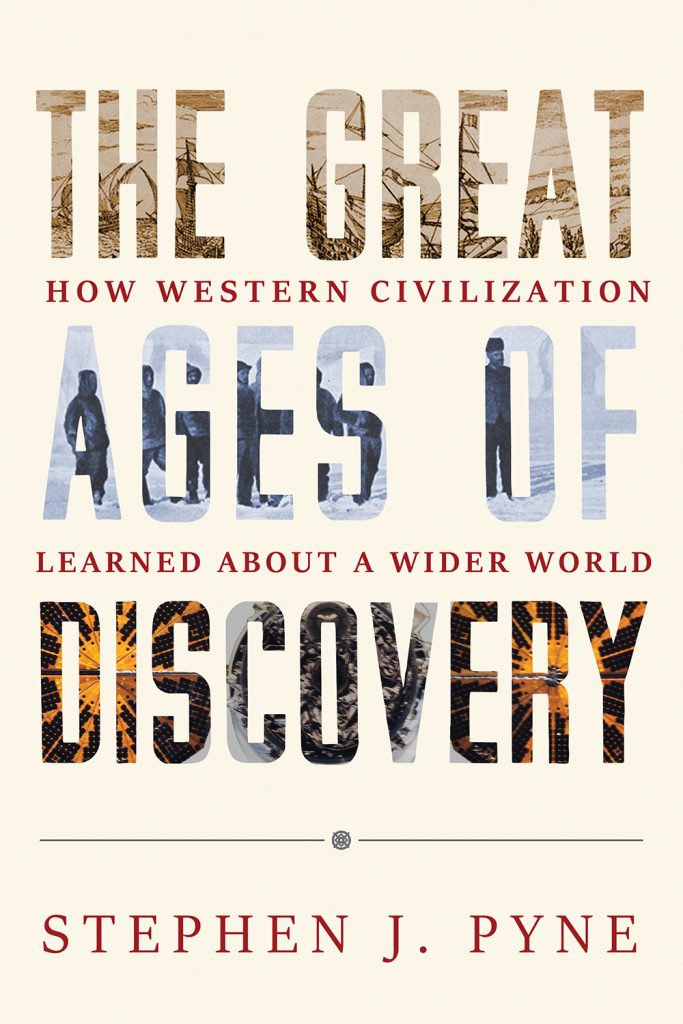
In The Great Ages of Discovery: How Western Civilization Learned About a Wider World, historian and MacArthur Fellow Stephen J. Pyne identifies three great ages of discovery in his fascinating new book.

“Stephen Pyne charts a new course through the history of exploration, navigating deftly among ruminations, reflections, themes, and concepts. He sees exploration as an intellectual adventure. Readers who accompany him will have a lucid, engaging, and magisterial guide. They can undertake odysseys without leaving their armchairs.”—Felipe Fernández-Armesto, author of Out of Our Minds: What We Think and How We Came to Think It.
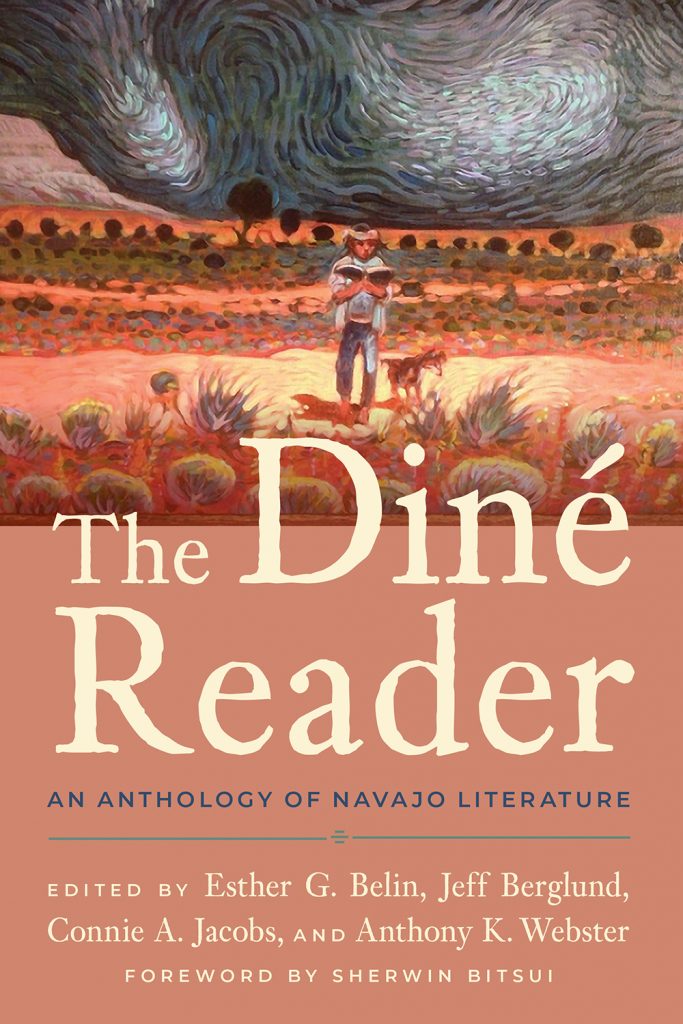
The Diné Reader: An Anthology of Navajo Literature is a ground-breaking anthology of Navajo Literature that showcases the breadth, depth, and diversity of Diné creative artists and their poetry, fiction, and nonfiction prose. The collected works display a rich variety of and creativity in themes: home and history; contemporary concerns about identity, historical trauma, and loss of language; and economic and environmental inequalities.

The Diné Reader: An Anthology of Navajo Literature is extraordinary. It is the beauty of Diné bizaad from Creation’s horizon—K’é breath, heart, continuance—beyond measure. I advise it be read with and for Humility, Courage, Sustenance, Gratitude—always for the people, community, and land that is the source of Existence.”—Simon J. Ortiz
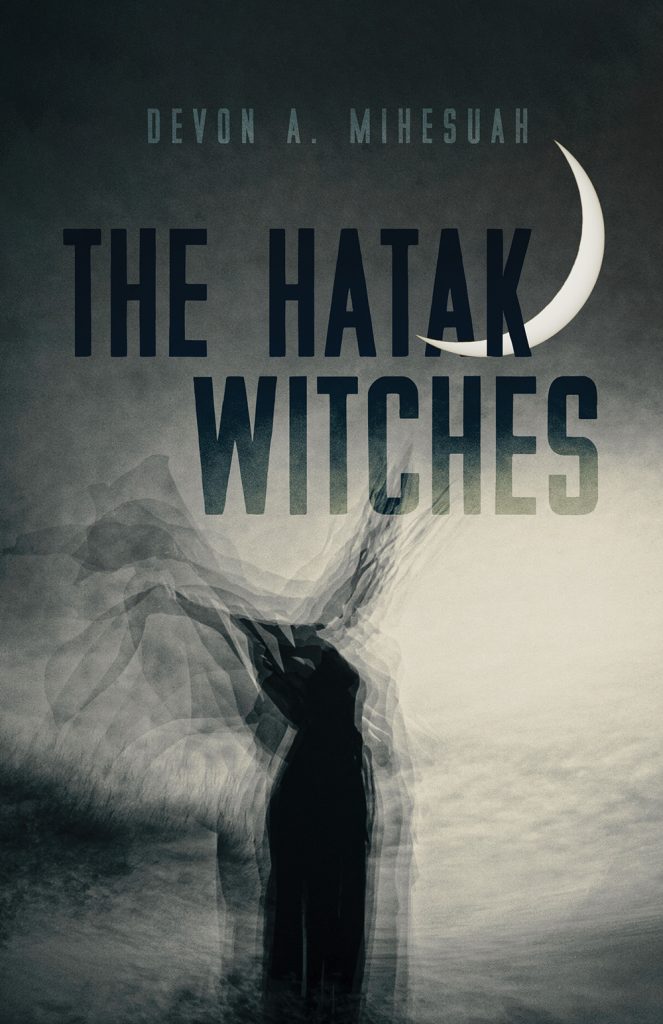
The Hatak Witches continues the storyline of Choctaw cosmology and cultural survival that are prominent in Devon A. Mihesuah’s award-winning novel, The Roads of My Relations.

In Hatak Witches, Detective Monique Blue Hawk and her partner Chris Pierson arrive to the Children’s Museum of Science and History in Norman, Oklahoma after a security guard is found dead and another wounded. They find no fingerprints, no footprints, and no obvious means to enter the locked building, but stolen is the portion of an ancient and deformed skeleton from the neglected museum archives.

“If you are looking for a journey into modern-day Choctaw spirituality, The Hatak Witches is a trip waiting to be taken.”—Geary Hobson, author of The Last of Ofos
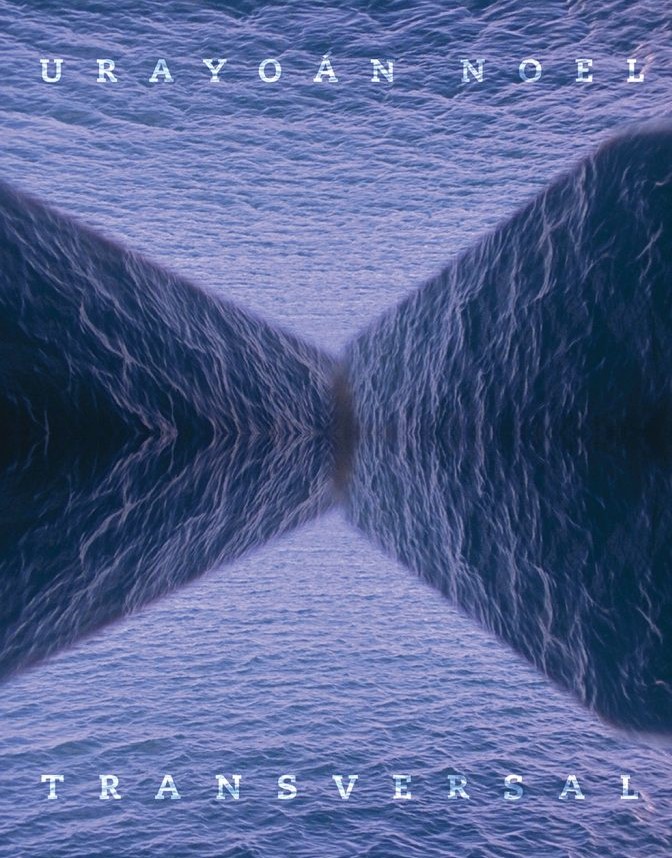
Urayoán Noel‘s new collection, Tranversal, featuring Noel’s bilingual playfulness, intellect, and irreverent political imagination with personal reflections on love, desire, and loss filtered through a queer approach to form, expanding upon Noel’s experiments with self-translation in his celebrated collection Buzzing Hemisphere/Rumor Hemisférico. 

“Urayoán understands the importance of his poetry being accessible. He understands that art is for everyone, and so he communicates with everyone. For him, all the dimensions of words are indispensable and therefore phonetics become visible in his stanzas. He respects words not in a professorial way but rather in the same way one respects the standing of an old-school bichote who’s still alive. Language is not a barrier but an imaginary border that serves as a tool to fatten up the arguments of his words. In life one has to move, one has to walk even when there’s a more comfortable way to get somewhere else, to other paths, and if I were to cross over one day, I would do so with this book. The transversal is as necessary as growth.”—Residente, recording artist and filmmaker.
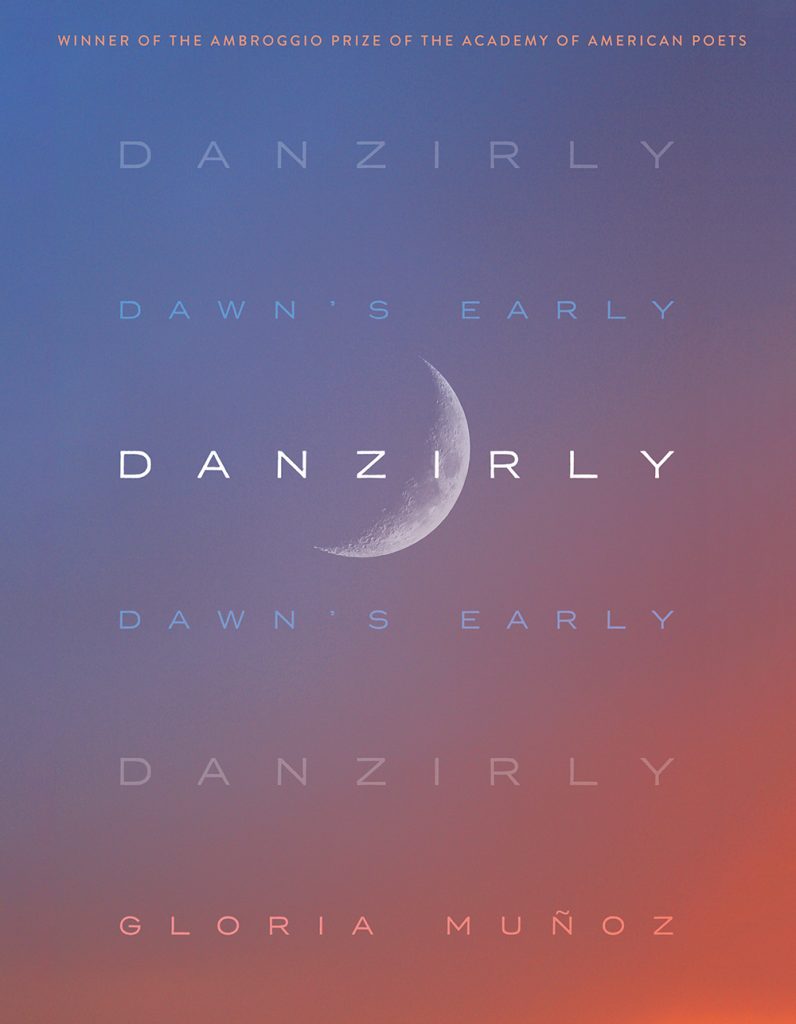
Winner of the Ambroggio Prize from the Academy of American Poets, Danzirly is a striking bilingual poetry collection by Gloria Muñoz, that fiercely examines the nuances of the American Dream for Latinx people in the United States, and powerfully dismantles Latinx stereotypes in poetic form, juxtaposing the promised wonders of a life in America with the harsh realities that immigrants face as they build their lives and raise their families here.

“In this utterly unique bilingual collection, Muñoz brilliantly negotiates two languages and the spaces between them, exploring the ever transient emblem of the American Dream through themes of lineage and loss, cultural and spiritual inheritance, assimilation, and racial and gender inequality.”—Richard Blanco, 2013 Presidential Inaugural Poet, author of How to Love a Country
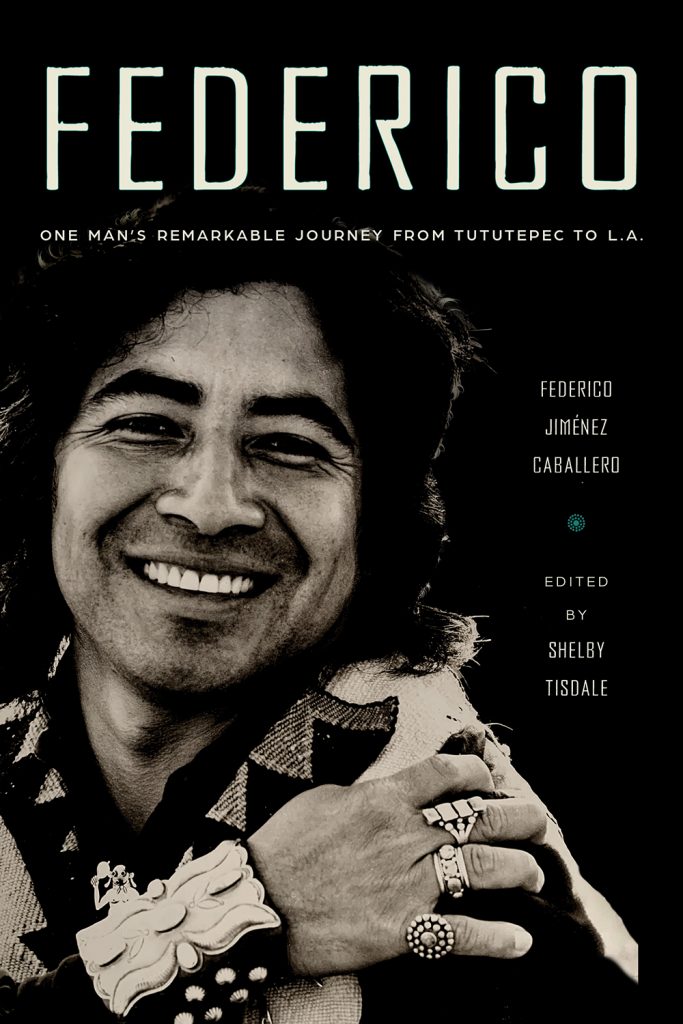
How did a young boy from Tututepec, Oaxaca, become a famous Indigenous jewelry artist and philanthropist in Los Angeles? In Federico: One Man’s Remarkable Journey from Tututepec to L.A., Federico Jiménez Caballero tells his remarkable story of willpower, curiosity, hard work, and passion that changed his life forever. Edited by Shelby Tisdale.

“A remarkable narrative telling of Indigenous origins, transformation in the city, and eventual migration to the United States, Federico by Federico Jiménez Caballero brings life to a unique story beginning in rural Oaxaca and ending in Los Angeles.”—Anna M. Nogar, author of Quill and Cross in the Borderlands: Sor María de Ágreda and the Lady in Blue, 1628 to the Present
In UNDOCUMENTS, John-Michael Rivera remixes the forms and styles of the first encyclopedia of the New World, the Florentine Codex, in order to tell a modern story of Greater Mexico in our current technology-heavy age, wherein modern lawmakers and powerful global figures desire to classify, deport, and erase immigrants and their experiences.

“A tour de force, UNDOCUMENTS breaks rules and creates new ones. Through deft handling of texts, both theoretical and historical, Rivera offers us a compendium of diverse people and items such as documents, poems, the Florentine Codex, Anzaldúa, Bataille, [and] philosophy, along with objects like el molcajete. Using a true mestizaje of genre and approaches, he cooks up a rich poetic stew that is stimulating, intriguing, and nourishing.”—Norma Elia Cantú, author of Cabañuelas: A Novel
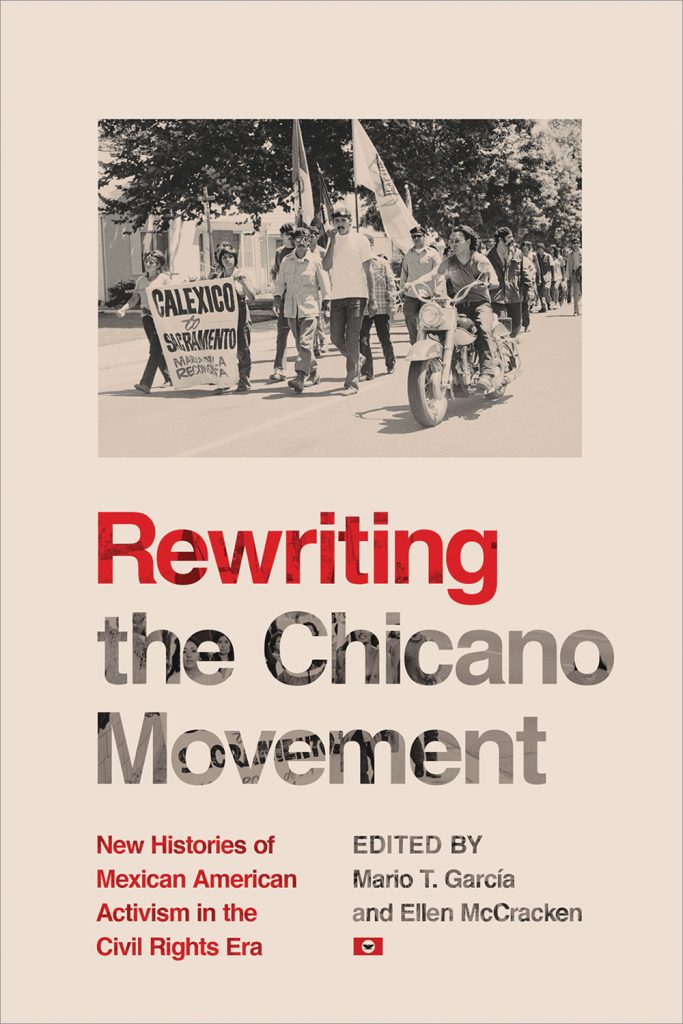
Edited by Mario T. García and Ellen McCracken, Rewriting the Chicano Movement: New Histories of Mexican American Activism in the Civil Rights Era is a collection of powerful new essays on the Chicano Movement that expand and revise our understanding of the movement. These essays capture the commitment, courage, and perseverance of movement activists, both men and women, and their struggles to achieve the promises of American democracy.

“Conversation about the Chicano Movement is far from over—in fact, it is continuing and getting reenergized all the time. Here, veteran and rising scholars across a variety of disciplines give us fascinating, multi-sited snapshots of this political moment in American history.”—Lori A. Flores, author of Grounds for Dreaming: Mexican Americans, Mexican Immigrants, and the California Farmworker Movement
In Empowered!: Latinos Transforming Arizona Politics, Lisa Magaña and César S. Silva argue that the state of Arizona is more inclusive and progressive then it has ever been. Following in the footsteps of grassroots organizers in California and the southeastern states, Latinos in Arizona have struggled and succeeded to alter the anti-immigrant and racist policies that have been affecting Latinos in the state for many years. Draconian immigration policies have plagued Arizona’s political history. Empowered! shows innovative ways that Latinos have fought these policies.

“This study offers a compelling account of how Latinos in Arizona organized and increased their electoral clout to change the landscape of state politics. Through grassroots networks and dogged determination, Latinos successfully pushed back on anti-immigrant and anti-Latino policies and politicians.”—Christine Marie Sierra, co-author of Contested Transformation: Race, Gender, and Political Leadership in 21st Century America
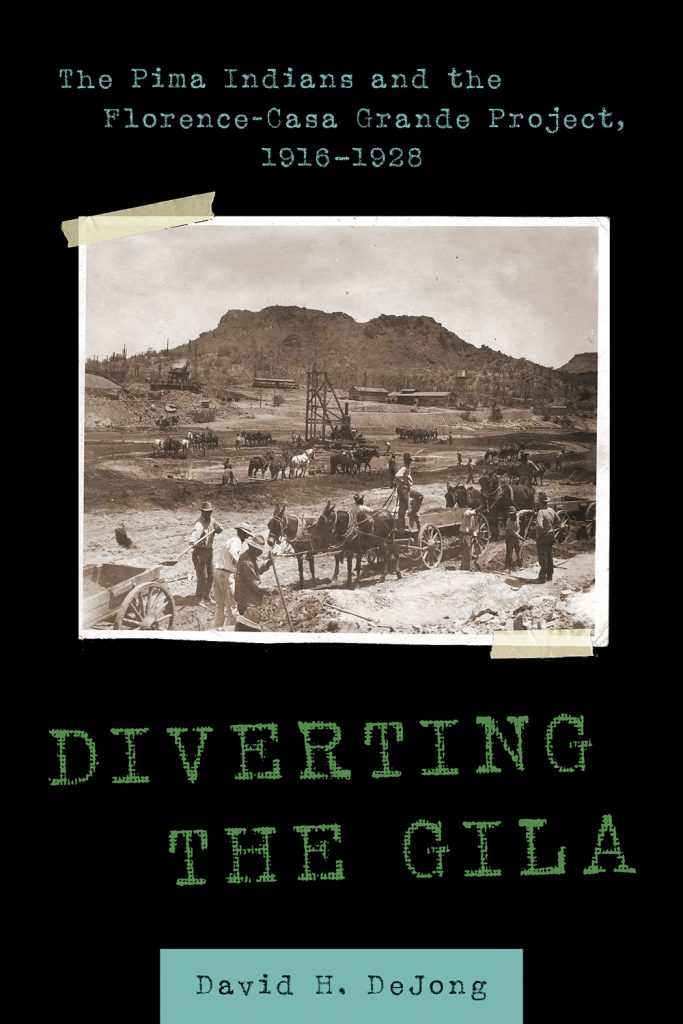
David H. DeJong‘s Diverting the Gila: The Pima Indians and the Florence-Casa Grande Project, 1916–1928, explores the complex web of tension, distrust, and political maneuvering to divide and divert the scarce waters of the Gila River. Residents of Florence, Casa Grande, and the Pima Reservation fought for vital access to water rights. As was often the case in the West, well-heeled, nontribal political interests manipulated the laws at the expense of the Indigenous community.

“The author provides a detailed study of good intentions, betrayal, and compromise to resolve the use of the Gila River by the Pima and white farmers in central Arizona. It also is the story of greed with an underlying foundation of racism on the part of white landowners against the Pima. In Arizona and the West, water is power—economic, social, and political. Its use is not neutral, and the Pima did not have it.”—R. Douglas Hurt, author of The Green Revolution in the Global South: Science, Politics, and Unintended Consequences
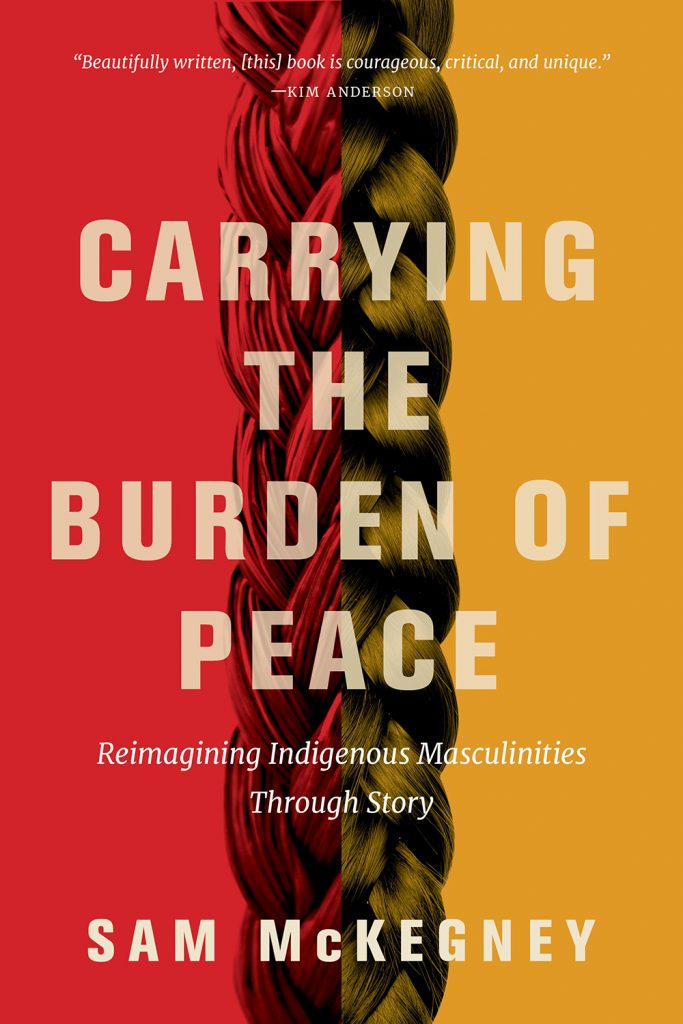
Carrying the Burden of Peace: Reimagining Indigenous Masculinities weaves together stories of Indigenous life, love, eroticism, pain, and joy to map the contours of diverse, empowered, and non-dominant Indigenous masculinities. Author Sam McKegney explores Indigenous literary art for understandings of masculinity that exceed the impoverished inheritance of colonialism.

“I came away from the manuscript convinced of the need for this work, as I find it exemplary of the kind of careful, ethically attentive, and deeply generous scholarship we need more of.”—Daniel Heath Justice, author of Why Indigenous Literatures Matter
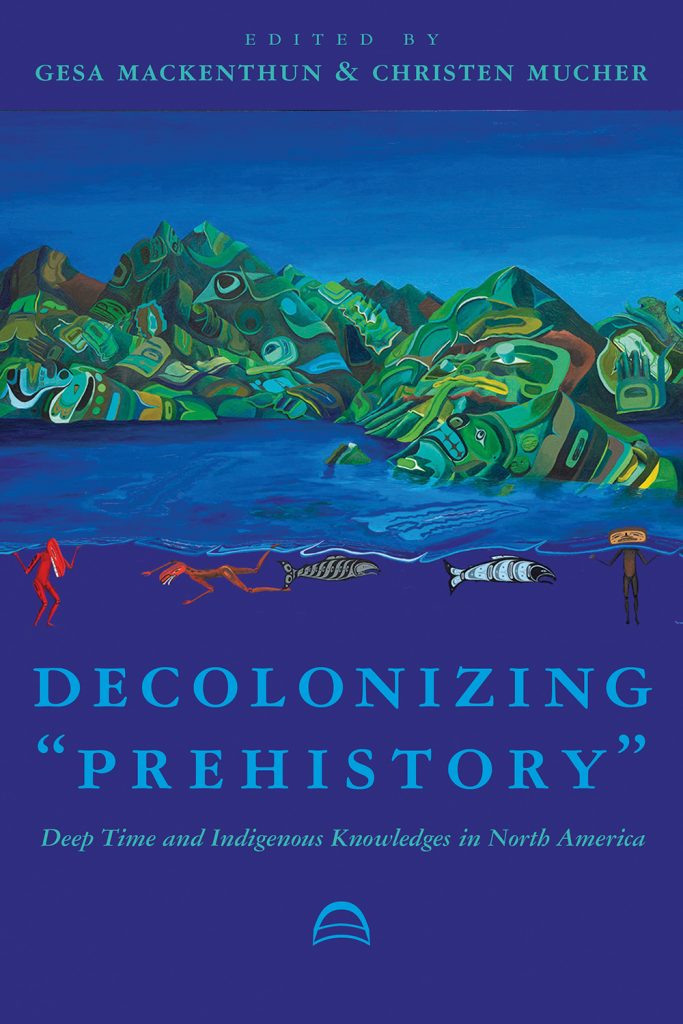
Decolonizing “Prehistory”: Deep Time and Indigenous Knowledges in North America combines a critical investigation of the documentation of the American deep past with perspectives from Indigenous traditional knowledges and attention to ongoing systems of intellectual colonialism. Edited by Gesa Mackenthun and Christen MucherDecolonizing “Prehistory” brings together experts from American studies, archaeology, anthropology, legal studies, history, and literary studies, this interdisciplinary volume offers essential information about the complexity and ambivalence of colonial encounters with Indigenous peoples in North America, and their impact on American scientific discourse.

Decolonizing “Prehistory” carries readers to the rugged landscapes of the Pacific Northwest to hear how they are known by communities with millennial depth as residents. The book adds breadth with chapters on the Penobscot River People, Maya communities living at tourist destinations Coba and Tulum, and Mammoth Cave. Philip Deloria concludes the book with a reading of his father’s no-holds-barred assertion of flaws in Western science, a position that time has brought closer to anthropologists’ own critiques seen in this volume.”—Alice Beck Kehoe, author of Traveling Prehistoric Seas: Critical Thinking on Ancient Transoceanic Voyages
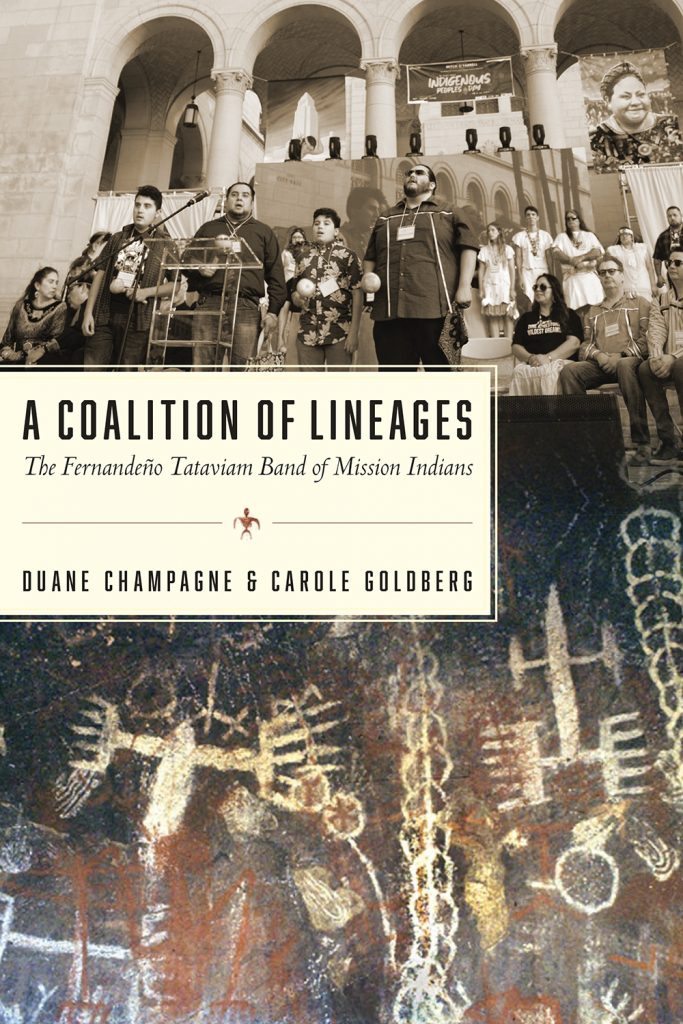
Authors Duane Champagne and Carole Goldberg are leading experts in Native sovereignty policies and histories. In A Coalition of Lineages: The Fernandeño Tataviam Band of Mission Indians, they worked in collaboration with members of the Fernandeño Tataviam Band of Mission Indians to illustrate how the community formed and persisted. A Coalition of Lineages is not only the story of a Native Southern California community, it is also a model for multicultural tribal development for recognized and nonrecognized Indian nations in the United States and elsewhere.

“Written to dispel the idea that these lineages ever ceased to exist under colonial power, this book offers a conceptual framework around the lineage that can be useful to historians and scholars.”—Lisbeth Haas, author of Saints and Citizens: Indigenous Histories of Colonial Missions and Mexican California
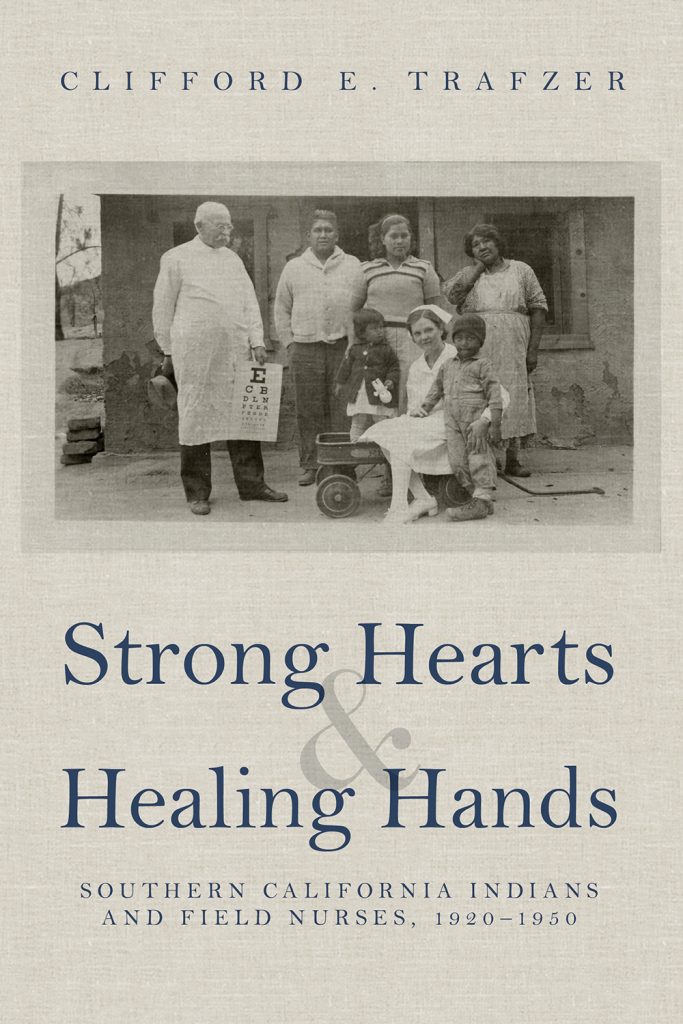
Strong Hearts and Healing Hands: Southern California Indians and Field Nurses, 1920–1950, tells the story of a bold program in public health that began in 1924 in the United States. The Indian Service of the United States hired its first nurses to work among Indians living on reservations. This corps of white women were dedicated to improving Indian health. In 1928, the first field nurses arrived in the Mission Indian Agency of Southern California. These nurses visited homes and schools, providing public health and sanitation information regarding disease causation and prevention. Over time, field nurses and Native people formed a positive working relationship that resulted in the decline of mortality from infectious diseases.

“Clifford Trafzer brings his many years of experience and unique set of knowledge to uncover the understudied role of field nurses from the Progressive Era to the 1950s as they collaborated closely with a multitude of Native Americans in Southern California to promote public health and counter the onslaught of tuberculosis and other Western diseases that afflicted them as a result of being confined to reservations.”—Andrae M. Marak, co-author of At the Border of Empires
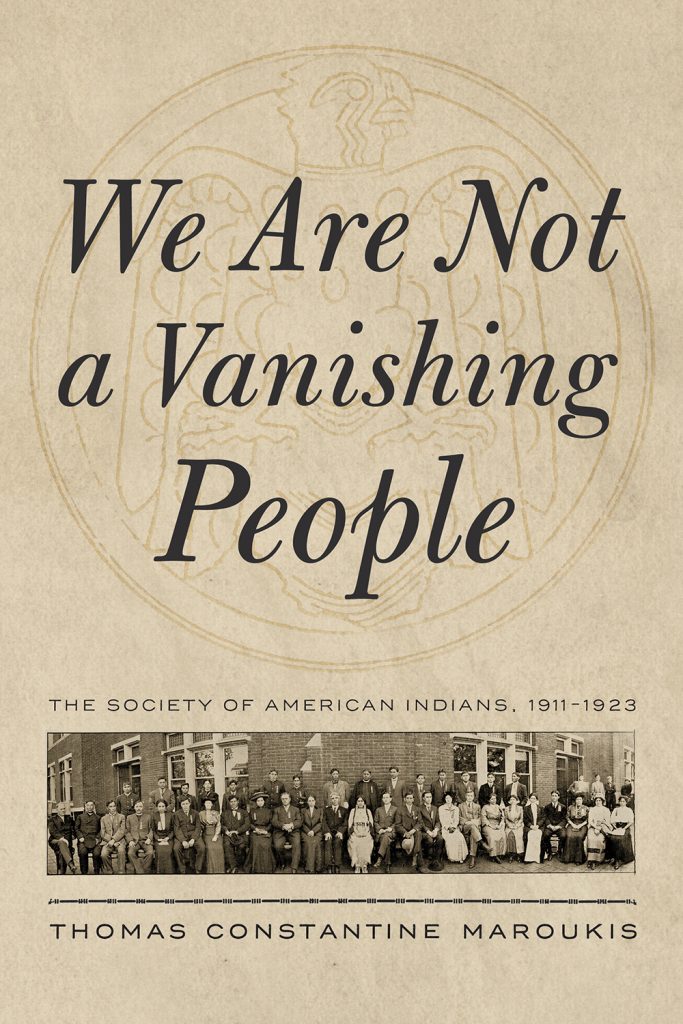
In 1911, a group of Native American intellectuals and activists joined together to establish the Society of American Indians (SAI), an organization by Indians for Indians. It was the first such nationwide organization dedicated to reform. In We Are Not a Vanishing People: The Society of American Indians, 1911–1923, Thomas Constantine Maroukis show how this new organization used a strategy of protest and activism that carried into the rest of the twentieth century. Some of the most prominent members included Charles A. Eastman (Dakota), Arthur Parker (Seneca), Carlos Montezuma (Yavapai), Zitkala-Ša (Yankton Sioux), and Sherman Coolidge (Peoria).

“This is an essential book for everyone who is interested in modern American Indian History. Thomas Maroukis examines how American Indian leaders organized, used their education (sometimes disagreed with each other) and addressed critical issues in Indian Country in the early 20th century. He convincingly argues that these new activists pushed back against the government and voiced a clear message that Indians had not vanished!”—Donald L. Fixico, author of Indian Resilience and Rebuilding: Indigenous Nations in the Modern American West
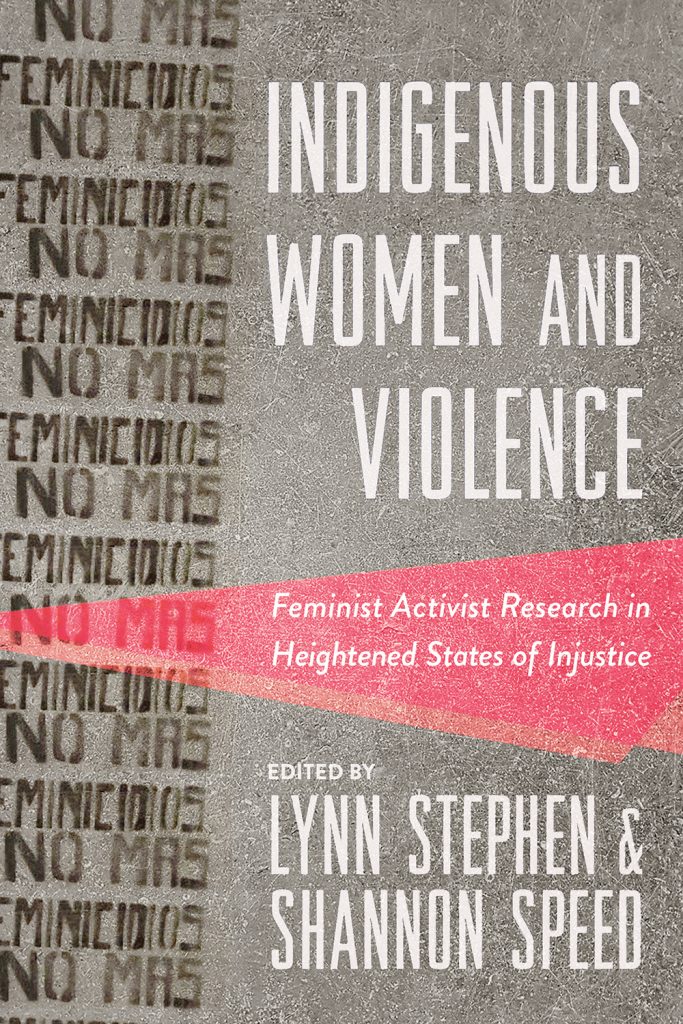
Indigenous Women and Violence: Feminist Activist Research in Heightened States of Injustice offers an intimate view of how settler colonialism and other structural forms of power and inequality created accumulated violences in the lives of Indigenous women. Edited by Lynn Stephen and Shannon Speed, this volume uncovers how these Indigenous women resist violence in Mexico, Central America, and the United States, centering on the topics of femicide, immigration, human rights violations, the criminal justice system, and Indigenous justice.

“Bringing together leading Indigenous and non-Indigenous scholars, this volume explores the connections between structural, extreme, and everyday violence against Indigenous women across time and borders. It makes important contributions to current debates about gender violence and research methods.”—Rachel Sieder, editor of Demanding Justice and Security: Indigenous Women and Legal Pluralities in Latin America
Tourism Geopolitics: Assemblages of Infrastructure, Affect, and Imagination, edited by Mary MostafanezhadMatilde Córdoba Azcárate, and Roger Norum homes in on tourism and its geopolitical entanglements by examining its contemporary affects, imaginaries, and infrastructures. It develops the concept of tourism geopolitics to reveal the growing centrality of tourism in geopolitical life, as well as the geopolitical nature of the tourism encounter.

This volume is a vital read for critical geographers, anthropologists, and political scientists, as well as scholars of tourism and cultural studies.
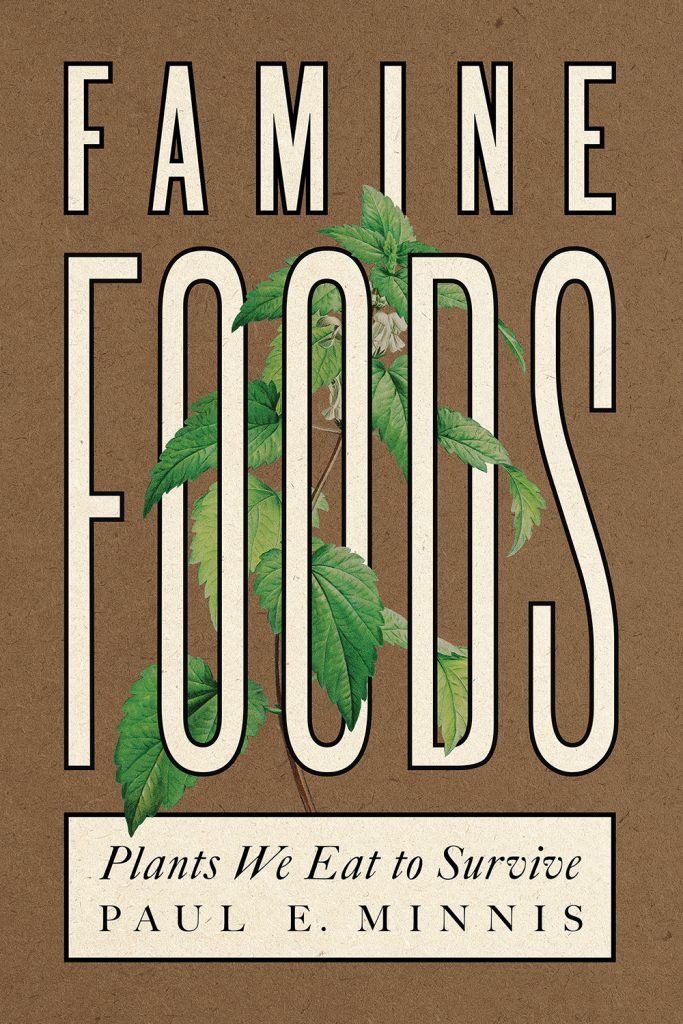
In Famine Foods: Plants We Eat to Survive, Paul E. Minnis focuses on the myriad plants that have sustained human populations throughout the course of history, unveiling those that people have consumed, and often still consume, to avoid starvation. For the first time, this book offers a fascinating overview of famine foods—how they are used, who uses them, and, perhaps most importantly, why they may be critical to sustain human life in the future.

“This book represents decades of detailed research by one of North America’s top ethnobiologists. Minnis draws on multiple sources to create this unique compendium of plants that humans have turned to during times of food scarcity. Critically important to peoples of the past, this knowledge may be just as important to future populations.”—Nancy J. Turner, author of Ancient Pathways, Ancestral Knowledge: Ethnobotany and Ecological Wisdom of Indigenous Peoples of Northwestern North America
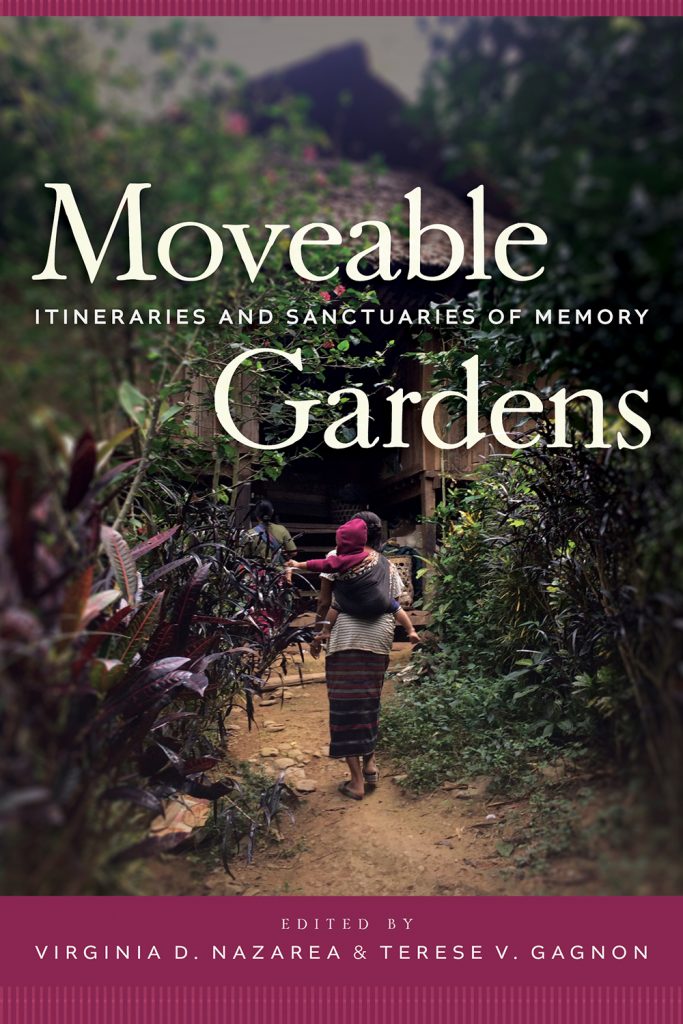
Moveable Gardens: Itineraries and Sanctuaries of Memory, edited by Virginia D. Nazarea and Terese Gagnon, highlights itineraries and sanctuaries in an era of massive dislocation, addressing concerns about finding comforting and familiar refuges in the Anthropocene. The worlds of marginalized individuals who live in impoverished rural communities, many Indigenous peoples, and refugees are constantly under threat of fracturing. Yet, in every case, there is resilience and regeneration as these individuals re-create their worlds through the foods, traditions, and plants they carry with them into their new realities.

“This carefully edited volume, well curated and well integrated, addresses a set of interrelated complexities critical to our current planetary era. United by two thematic threads, itineraries and sanctuaries, the chapters successfully illuminate and detail specific contexts while revealing commonalities across geographies.”—Ann Grodzins Gold, author of Shiptown: Between Rural and Urban North India
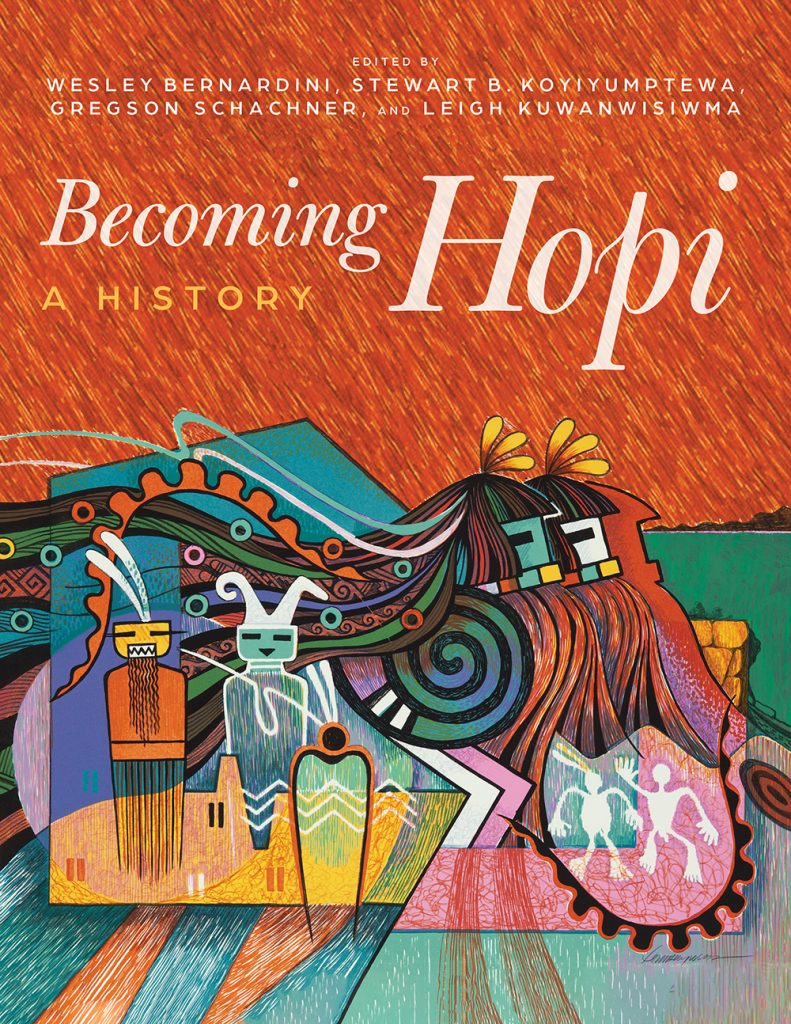
Becoming Hopi: A History is a comprehensive look at the history of the people of the Hopi Mesas as it has never been told before. The Hopi Tribe is one of the most intensively studied Indigenous groups in the world. Most popular accounts of Hopi history romanticize Hopi society as “timeless.” The archaeological record and accounts from Hopi people paint a much more dynamic picture, full of migrations, gatherings, and dispersals of people; a search for the center place; and the struggle to reconcile different cultural and religious traditions. Edited by Wesley BernardiniStewart B. KoyiyumptewaGregson Schachner, and Leigh J. Kuwanwisiwma, Becoming Hopi weaves together evidence from archaeology, oral tradition, historical records, and ethnography to reconstruct the full story of the Hopi Mesas, rejecting the colonial divide between “prehistory” and “history.”

Becoming Hopi brilliantly combines Hopi and non-Hopi voices in helping to rewrite Hopi history and the process of becoming Hopi. The coverage is extensive—both for Hopi as well as for wide swaths of the northern Southwest—and each chapter has something new to offer in terms of innovative data collection and interpretation. The combination and use of traditional, archaeological, and documentary histories unfolds a rare perspective on what it means to be Hopi.”—Barbara Mills, co-editor of The Oxford Handbook of Southwest Archaeology
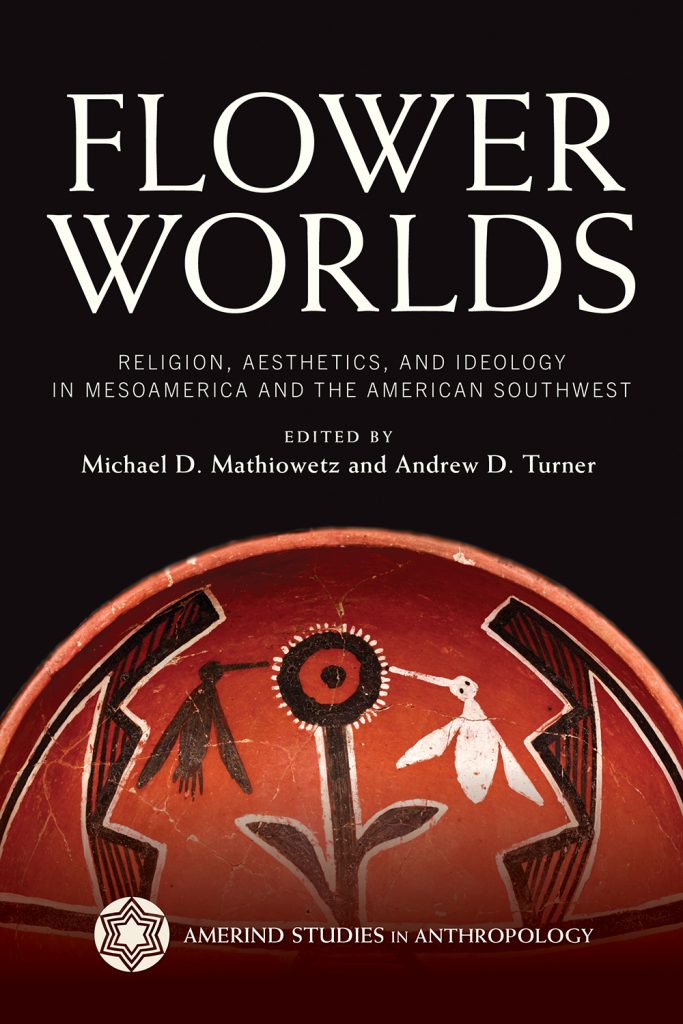
The recognition of Flower Worlds is one of the most significant breakthroughs in the study of Indigenous spirituality in the Americas. These worlds are solar and floral spiritual domains that are widely shared among both pre-Hispanic and contemporary Native cultures in Mesoamerica and the American Southwest. Flower Worlds: Religion, Aesthetics, and Ideology in Mesoamerica and the American Southwest is the first volume, edited by Michael Mathiowetz and Andrew Turner, to bring together a diverse range of scholars to create a truly multidisciplinary understanding of Flower Worlds.

“… the authors are coming at Flower World concepts from different directions and perspectives, and these different ideas and perspectives speak together in a way that helps further the conversation. This volume is not about concluding ideas but about continuing the conversation. I was impressed by the multitude of strong voices—both past and present—representing elements of the Flower World. This volume will be of lasting importance in the cross-cultural study of Flower Worlds.”—John G. Douglass, co-editor ofThe Global Spanish Empire: Five Hundred Years of Place Making and Pluralism
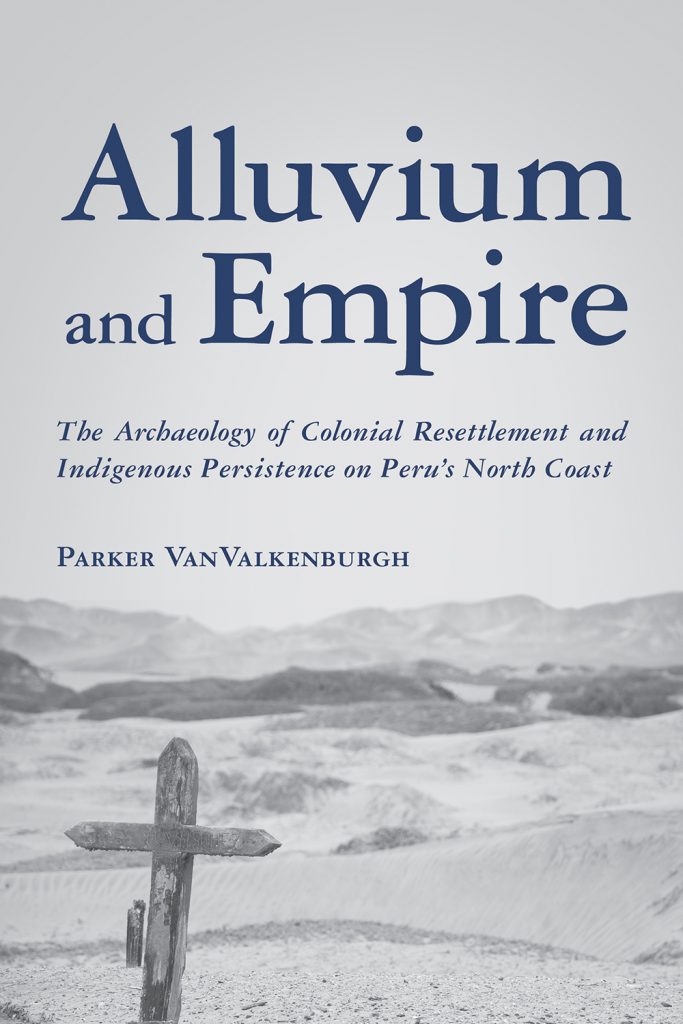
Alluvium and Empire: The Archaeology of Colonial Resettlement and Indigenous Persistence on Peru’s North Coast uncovers the stories of Indigenous people who were subject to one of the largest waves of forced resettlement in human history, the Reducción General. In 1569, Spanish administrators attempted to move at least 1.4 million Indigenous people into a series of planned towns called reducciones, with the goal of reshaping their households, communities, and religious practices. However, in northern Peru’s Zaña Valley, this process failed to go as the Spanish had planned. In Alluvium and Empire, author Parker VanValkenburgh explores both the short-term processes and long-term legacies of Indigenous resettlement in this region, drawing particular attention to the formation of complex relationships between Indigenous communities, imperial institutions, and the dynamic environments of Peru’s north coast.

“This book represents a much-welcome approach to the archaeology of empire. It combines a sophisticated theoretical framework with rigorous archival and archaeological methods to shed valuable new light on the history of Spanish empire building in Peru.”—Craig Cipolla, author of Foreign Objects: Rethinking Indigenous Consumption in American Archaeology

The Pluto System After New Horizons, edited by S. Alan SternRichard P. BinzelWilliam M. GrundyJeffrey M. Moore, and Leslie A. Young, seeks to become the benchmark for synthesizing our understanding of the Pluto system. The volume’s lead editor is S. Alan Stern, who also serves as NASA’s New Horizons Principal Investigator; co-editors Richard P. Binzel, William M. Grundy, Jeffrey M. Moore, and Leslie A. Young are all co-investigators on New Horizons. Leading researchers from around the globe have spent the last five years assimilating Pluto system flyby data returned from New Horizons. The chapters in this volume form an enduring foundation for ongoing study and understanding of the Pluto system.
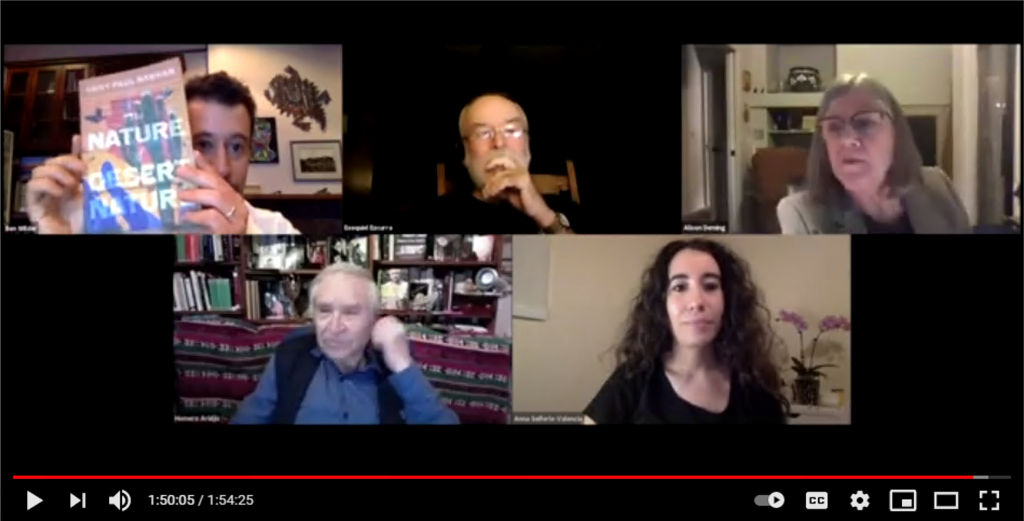
Watch: Tumamoc Desert Lab Book Release Event for ‘The Nature of Desert Nature’

December 21, 2021

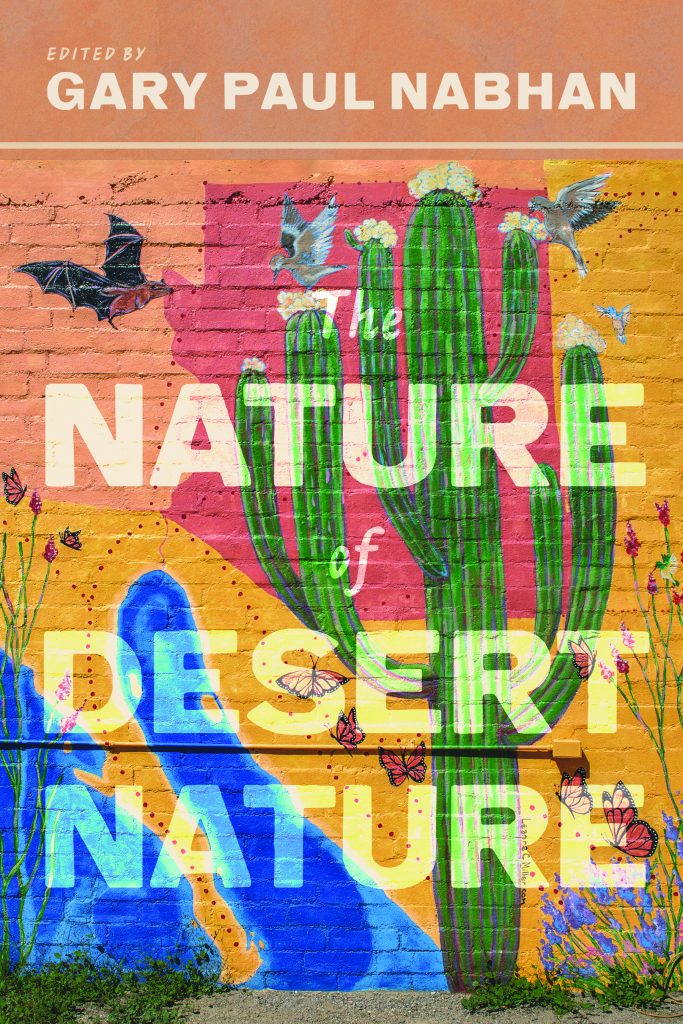
The Desert Laboratory on Tumamoc Hill hosted a special online event on December 9, 2020 to celebrate the book release of The Nature of Desert Nature, edited by Gary Nabhan.

In this new collection of essays and more, Nabhan invites a prism of voices—friends, colleagues, and advisors from his more than four decades of study of deserts—to bring their own perspectives. Scientists, artists, desert contemplatives, poets, and writers bring the desert into view and investigate why these places compel us to walk through their sands and beneath their cacti and acacia.

Introduced by Desert Laboratory Director Ben Wilder, Nabhan was joined by contributors Homero Aridjis, poet and environmental leader; Exequiel Ezcurra, ecologist and science diplomat; and Alison Hawthorne Deming, poet and Regents Professor.

Girl of New Zealand Chosen as a 2020 Choice Outstanding Academic Title

December 18, 2020

We are thrilled to announce that Michelle Erai’s Girl of New Zealand was chosen as a 2020 Choice Outstanding Academic Title!

These outstanding works have been selected for their excellence in scholarship and presentation, the significance of their contribution to the field, and their value as an important treatment of their subject.

Girl of New Zealand presents a nuanced insight into the way violence and colonial attitudes shaped the representation of Māori women and girls. Michelle Erai examines more than thirty images of Māori women alongside the records of early missionaries and settlers in Aotearoa, as well as comments by archivists and librarians, to shed light on how race, gender, and sexuality have been ascribed to particular bodies.

Congratulations, Michelle!

Explore Our Recent Ethnobiology and Ethnobotany Titles

December 17, 2020

The University of Arizona Press publishes a wide range of fascinating ethnobiology and ethnobotany titles. Below, read about our most recent titles in these fields.

Use the code AZETHNO20 to receive 35% off all of the titles mentioned in this post, plus free U.S. shipping, until January 15, 2021.

Do you have an ethnobiology or ethnobotany manuscript? To learn more about our publishing program, visit here.

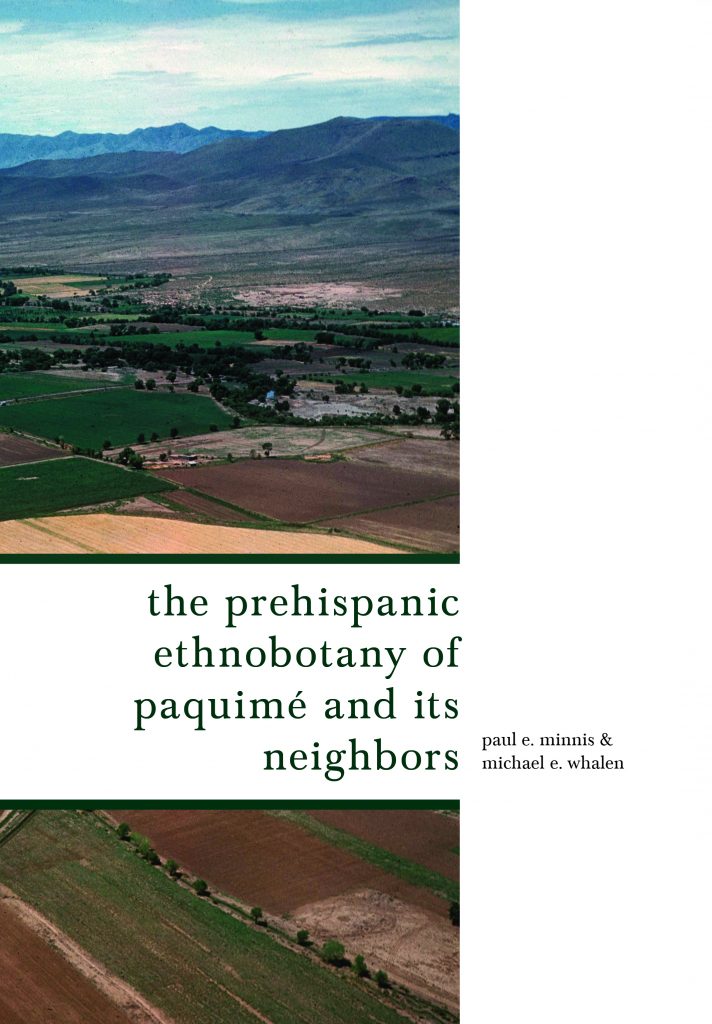
The Prehispanic Ethnobotany of Paquimé and Its Neighbors is a major ethnobotanical study for the ancient U.S. Southwest and northwestern Mexico. The results reorient our perspective in the rise of one of the most impressive communities in the international region.

See some photographs and field notes from editors Paul Minnis and Michael Whalen here.

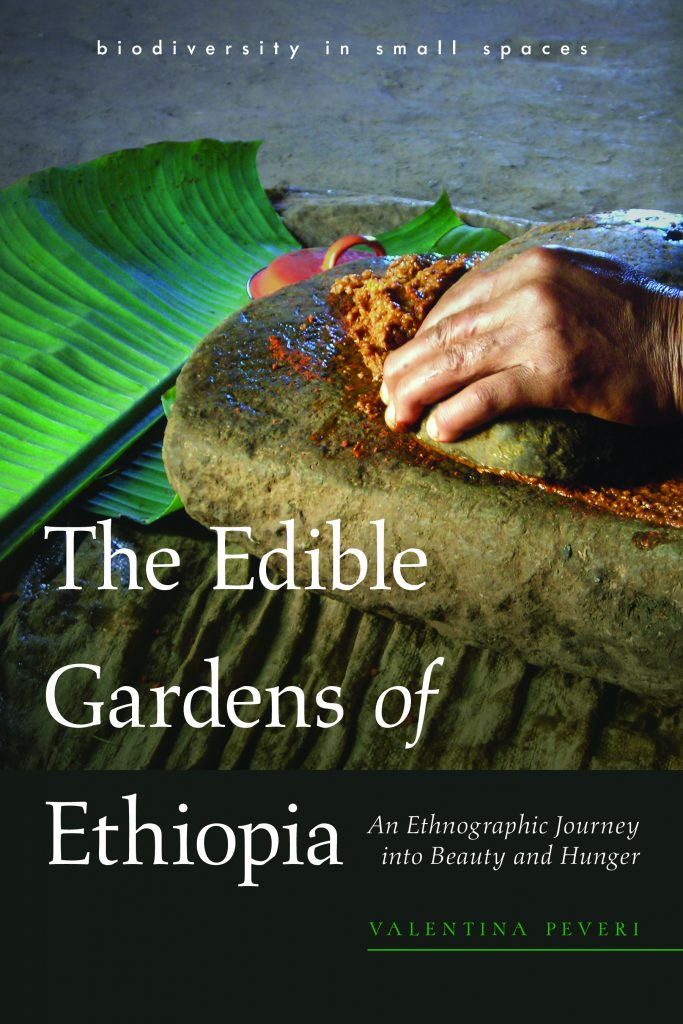
Based on Valentina Peveri’s prolonged engagement with this “virtuous” plant of southwestern Ethiopia, The Edible Gardens of Ethiopia provides a nuanced reading of the ensete ventricosum (avant-)garden and explores how the life in tiny, diverse, and womanly plots may indeed offers alternative visions of nature, food policy, and conservation efforts.

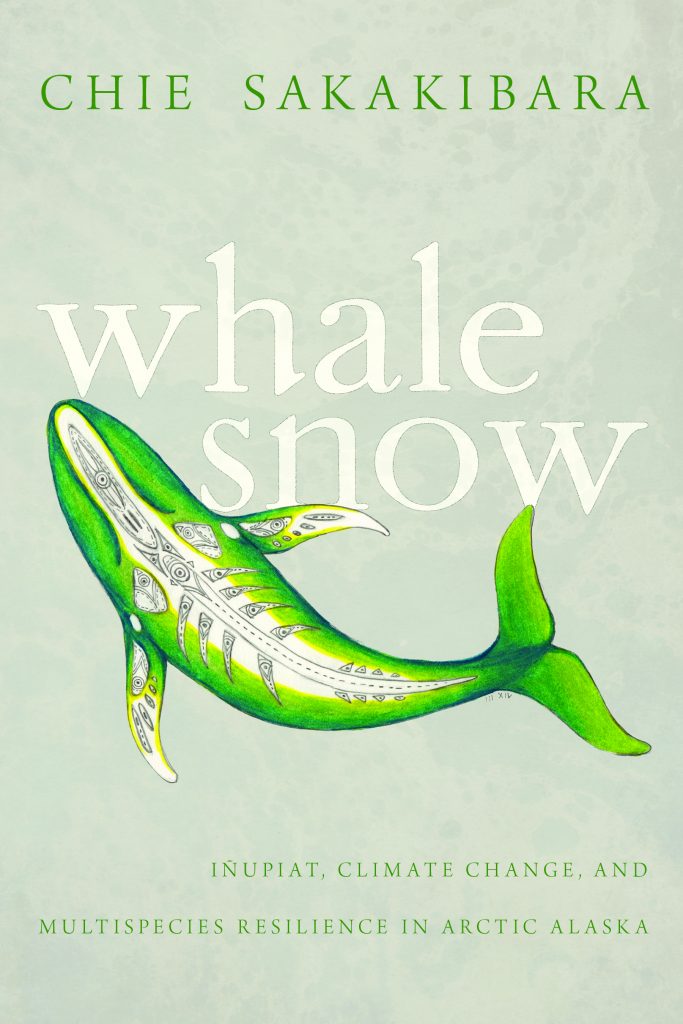
Chie Sakakibara shows how knots of connection came into being between humans and nonhuman others and how such intimate and intense relations will help humans survive the Anthropocene. Whale Snow offers an important and thought-provoking look at global climate change as it manifests in the everyday life of the Iñupiat in Arctic Alaska.

Read a Q & A with author Chie Sakakibara here.

The desert inspires wonder. Attending to history, culture, science, and spirit, The Nature of Desert Nature celebrates the bounty and the significance of desert places.

Watch editor Gary Nabhan and contributor Francisco Cantú discuss The Nature of Desert Nature here.

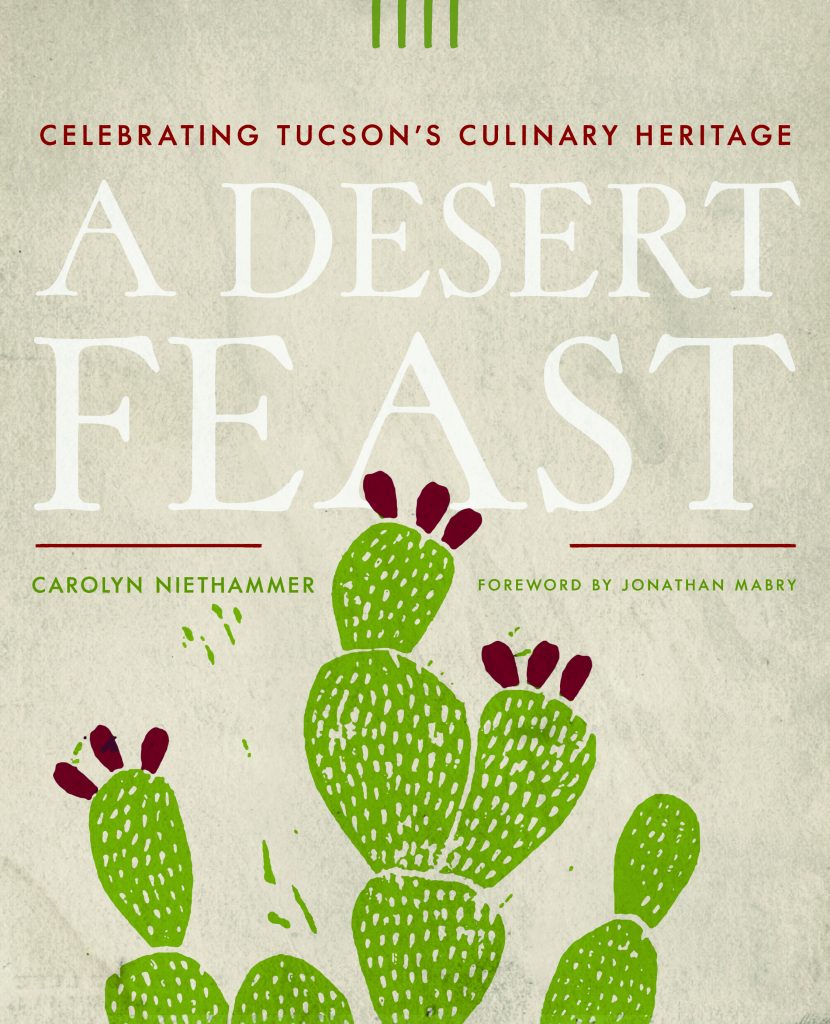
A Desert Feast offers a food pilgrimage, where stories and recipes demonstrate why the desert city of Tucson became American’s first UNESCO City of Gastronomy. You’ll meet the farmers, small-scale food entrepreneurs, and chefs who are dedicated to making Tucson taste like nowhere else.

Watch the Tucson Festival Of Books’ virtual event with Carolyn Niethammer & Andi Berlin here, then watch Carolyn introduce her new book here. Read an excerpt from A Desert Feast here, then visit our Facebook page or YouTube page to watch a video series about the book.

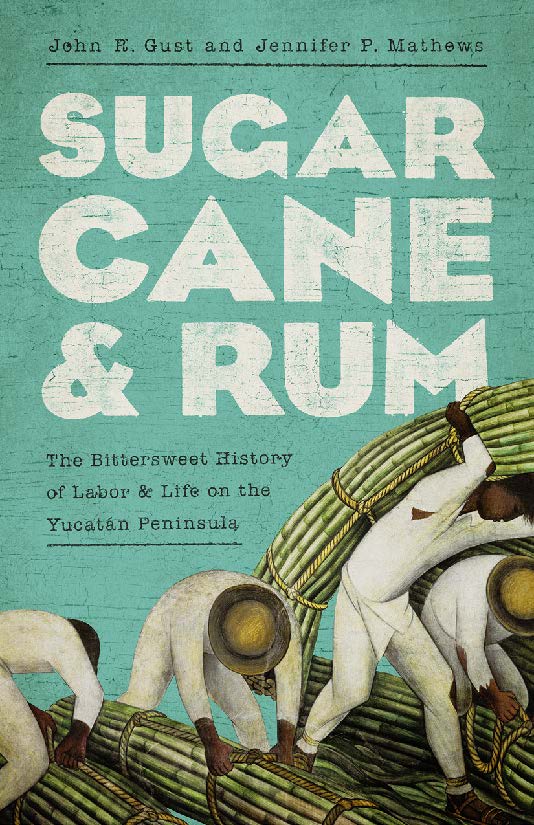
More than a history of coveted commodities, the unique story that unfolds in John R. Gust and Jennifer P. Mathews’s new history Sugarcane and Rum is told through the lens of Maya laborers who worked under brutal conditions on small haciendas to harvest sugarcane and produce rum in the Yucatan Peninsula of Mexico.

Read an excerpt from Sugarcane and Rum here. We are thrilled that Smithsonian Magazine selected Sugarcane and Rum for their weekly reading series!

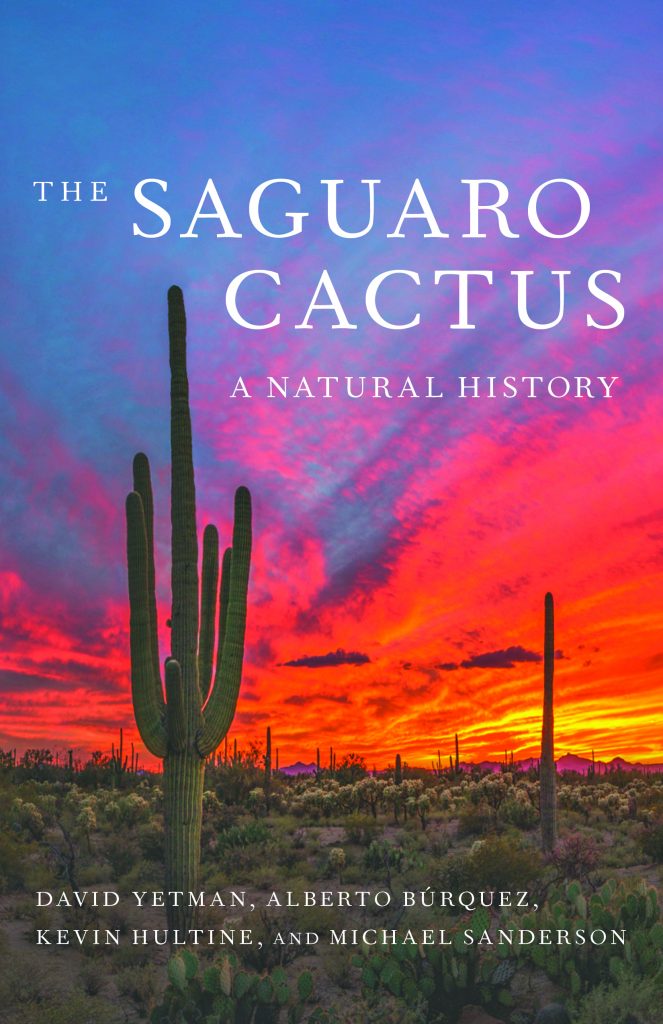
The saguaro, with its great size and characteristic shape, has become the emblem of the Sonoran Desert of southwestern Arizona and northwestern Mexico. The Saguaro Cactus offers a complete natural history of this enduring cactus, the largest and tallest in the United States. From its role in Sonoran Desert ecology, to its adaptations to the desert climate, to its sacred place in Indigenous culture, this book offers a definitive source on a distinguished desert plant.

Read an excerpt from The Saguaro Cactus here. Read about a great book release event we hosted for The Saguaro Cactus, back in the pre-covid days, here.

WSJ: Stephen Pyne on ‘The Year Wildfires in the West Spread Like the Plague’

December 12, 2020

In the 2020 year in review issue of the Wall Street Journal, author Stephen Pyne explains why 2020 brought a better understanding of the causes of wildfires and what needs to be done. He writes:

“Surely the dominant story of 2020 will be the coronavirus pandemic and the economic upheaval and political fallout it caused. But the enduring images of the year may well be of another contagion—the fires that splashed across the globe and the havoc they wrought where humanity’s and nature’s economies met.

The fires seemed everywhere, partly because of extensive media coverage—fires are visually graphic and guaranteed to grab attention. But this wasn’t hype. The fires were real. Many occurred in the usual places—like California, African savannas and Australia—that are built to burn, though this time they came with performance enhancers. Few of such fires were individually unprecedented, but they were so many they swarmed, and they came in serial outbreaks. In their ensemble they qualify as epic.”

Read more

Watch: Nathaniel Morris with UCLAmericas Discusses Soldiers, Saints, and Shamans

December 9, 2020

The UCL Institute of the Americas held a book release celebration for University of Arizona Press author Nathaniel Morris on December 2, 2020.

Soldiers, Saints, and Shamans: Indigenous Communities and the Revolutionary State in Mexico’s Gran Nayar, 1910–1940 is Morris’ first book based on his extensive archival research and years of fieldwork in the rugged and remote Gran Nayar.

Morris shows that the Náayari, Wixárika, O’dam, and Mexicanero peoples were actively involved in the armed phase of the Mexican Revolution. This participation led to serious clashes between an expansionist, “rationalist” revolutionary state and the highly autonomous communities and heterodox cultural and religious practices of the Gran Nayar’s inhabitants.

Field Notes: Nathaniel Morris on Fiestas in the Mountains of Mexico

December 1, 2020

Leafing through documents in the archives could only ever tell historian Nathaniel Morris half of the story he was trying to piece together. He wanted to reconstruct the way in which the Mexican Revolution of 1910-1940 had unfolded in the remote, mountainous Gran Nayar region of western Mexico, and the effects this had had on the identities of its inhabitants. But few of the bandits, teachers, generals, politicians, agronomists or rebel guerrillas active there during that turbulent era left detailed records of their activities. And most of the local population – mostly Indigenous Náayari (Cora), Wixárika (Huichol), O’dam (Tepehuano) and Mexicanero people – had been illiterate, which meant their voices were also largely missing from the documentary record. It was vital, then, for Morris to travel to the Gran Nayar itself, to track down the area’s oldest remaining inhabitants and hear directly from them about how, and why, their forebears (and, in some cases, they themselves) had taken part in the peasant uprisings, military revolts, coups, agrarian reforms and radical cultural projects that swept Mexico during the first half of the twentieth century. These interviews form the core of Morris’ new book, Soldiers, Saints and Shamans, which explores the complex and often conflictive relations between Náayari, Wixárika, O’dam and Mexicanero communities and the revolutionary Mexican state.

Today we share a few of Morris’ photos and extended captions from his fieldwork, which offer insight into the stories and methods that have informed his work.

All photos and captions by Nathaniel Morris.

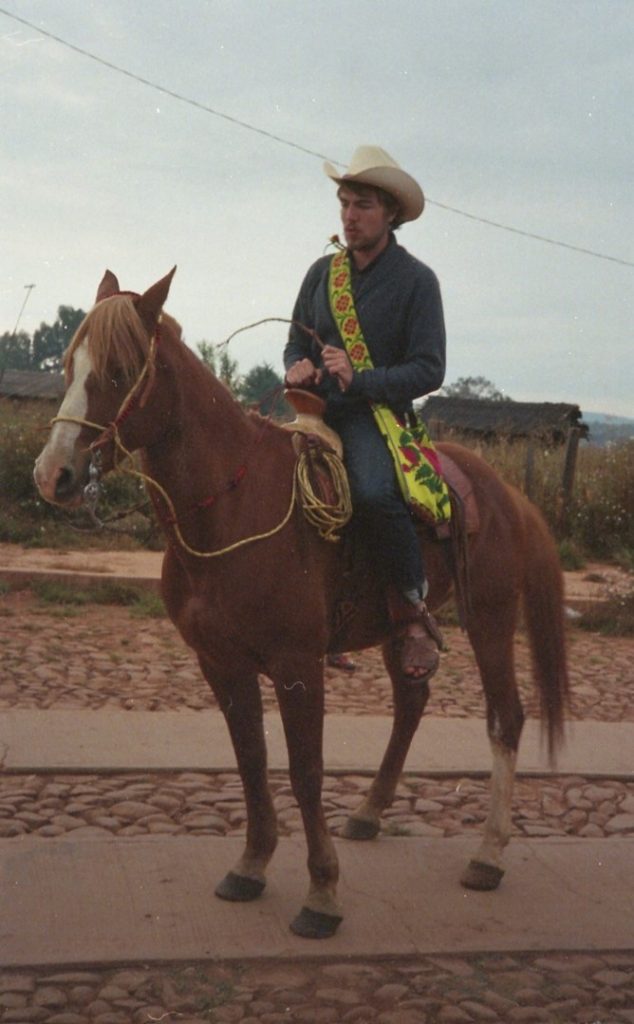
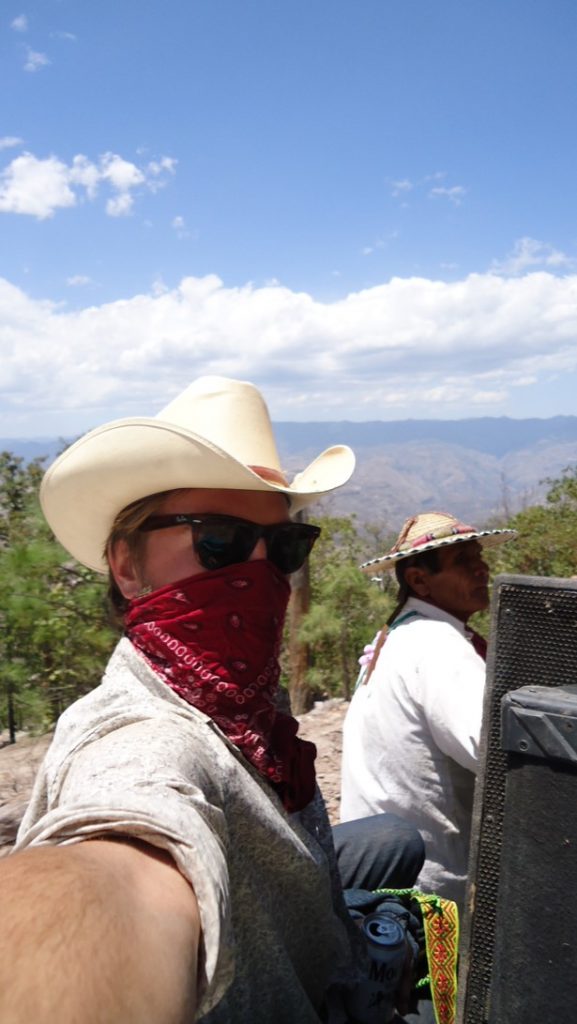
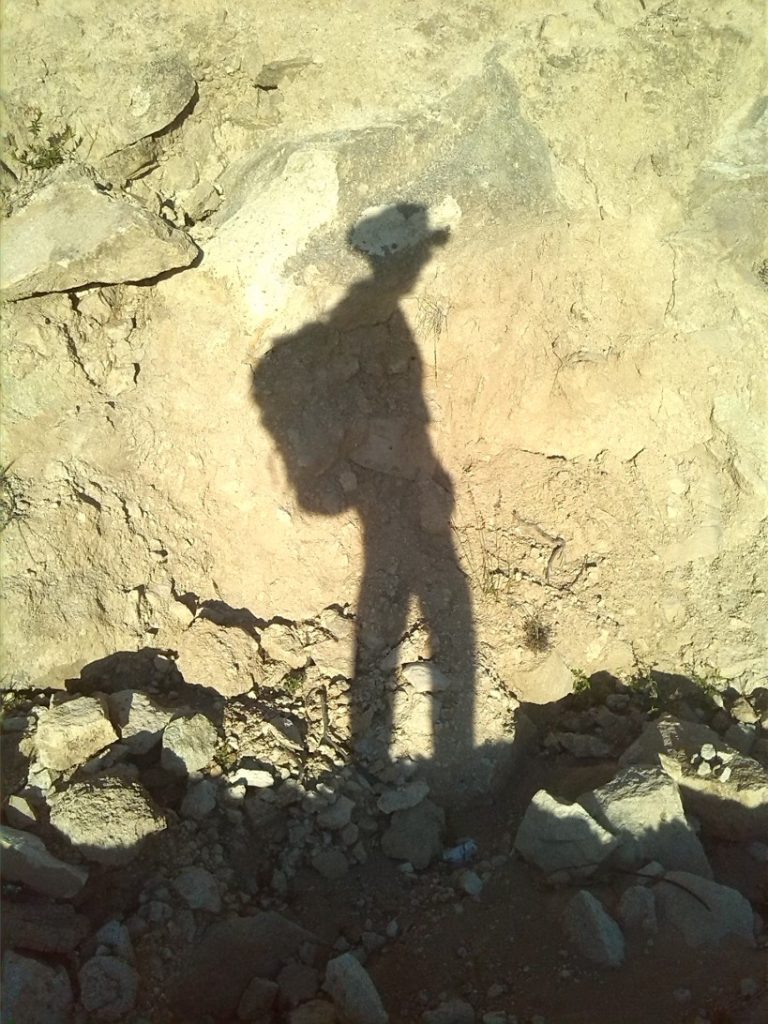
1: To carry out my research in the Gran Nayar – a region of mountains, canyons, pine forests and scrubland with a scattered population and few paved roads – I had to walk, hike, ride horses, and hitch rides in the backs of pick-up trucks. This sort of travel – often gruelling, sometimes scary, but always eye-opening – enabled me to track down many of the region’s surviving eyewitnesses to the revolution; and it also helped me to understand the diverse landscapes and climates in which they and their forebears have made their lives, and the routes and connections between places and people. The beliefs, practices, and the very ethnic identity of the Náayari, Wixárika, O’dam and Mexicanero peoples is completely tied up with the lands in which they live, which the gods brought into being to replace previous worlds destroyed as part of an ongoing “cosmic battle” between light and darkness, order and chaos, aridity and fertility. The story of this creation is inscribed in the geography of the Gran Nayar, which is strewn with thousands of sites identified with the gods and ancestors and their stories. In the Gran Nayar, land is simultaneously culture, identity, and history.

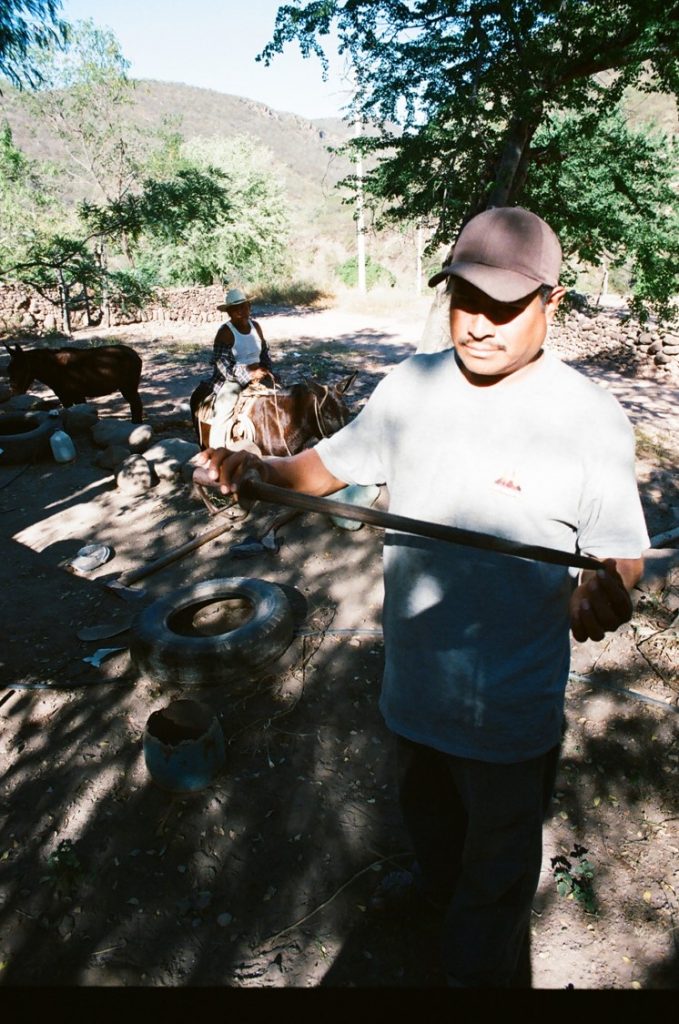
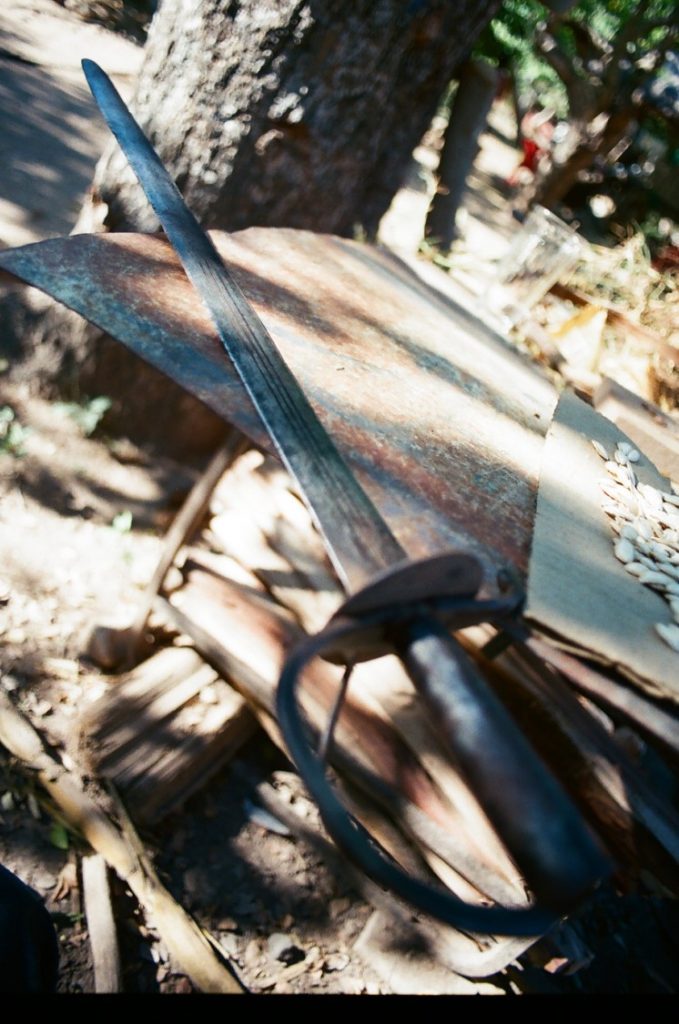
2: Here you can see the great-grandson of Mariano Mejía – one of the central characters in my book, and the single most powerful man in the whole Gran Nayar during the 1920s – showing me Mejía’s sword. Meeting the relatives of the historical figures I was investigating, hearing the stories that had been passed down within their families, and – as in this case – seeing and even being able to hold artefacts from the Revolutionary era, really helped me to connect to my research. While gathering this oral testimony I lived with Náayari, Wixárika, O’dam, Mexicanero and mestizo families. I ate their food, slept on their floors, learned a little (far too little) of their languages, and listened to their own stories — often sad, sometimes hilarious — of their own lives in the region. And so it became almost a personal quest for me to fill in this gaping hole in our records of the Revolution where the Gran Nayar should’ve been.

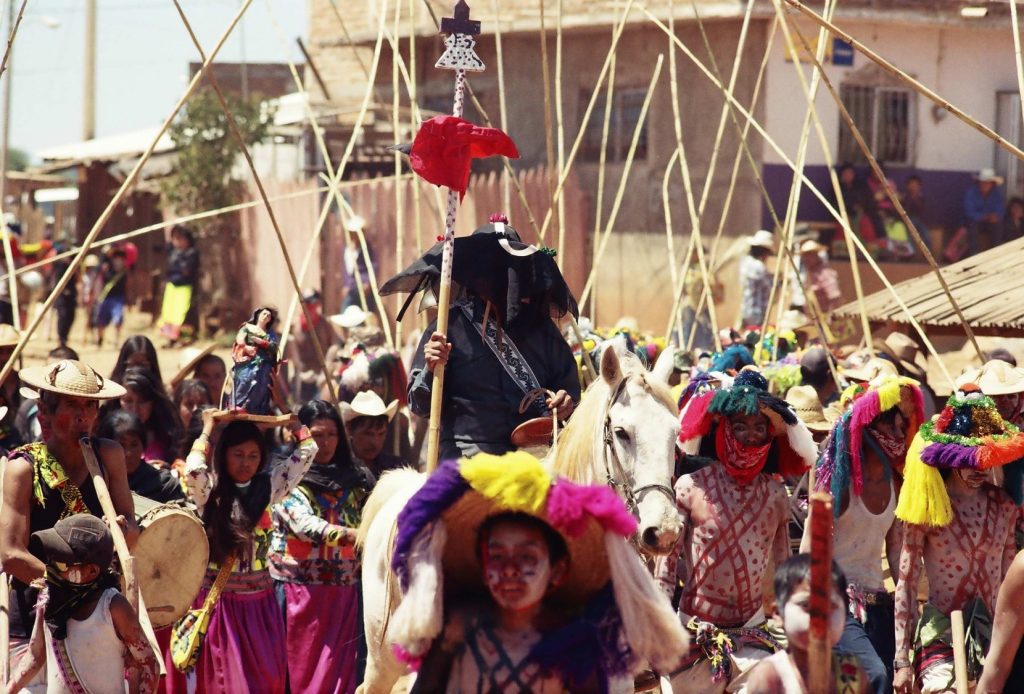
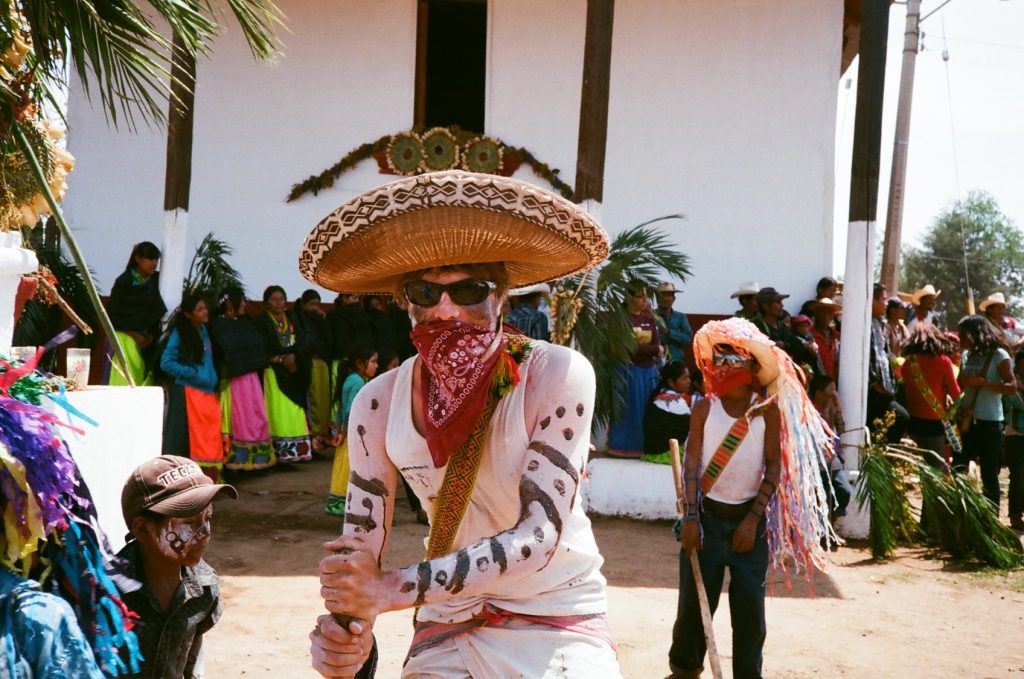
3: You can’t understand politics in the Gran Nayar – even today – without understanding local ceremonial practices, such as the Semana Santa (Holy Week) festival pictured here. Religious beliefs, rituals, prayers, fiestas and thanksgivings still permeate every aspect of Náayari, Wixárika, O’dam, and Mexicanero life, from farming and hunting to politics and warfare. And so the Mexican Revolution was locally experienced—and is today remembered—as both a political and a supernatural event: an era of widespread intercommunal and factional conflict, when the still-unfinished agrarian reform that today divides the region was first begun; but also a time when local warlords channelled occult forces to defend their communities from raiders, and when miraculous statues of Catholic saints resisted the attacks of bandits or soldiers, or even took on human form to lead the charge against their enemies. It is natural, then, to find historical narratives of the Mexican Revolution embedded in the modern ceremonial practices of the Gran Nayar’s inhabitants, whether in the form of bandolier-draped dancers demanding gold from village elders in Tuxpan de Bolaños; painted “devils” shouting their allegiance to the Carrancistas, Villistas, or cristeros in Santa Teresa; or glazed-eyed peyote pilgrims in Santa Catarina irreverently yelling “Long live the supreme government!” as they romp around their ritual dance grounds. Many of the political outcomes of the revolution are also conceived of in terms of their effects on local ethno-religious identities.

4: In order to try and really understand the relationship between rituals, politics, and history, I had to try and be an ethnologist as well as a historian. And that meant helping to prepare ritual feasts, dancing, praying, drinking, and in Santa Teresa running laps and fighting other stick-wielding “devils” during Semana Santa – here you can see me in my clay- and ash-painted finest at the climax of that exhausting four-day fiesta. Taking part in, rather than just watching, helped me to understand how local rituals express both collective memories and more far-reaching mythical-historical narratives, all of which have been inflected to some degree by local experiences of the revolution.

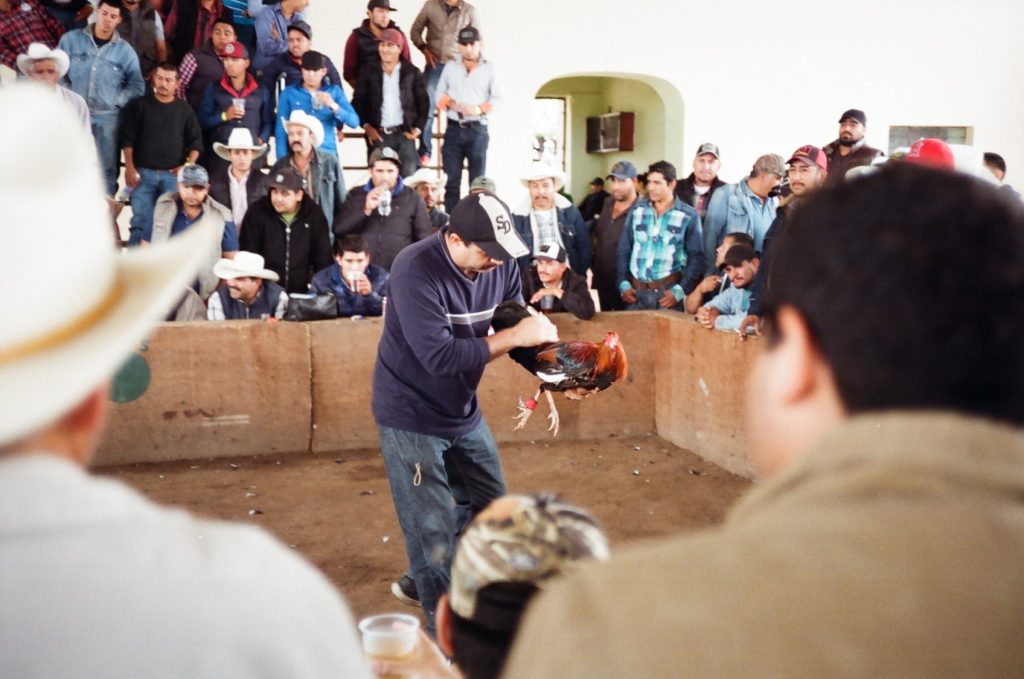
5: It wasn’t just strictly religious, Indigenous festivals that I found myself taking part in – here you can see cockfight – which is about as secular an event as it gets – in Huajimic, a mestizo, rather than Indigenous, community in the mountains of Nayarit. Spanish-speaking mestizo people are a minority in Gran Nayar, but make up the majority of the population in Mexico as a whole. For that reason mestizo people born and raised in the Gran Nayar often played key roles in linking the region to the rest of the country, and so have had an influence on the history of the region that belies their limited numbers. During the Revolution, political violence, exile, political manoeuvring by pro-agrarian reform factions, state-promoted shifts from subsistence agriculture to extractive industry, and the arrival of mestizo settlers from elsewhere in Mexico, also transformed a few originally Indigenous communities into mestizo settlements. And so ethnic tensions between mestizos and Indigenous people that have roots in the Revolution continue to shape politics in the Gran Nayar today.

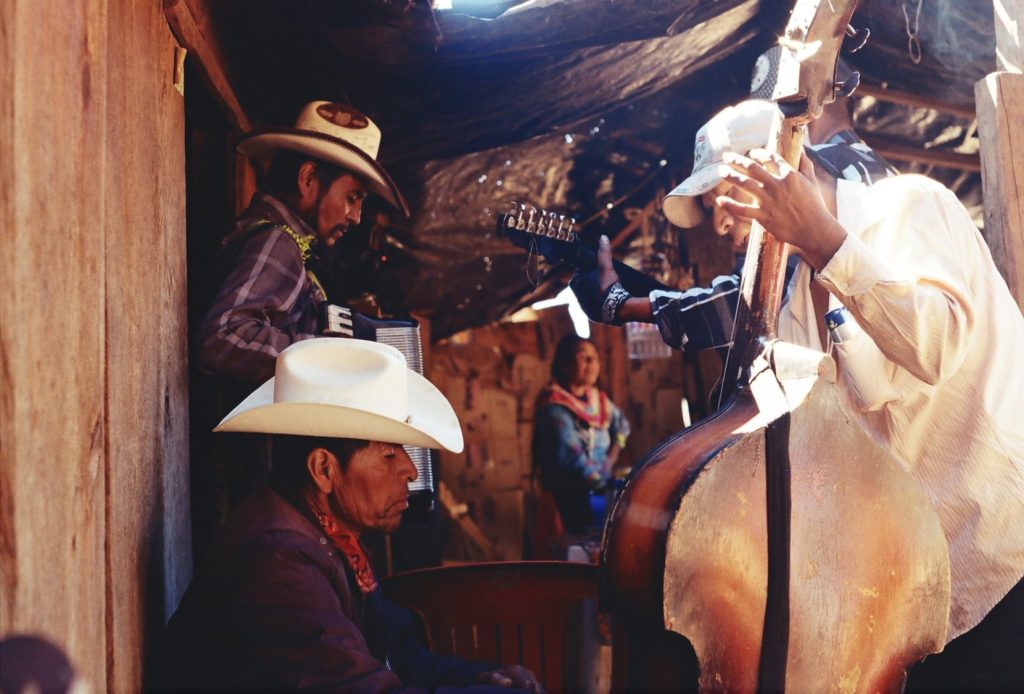
6: As well as interviews and what ethnologists would call ‘participant observation,’ music was also essential to my research in the Gran Nayar. Here you can see a group of Náayari musicians laying down some tunes in the open air just after a fiesta. During the Revolutionary era – and still, to an extent, today – ballads known as ‘corridos’ functioned almost like newspapers in much of rural Mexico, spreading the word about important happenings, the rise and often violent fall of key local leaders, new political movements and much else of interest to a population that was largely illiterate. Today, ballads celebrating—or condemning—the paramount caciques, or telling of important battles, personal tragedies or political victories of the Revolution in the Gran Nayar, endure as popular entertainments during communal fiestas. These songs often contain key details that helped me better piece together not only the local events of the Revolution, but also the ways in which these were perceived and later remembered by the people of the Gran Nayar.

Nathaniel Morris is a historian of modern Mexico. He is currently a Research Fellow at University College London, where he is studying the participation of Indigenous militias in both the Mexican Revolution of 1910-40, and the ‘Drug War’ wracking the country today. Soldiers, Saints, and Shamans is Morris’s first book.

Watch: Gary Nabhan and Francisco Cantú Discuss the Nature of Desert Nature

November 23, 2020

Recently, editor Gary Nabhan, contributor Francisco Cantú, and University of Arizona Press marketing assistant Savannah Hicks came together virtually as part of the Tucson Festival of Books Authors in Conversation series to talk about Nabhan’s new collection, The Nature of Desert Nature.

The desert inspires wonder. Attending to history, culture, science, and spirit, The Nature of Desert Nature celebrates the bounty and the significance of desert places.

Watch their discussion below.

powered by Crowdcast

A Look Inside A Marriage Out West

November 23, 2020

A Marriage Out West is an intimate biographical account of two fascinating figures of twentieth-century archaeology. Frances Theresa Peet Russell, an educator, married Harvard anthropologist Frank Russell in June 1900. They left immediately on a busman’s honeymoon to the Southwest. Their goal was twofold: to travel to an arid environment to quiet Frank’s tuberculosis and to find archaeological sites to support his research.

Below, read an excerpt from Nancy J. Parezo and Don D. Fowler’s A Marriage Out West.

We have long studied how women overcame economic and social barriers as they strove to be successful anthropologists. We have emphasized the hard work, perseverance, and resilience this required, given the asymmetrical reality in what was always considered the most welcoming of the sciences. Anthropology had its limits to the welcome, of course. Interested in the rise of professorships as a form of professional occupation in America, elsewhere we have looked at how anthropological careers compared to those of women who became professionals in the hard sciences, the natural sciences, sociology, and history, but we have never studied someone who pursued a career in English and philosophy, intentionally leaving anthropology behind. This is one reason Theresa Russell’s story is important.

Like several of our colleagues, we have focused primarily on the careers of women with a passion for anthropology who succeeded. We have used grounded methods to identify their strategies to overcome societal and professional obstacles, generate resources, and find interesting problems to tackle. This is one reason why we have both been fascinated with how women have thrived at disciplinary boundaries and margins, often espousing theories and writing programs that would take years for men to discover and exploit. From these biographies we have discovered patterns that reflect access and participation in American professions as a form of specialized work based on esoteric knowledge. One was that women gained initial recognition by writing popular accounts of their adventures in the field— that is, travelogues— and getting paid well for these works. Theresa employed this option to establish a new scholarly path, but it was not a path to an archaeological career. It is one where anthropological exploratory research was used as the entry into English, philosophy, and psychology. We welcome other scholars to look for similar instances. We are sure they exist.

_______________________________________________________________________________

Also critical for understanding the Russells’ fieldwork were the development of anthropology as a national discipline and the growth of physical anthropology/ anthropometry as a distinct subdivision of the multifaceted endeavor to understand humanity’s development and variability. This involved more than expounding interpretations and developing framing theories. Striving for professional status included demonstrating that anthropology was a natural science, with original data that could be standardized and measured. Frank was concerned with improving anthropometric and osteological techniques, inventing precise measuring tools, and standardizing methodologies as well as with how anthropology would be taught in universities.

When they made their first trip, the Russells had intended to return to Harvard University, where Frank would pursue the institutionalized academic year of teaching and a summer fieldwork schedule. Theresa could continue to study philosophy and have stimulating conversations with her peers. They did not think they would spend the next two years surveying Arizona and participating in ethnographic field work full time. They covered a phenomenal area. Frank estimated that by October 1902, they had traveled 4,000 miles exclusive of train travel each year. The undertaking was comparable to the areas covered by European scholar explorers Adolph Bandelier, who looked for sites in Arizona between 1880 and 1885; and Alphonse Pinart, who searched for sites in 1876, traveling from San Diego to Tucson and around central and southern Arizona. As J. Jefferson Reid and Stephanie Whittlesey discuss in their excellent history of Arizona archaeology, archaeologists in the 1880s and 1890s did not attempt to survey the entire state as they searched for suitable sites. Most men and women worked in a single region each season. This in itself makes Theresa and Frank’s stories memorable.

Nancy J. Parezo is a professor emerita of American Indian studies at the University of Arizona. In addition to teaching at the institution for almost forty years, she was curator of ethnology at the Arizona State Museum and loaned executive to the Arizona Board of Regents. She also participated for ten years in the Smithsonian Institution summer training program in museum anthropology. The author of more than two hundred books and articles, she is currently working through the nine large four-drawer file cabinets that are full of data for more histories of anthropologies and museums, collecting behavior, and Native American repatriation. Her next project documents missionary Henry Voth’s collecting and ethnographic activities among the Hopi and Cheyenne. With her dear friend Don D. Fowler, she is dedicated to honoring the invisible female scholars who helped develop anthropology in the American Southwest.

Don D. Fowler is the Mamie Kleberg Distinguished Professor of Anthropology and Historic Preservation, Emeritus, at the University of Nevada, Reno (UNR). In 2019 the Don Frazier & Don Fowler Endowed Chair in Archaeology was established at UNR in his honor. His PhD is from the University of Pittsburgh. He has taught anthropology and historic preservation at UNR for forty years. He was a postdoctoral fellow in anthropology at the Smithsonian Institution in 1967–68, a research associate in anthropology for the Smithsonian Institution from 1970 to 2004, a past president of the Society for American Archaeology. He received the SAA’s Lifetime Achievement Award in 2003 and the Byron Cummings Award from the Arizona Archaeological & Historical Society in 1998, among other honors. He is the author or co-author of dozens of papers and reports on southwestern and Great Basin archaeology and cultural resources management, and, with co-author and great friend Nancy Parezo, publications on the history of European and American archaeology and ethnology.

Zócalo Magazine Shares Excerpt from ‘Desert Feast’

November 18, 2020

Tucson’s Zócalo Magazine recently featured an excerpt from Carolyn Niethammer‘s new book, The Desert Feast: Celebrating Tucson’s Culinary Heritage.

The Desert Feast offers a food pilgrimage, where stories and recipes demonstrate why the desert city of Tucson became America’s first UNESCO City of Gastronomy.

The excerpt tells part of the story of Sonoran wheat and how its introduction forever changed our region’s food landscape:

The easy and quick adoption of spring wheat can be attributed to the fact that it filled an important niche in the food cycle. And, as a new crop, it came without cultural baggage. Corn was traditionally planted and curated through its lifecycle with ceremony and song; wheat, on the other hand, with no such requirements, was easier to grow. We must not overlook the fact, though, that in some mission communities, the local people had no choice but were forced to grow wheat for the padres’ sacramental wafers.

By the mid-eighteenth century, spring wheat had become the major staple crop of the Tucson basin and far beyond. Although it does better with irrigation, in a normal, non-drought year, it could also produce an excellent crop in marginal soils of low fertility and with no water other than winter rainfall. With the abundance of wheat, women began making tortillas from flour instead of corn.

Read the entire excerpt here:

For Authors

The University of Arizona Press publishes the work of leading scholars from around the globe. Learn more about submitting a proposal, preparing your final manuscript, and publication.

Inquire

Requests

The University of Arizona Press is proud to share our books with readers, booksellers, media, librarians, scholars, and instructors. Join our email Newsletter. Request reprint licenses, information on subsidiary rights and translations, accessibility files, review copies, and desk and exam copies.

Request

Support the Press

Support a premier publisher of academic, regional, and literary works. We are committed to sharing past, present, and future works that reflect the special strengths of the University of Arizona and support its land-grant mission.

Give