Thinking Like a Burned Mountain: An Excerpt from Stephen J. Pyne’s To the Last Smoke Anthology

June 16, 2020

For more than a week, the Tucson community has watched the Bighorn Fire burn its way across the Santa Catalina Mountains. Many people have been ordered to evacuate their homes as firefighters from surrounding regions fight the blaze. As of today, the fire has burned 14,686 acres with 30 percent containment. 

Since 2015, we’ve published the works of fire historian Stephen J. Pyne, starting with a narrative examination of fire in the United States Between Two Fires: A Fire History of Contemporary America. Next, we published a series of regional fire surveys. This spring, Pyne brought together the best of each regional study into the anthology To the Last Smoke, which offers a unique and sweeping view of the nation’s fire scene and serves as a punctuation mark to the series.

Pyne is an emeritus professor at Arizona State University. He is the author of more than 30 books, mostly on wildland fire and its history but also dealing with the history of places and exploration, including The Ice, How the Canyon Became Grand, and Voyager.

Below, read an excerpt from the “Southwest” section of Pyne’s new anthology:

“On September 18, 1909, a young Aldo Leopold, then a ranger with the U.S. Forest Service, shot two timber wolves in Arizona’s White Mountains. He noted the episode casually in a letter home. But the incident, like embers in an old campfire, glowed in his mind, and in April 1944 he wrote one of his most celebrated meditations, ‘Thinking Like a Mountain’, in which he described standing over the dying she-wolf and watching the ‘fierce green fire’ in her eyes die and wondered if shooting the wolf had helped unhinge the larger landscape. Too much emphasis on safety, he thought, was dangerous. He quoted Thoreau’s dictum, ‘In wildness is the salvation of the world.’

The essays, or more accurately moral epistle, became one of the founding documents of 20th-century American environmentalism. It helped make the wolf the living emblem of the wild, and wolf restoration a measure of ecological enlightenment. About 10 miles of Leopold’s kill site, Mexican gray wolves were reintroduced in 1998. But his insights also helped underwrite a campaign of nature protection that focused on the preservation of pristine lands. Leopold was the architect of America’s first ‘primitive area’, the Gila, located in an adjacent national forest, which subsequently became the inspiration for a National Wilderness Preservation System 40 years later. In 1984 the system acquired the 11,000-acre Bear Wallow Wilderness, about 10 miles as the crow flies southwest from where Leopold shot is wolf. Between them the three sites from a triangle of environmental thinking transformed into action— the deed into an idea, the emblem into a restored species, the wild into a legally gazetted preserve.

A century later a mammoth wildfire boiled out of the Bear Wallow Wilderness, blew over the wolf reintroduction site, and overran Leopold’s vantage point above the Black River. The Wallow fire, kindled by an untended campfire, burned 50 times as much land as the wilderness held. An idealistic green fire met an all-too-real red one.

The contrast almost overflows with symbolism, but two themes seem most useful. One speaks to nature protection, and that preserving the wild is perhaps not just a paradox but an example of a misguided urge toward safety, in this case the security of nature, not unlike Leopold’s shooting a wolf. ‘In those days we never heard of passing up a chance to kill a wolf.’ Fewer wolves meant more deer, and no wolves meant ‘a hunter’s paradise.’ So, too, it has seemed self-evident that removing the human presence would mean a healthier land, and no people would mean paradise.

The other theme is fire. At the time Leopold killed the green fire, he was also swatting out red ones. Fire control was among the most fundamental of ranger tasks; to ignore fire could be cause for dismissal. Interestingly, posters from the era even equated fire with wolves: the fire wolf running wild through reserves was a ravenous killer that needed to be hunted down and shot. Over time this belief, too, yielded to the realization that fire’s removal, like the wolf’s, could unravel ecosystems. The difference was that fire was renewed annually, if not through human artifice then through lightning (the American Southwest is North America’s epicenter for lightning fire). The spark is always there: if wind and fuel are aligned, fire can spread.

But the deeper story was that the sparks decreased and the fuel was stripped away. Lightning fires were attacked and distinguished at their origin. People quit setting tame fires to substitute for nature’s wild ones. And overgrazing slow-metabolized on a vast scale what fire had formerly fast-burned. Cattle and sheep cleaned out the country’s combustibles. Flame might kindle in the isolated snag; it could not easily spread. Over decades, however, the removal of predatory fire allowed a woody understory to flourish, akin to the metastasizing deer population that blew up after the wolves were extinguished. Both yielded a sick, impoverished landscape.

So a campaign to restore fire ran parallel to that for reinstating wolves. Their histories are oddly symmetrical. The population of neither wolf nor fire has reached its former levels, and the landscape teeters on a metastable ridgeline. The issue is that success requires not merely the presence of wolf and flame but a suitable habitat in which they can thrive. The power of fire resides in the power to propagate, and that sustaining setting was gone. Fire, however, had other properties wolves lacked, notably a capacity not simply to recycle but to transform. A single spark could transmute thousands of acres almost instantaneously.

On Memorial Day weekend, May 2011, flames returned. This time they came as feral fire. It was certainly not a tame fire— not a controlled burn or a prescribed one suitable for wildlands. Neither was it a truly natural fire; it started from a slovenly kept campfire and burned through decades of forests whose structure had been destabilized by logging, of grazing that had destroyed their capacity to carry surface fire, and of doctrines of fire exclusion that had prevented nature’s economy from brokering fuel and flame. The Wallow fire could no more behave as it would have in presettlement times than could a wolf pack dropped into a former hunting site now remade into a Phoenix shopping mall.

Probably fires had burned as widely in the past, but through long seasons in which they crept and swept as the mutable comings and goings of local weather allowed. Undoubtedly, in the past spring winds, underwritten by single-digit humidity, had blown flame through the canopies of mixed-conifer spruce and fir and left landscapes of white ash and sticks. But it is unlikely that earlier times had witnessed a similar combination of size and intensity. The Wallow burn was not what forest officers had in mind when they sought to reintroduce the ecological alchemy of free-burning flame.

© 2020 by The Arizona Board of Regents

If you would like to read more about fire in the Southwest, we are currently offering Stephen J. Pyne’s The Southwest as a free e-book through 6/25/2020. Use the code AZFIRE20 at checkout!

Excerpt From Sugarcane and Rum by John Gust and Jennifer Mathews

May 5, 2020

In Sugarcane and Rum: The Bittersweet History of Labor and Life on the Yucatán Peninsula, authors John Gust and Jennifer Mathews tell the story of sugarcane and rum production through the lens of Maya laborers who worked under brutal conditions on small haciendas to harvest sugarcane and produce rum. The book explains how rum continues to impact the Yucatán and the people who have lived there for millennia.

Below, read an excerpt on the Maya of Quintana Roo:

SUGAR AND RUM PRODUCTION ON THE YUCATAN PENINSULA

Sugar and rum production in Yucatan were influenced by two major factors: (1) the long growing cycle that affected when and how much labor was needed, and (2) the social relationship between the owner and working class that influenced where sugar was produced. This chapter explores the interrelationship of these factors through a discussion of how sugar growing moved from the central and southeastern portions of the peninsula to the wilds of the northeastern coast. The final section details the authors’ work investigating the small site of Xuxub and the larger site of San Eusebio near the northeastern coast of Yucatan.

THE WILD NORTH COAST OF QUINTANA ROO

The historical trajectory of the northern coast of Quintana Roo, including the Yalahau region, where the authors’ ongoing archaeological investigations are focused (see map 2), is quite different from the rest of the Yucatan Peninsula. Within the century following contact, European-introduced diseases resulted in a massive population reduction, perhaps as high as 90 percent. The surviving native peoples were concentrated into settlement regions across the peninsula, but Quintana Roo became a bastion for Maya rebelling against the Spanish.2 Because of this unstable social environment, in the mid-1500s only six encomiendas were established in Quintana Roo. These were located at the sites of Kantunilkin, Conil, Cozumel, Ecab, Pole, and Zama (Tulum/Tancah).

In 1546, the Maya of what is today Quintana Roo initiated the “Great Revolt” to protest their treatment by the Spanish. Although this uprising was squelched by 1547, the Spanish still regarded the area as hostile. A combination of low population density and little supervision by the Spanish along the northeastern tip of the peninsula fostered the development of piracy in the area.5 Legends recall pirates hiding their booty along the coast, and by the mid-1600s they began extracting the logwood tree (known locally as palo de tinte or palo tinto) near Ecab. The Spanish virtually abandoned the region to a small population of Maya and pirates by the mid-1600s because of the difficulty of maintaining the area. This lack of attention continued for the next two centuries, making the region a place of escape for those fed up with the colonial and early postcolonial system.

INDEPENDENCE, LAND LOSS, AND REVOLUTION

The previous chapter discussed the failure of the elites to live up to their promises of reform and betterment for Indigenous peoples after the war for Mexican independence. The result was loss of land and the Indigenous populations, including Yucatan’s Maya, being treated as nothing more than cheap labor instead of full participants in efforts to modernize Yucatan and grow its economy. Haciendas continued to expand, and by 1840, hacienda owners were buying up property, virtually land-locking Maya villages and making it impossible for them to sustain themselves, develop infrastructure, or have access to education.

When the Caste War of the Yucatan Peninsula (Guerra de Castas) started in 1847, the rebels began specifically targeting sugar-producing haciendas for destruction. The war raged on for several years, resulting in massive casualty losses of approximately 40 percent on both sides. By 1850, the armies of Yucatan had secured the western part of the peninsula. The Caste War ended with the defeat of the remaining rebels in most of the Mexican Yucatan by the mid-1850s. The exception was in the southeast, where war raged until finally ending in 1901, when the remaining rebels (the cruceros) were defeated by General Ignacio Bravo and his soldiers. Throughout the conflict, many Maya retreated to the remote “uncontrollable wilds” of the east.

The razing of sugar plantations not only devastated some of the Yucatan’s most profitable enterprises, but also led to sugar shortages and curtailed the production of cane alcohol. Those looking to restart production in the 1870s looked to the isolated north coast of Quintana Roo, which had soils suitable for sugarcane. Although the area had once been abandoned to pirates and hostile Maya, the inhabitants of the largest Maya town in the area, known as Kantunilkin, agreed to cease hostilities circa 1855, and instead helped local authorities keep the peace. The region was isolated and lacked infrastructure but was relatively safe and became the best option for sugar production. This region, which includes our study area, still contains historic ruins of several of these sugar operations.

Michelle Erai’s Girl of New Zealand “Talks Back” to Colonization: An Excerpt

April 13, 2020

Girl of New Zealand presents a nuanced insight into the way violence and colonial attitudes shaped the representation of Māori women and girls. In the wake of the Me Too movement and other feminist projects, Michelle Erai’s timely analysis speaks to the historical foundations of negative attitudes toward Indigenous Māori women in the eyes of colonial “others.” Erai resurrects Māori women from objectification and locates them firmly within Māori whānau and communities.

Below, read an excerpt from Girl of New Zealand.

Images, steeped with symbols of empire, literally circled the globe, inscribing and reiterating pre-imagined notions of the Native woman. For the Māori woman in particular, her imagined automatic acquiescence began to really take hold in the early days of contact with the whalers and commercial entrepreneurs that soon followed behind the explorers, and only slightly preceded the missionaries. Within about sixty years that imagined acquiescence became the optical alibi for an arm of capitalist primitive accumulation particularly well-suited to South Pacific islands— tourism.

Using “The Souvenir” as a metaphor, it is possible to discern how and why bodies of women are sites of constant scrutiny based on their beauty and how such implications are deeply institutional and directed by expectations derived from power. Celeste Olaquiaga writes, “It is the demiurgic desire for immortality, the secret of creation held in the palm of one hand, the ability to gaze, unfettered, into the unknown otherness of an imprisoned creature that cannot escape its imposed rigor mortis or our voracious demands.” This fetishism of immortality being held within the powers of one’s palm translates into the desire for immortality that is imposed upon the bodies of women. This powerful fetishization that resides within the realms of imagination creates expectations of the feminized body, to fight against the natural paths of nature, and to create a firm utopian imagination that fixes the conditions of living. The bodies of women then also become the site of this fetishization through the commodification of our imaginations. The consequences for Māori women of this performance is a kind of violence that Jasbir Puar identified: “Violence is naturalized as the inexorable and fitting response to nonnormative [or perhaps fetishized] sexuality.”

The use of images to attract a new middle-class traveler began in earnest when in 1901 New Zealand became the first country to dedicate a government department to tourism. In terms of how advertising can help us think about the impact of an advertising image, Margaret Werry argues, “As a nation, Aotearoa New Zealand is a community not so much imagined as imagineered. It is a state production and a participatory drama, the work of culture agents across business, civil society, policy, and entertainment. Index and agent of a broader synergy, tourism is implicated in virtually every industry sector.”

Where this becomes important is in the construction of “taste” for the modern neoliberal citizen subject through tourism and touristic imaging; this had a special impact for Māori in that the “imagineers” suggested Māori culture “might offer the nation what advertising guru Kevin Roberts called a Lovemark, lending the brand distinction, authenticity, and affective charge.”

When Bourdieu draws the connection between how an intellect may be trained to produce “taste”. that a distinction reproduces a classed hierarchy invisibly, he is circling the operations of hegemony. Hegemony relies upon the existence of some state prior to the one that draws distinctions, and that within that state there must be an innocence upon which distinctions can become imprinted. Or hailed. Called into being. And that hailing— learning the violence of the word— replaces innocence. Not with knowledge, but with approved knowledge; not with a vista existing in a native savage state, but a constant reiteration of the conditions of the status quo. I suggest there are two notable sources of images that directly challenge the fixity of that presumed innocence— first, advertising, and second, religious iconography. In these two fields, with their explicit goal of effecting a metamorphosis in the viewer through an image, lie, I think, the imperative to fully consider the impact of colonial optics: of what it means to assume an innocent eye, and therefore the consequences of choosing not to train a knowing eye; also, the transformative possibilities of images consciously employing metamorphoses to “talk back” to colonization.

© 2020 by The Arizona Board of Regents

Michelle Erai was an assistant professor of gender studies at University of California, Los Angeles. She is originally from Whangarei, Aotearoa, and is descended from the tribes of Ngāpuhi and Ngati Porou.

An Excerpt From ‘The Saguaro Cactus: A Natural History’

February 17, 2020

This book offers a complete natural history of an enduring and iconic desert plant. Enjoy this excerpt, published by the Tucson Weekly on January 30, and help us celebrate the book and this iconic symbol of our desert.

From “A Saguaro Primer
By David Yetman

The saguaro, with its great size and characteristic shape—its arms stretching heavenward, its silhouette often resembling a human—has become the emblem of the Sonoran Desert of southwestern Arizona. This is rightly so, for it is by far the largest and tallest cactus in the United States and our tallest desert plant as well. In this volume, we present a summary of current information about this, the desert’s most noteworthy plant.

Saguaros occasionally reach 12 meters (40 feet) in height, and individuals over 15 meters (50 feet) tall appear from time to time. The record height is 23 meters (78 feet), a well-known plant of a single stalk growing near Cave Creek, Arizona, which was toppled by winds in 1986. Photos of that plant are elusive, but it was clearly a very tall cactus, perhaps the tallest of any cactus ever recorded. While other cactus species may produce individuals taller than the average saguaro, none has been documented of that stupendous height. In 1907 William Hornaday reported a saguaro between 55 and 60 feet in height. He was leader of a 1907 scientific expedition to Pinacate Volcanic Range in Mexico near the border with southwestern Arizona and was in the company of distinguished researchers. The saguaro’s sole competitor for tallness in the deserts of the United States is the Joshua tree (Yucca brevifolia), a native of the Mohave Desert, a yucca that only rarely reaches 9 meters (30 feet) in height.

Saguaros are among the tallest cacti in terms of average height. They are also among those with the greatest mass. Neobuxbaumia mezcalaensis of southern Mexico, a single-stalked columnar cactus and distant relative of the saguaro, probably reaches greater average height, with individuals reaching in excess of 18 meters (60 feet). Other columnar giants include Pachycereus weberi and Mitrocereus fulviceps of southern Mexico and Pachycereus pringlei, the cardón sahueso of the Sonoran Desert in Baja California and the coastal regions and islands of central Sonora. Pachycereus pringlei and the truly massive P. weberi routinely exceed the mass of the saguaro. While columnar cacti are widespread in South America, none reaches the height or mass of the larger saguaros.

The most famous incident involving cacti of any kind occurred in 1982. The episode featured a saguaro growing near Phoenix, Arizona, and an unfortunate drunk named David Grundman, a hapless chap. Grundman, having imbibed an excess of strong drink, decided to knock over a saguaro with his jeep. He failed, succeeding only in damaging his vehicle. In a fit of rage at the unobliging saguaro, he fired both barrels of a shotgun at its base. The blast weakened the trunk, and the great plant toppled, crushing Grundman beneath. Few observers shed tears over the vandal’s demise. A published ballad commemorates his folly.

The Embodiment of Risk Along the U.S.-México Line

December 18, 2019

The Border and Its Bodies: The Embodiment of Risk Along the U.S.- México Line, is an important book of borderlands scholarship, but there’s more to this University of Arizona Press book, placed on the Association of University Presses’ reading list during University Press Week last November. The book’s editors Thomas E. Sheridan and Randall H. McGuire, along with its thirteen contributors, have presented a timely presentation on the realities of our border region. This book examines the impact of migration from Central America and México to the United States on the most basic social unit possible: the human body. It explores the terrible toll migration takes on the bodies of migrants—those who cross the border and those who die along the way. The following is an excerpt from contributor Robin Reineke, an assistant research social scientist in anthropology at the University of Arizona’s Southwest Center, and cofounder and executive director of the Colibri Center for Human Rights:

Necroviolence and Postmortem Care Along the U.S.-México Border

By Robin Reineke

In June 2010, the decomposed remains of a man were found by the U.S. Border Patrol on the Tohono O’odham Nation in Arizona. The man was found under a tree, with a backpack containing about $200 in Mexican pesos, a few bus ticket stubs, and a prayer card for Pope Benedict. His body was transported to the Pima County Office of the Medical Examiner (PCOME), where forensic investigators, pathologists, and anthropologists began the work of trying to identify him. During their examination, a Honduran identification card was found in the man’s shoes.

Nearly two months passed with no leads on this man’s identity. Then, in August, a woman called to report her brother, Miguel, missing. A volunteer took the missing person’s report. Miguel’s full name matched the name on the Honduran ID card. Miguel also was reported to have a tattoo—a homemade letter M on one of his forearms. Although the external examination, autopsy, and forensic anthropology examination had all been completed, there was no note of a tattoo. To see if there was indeed a tattoo on the body, investigators used infrared photography to photograph the highly decomposed flesh of the arms of the unknown man. The photographs revealed what could not be seen with the human eye—a light, hand-drawn letter M on the right forearm. The unknown remains were identified as Miguel’s.

Miguel had lived and worked in the United States for decades. He was a gardener. In the spring of 2010, he was apprehended by ICE after being pulled over for speeding, and was deported to Honduras. Shortly after, in the summer of that year, Miguel hired a coyote to guide him across the Arizona desert. He was desperate to get back to his family and his job. He attempted the crossing in June, one of the hottest months of the year in the Sonoran Desert, when temperatures regularly reach into the triple digits.

When the volunteer called to notify Miguel’s sister that he had died in the desert from heatstroke, she wept and expressed confusion. “How could someone die just from walking? He was a gardener; he was used to being in the sun. I think someone murdered him,” she said. The volunteer assured her that there were no signs of trauma, and explained that, sadly, hundreds of people die each year attempting to cross the border through Arizona. The volunteer then explained the next steps: the family would need to choose a funeral home, and then have the funeral home contact the medical examiner’s office to arrange to pick up Miguel’s remains.

About a week later, the volunteer got to her desk one morning and noticed that her voicemail box was full—twenty-eight messages. They were all from Miguel’s family, who were distraught, confused, and angry. The family had been calling from the funeral home, where they had just seen Miguel’s remains. They were convinced that they had been deceived about the cause of death, because the body they were looking at was a horrifying sight—a blackened, decomposed, headless corpse whose hands had been cut off. Clearly, they said, Miguel had been murdered.

Although the official manner of death was accidental, not homicide, they were right. Miguel had been murdered by the U.S. federal government, using the Sonoran Desert as a weapon, and his body showed the signs of this violence.

INTRODUCTION

What happened to Miguel and his family was a complicated injustice, with layers of violence occurring along a protracted timeline. First, Miguel had likely been racially profiled by police. He was then deported to a country he hadn’t called home in more than 20 years, which separated him from his small children and his only means of income. Then, in an attempt to get home, Miguel had followed the path created for Latin American workers by decades of U.S. immigration and border policy, which cuts through remote regions of the Sonoran Desert. The desert conditions and arid heat took its toll, and Miguel died from exposure to the elements. His body was not found for several weeks because of the isolated area where he had been traveling. By the time Miguel was found, his body had endured the same brutality of the desert conditions that had killed him.

On arrival to the medical examiner’s office, Miguel’s body was unrecognizable due to decomposition, and would require special examination techniques for there to be any hope of finding his family. During autopsy, his inner organs and brain had been removed for examination. During the forensic anthropology examination, his skull had been detached, along with portions of his pubic bones. His body was so decomposed and desiccated that investigators had to cut off his hands so that his fingers could be rehydrated for fingerprinting. When his family finally saw his remains, they were looking at the effects of violence, but they were also looking at attempts to care for Miguel and his family.

The volunteer who had first taken the missing person report for Miguel, who had then called his sister when his remains were identified, and who had heard the distressed voices of the family when they were looking at what was left of his body, was in some ways ill-equipped to handle the situation. She was young, she was in over her head, and she was scared. That volunteer was me.

At the time, I was a graduate student in the School of Anthropology at the University of Arizona. The same semester I started graduate school, in the fall of 2006, I began interning and volunteering under the guidance of Dr. Bruce Anderson, forensic anthropologist at the PCOME. I was interested in the ways that a cultural anthropologist might be able to support the work of forensic anthropologists, and Dr. Anderson was eager to have my help. At the time, Dr. Anderson was examining about 150 cases per year—far more than any other single forensic anthropologist in the nation, likely in the world. On top of this, he was also managing calls from families of the missing. The families were calling the medical examiner’s office directly because they had nowhere else to go. The standard mechanism for reporting and pursuing the investigation of a missing person in the United States is through law enforcement. However, families of missing migrants generally struggle with this system: because they are afraid to contact police for fear of deportation, they do not live in the United States, or they are turned away by law enforcement officials when they try to file a report for a missing foreign national. So they call the medical examiner’s and coroner’s offices along the border directly. When I approached Bruce in 2006, he suggested that I help him with missing person reports, and with speaking to the families—work he had taken on voluntarily despite being already overwhelmed with the caseload.

Gradually, these volunteer efforts grew into a nonprofit, the Colibri Center for Human Rights, which I cofounded in 2013. My graduate research became focused on the social and scientific process of identifying the remains of migrants who had died attempting to cross the U.S.-Mexico border into Arizona (Reineke 2016). That summer, when on the phone with Miguel’s family, I had cautioned them against opening the body bag. I explained that viewing his remains would be difficult and that I didn’t want them to remember Miguel that way. But when the body bag containing Miguel’s remains arrived at the funeral home, the family wanted to see him. They needed to confirm that it was indeed Miguel, and to understand for themselves what had happened to him. What they saw was evidence of violence, but not the kind they assumed. There is no good language for the kind of violence Miguel’s body had gone through.

From The Border and Its Bodies: The Embodiment of Risk Along the U.S.- México Line, edited by Thomas E. Sheridan and Randall H. McGuire. ©2019 The Arizona Board of Regents.

An Excerpt from Postcards from the Chihuahua Border by Daniel D. Arreola

October 23, 2019

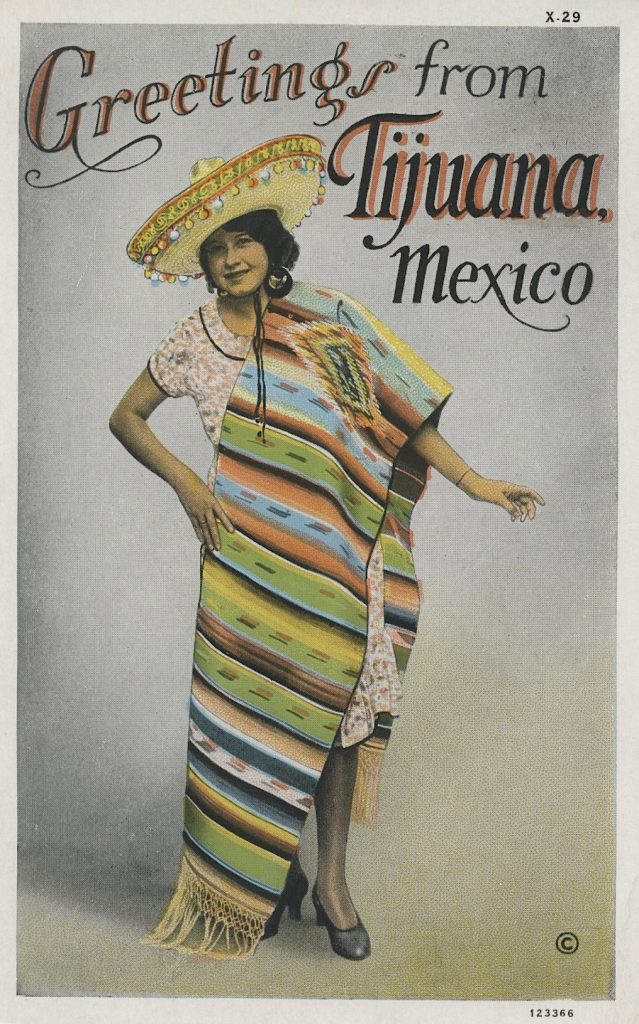
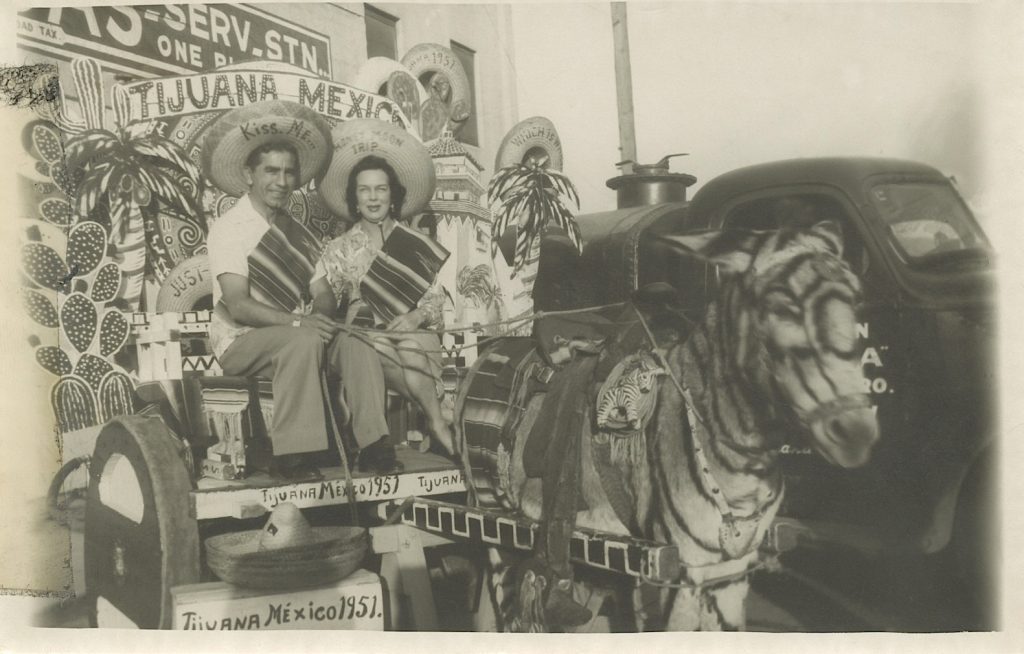
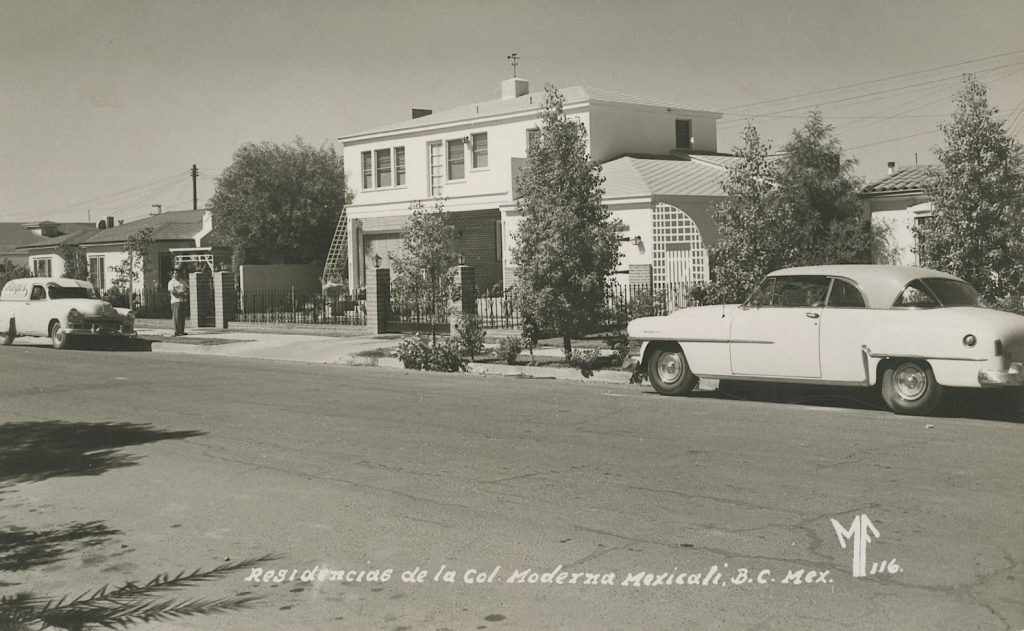
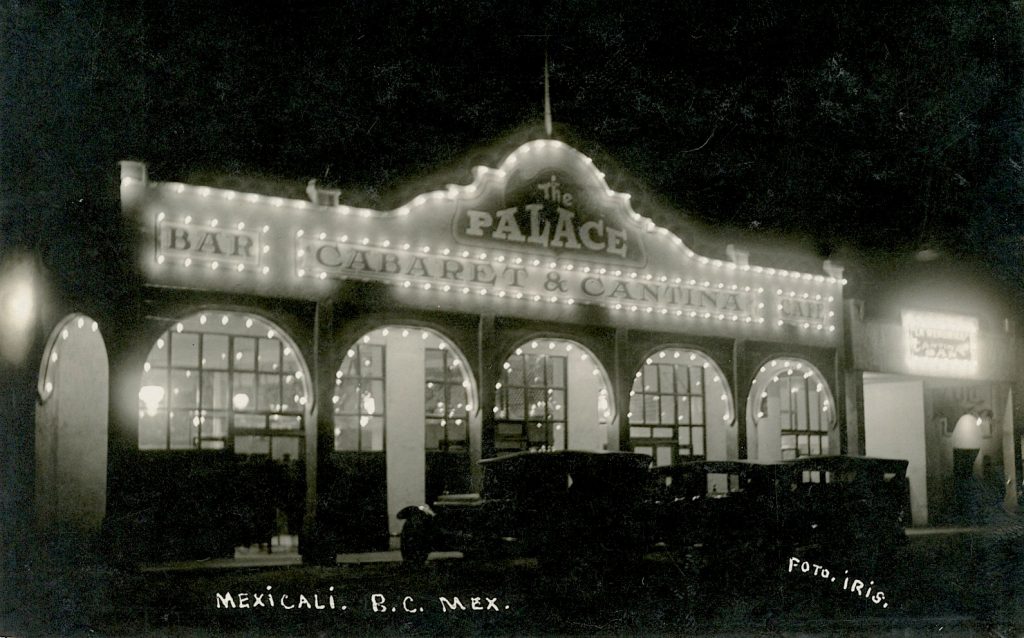
In Postcards from the Chihuahua Border, Daniel D. Arreola provides a colorful and dynamic visual history of Mexico’s northern border. Drawing on more than three decades of archival work, Arreola invites the reader to time travel, to revisit the first half of the twentieth century, when the border towns of Ciudad Juárez, Ojinaga, and Palomas, were framed and made popular through picture postcards. Arreola provides a visual journey through the borderlands neighboring west Texas and New Mexico.

Below, read an excerpt written by Daniel D. Arreola from the introduction of Postcards from the Chihuahua Border.

“Arguably, the Mexico-United States border has been one of the most overlooked places on earth.  We now know, perhaps all too well, that the border is part of political consciousness although not necessarily understood through careful observation or experience and that some want to construct a wall at this boundary where, ironically, one already exists.  Too many of us don’t understand that the borderline itself is a nineteenth-century political agreement while the fence in all its many iterations is a twentieth century phenomenon, or that the first permanent fence along this international boundary between an Arizona town and a Sonora town is just now at this writing a century old.  Even fewer of us recognize the echoes resounding from this borderland that should remind us why the original monuments were planted along the divide without a fence.

Daniel D. Arreola

“The towns of the Chihuahua border, part of the system of cities that dot the Mexican side of the boundary, are the subjects of this book, the third installment in a series of writings about the visual historical geography of these forgotten places.  The purpose of Postcards from the Chihuahua Border as in my previous explorations of the Río Bravo border and the Sonora border is to caste a new eye on an old subject and bring light to a way of seeing the border that has been overlooked.

Looking, it turns out, is not the same as seeing.  We look at the world daily, but seeing the world engages the mind beyond the surficial glance.  In Postcards from the Chihuahua Border, I ask readers to contemplate what geographer Christopher L. Salter said about documents and the geographer’s point of view, to wit, “The cultural landscape—that is, landscape which has been modified and transformed by human action—is the oldest primary document in our possession.” As document, the landscape is worthy of reading, analysis, and understanding.  Unlike a book bound between two covers, the landscape is a leafless palimpsest, a surface partly erased but with relics still visible.  Yet, like a book, a landscape can be read if we ask the right questions. In that spirit, the book you hold in your hands is a kind of testimonial to landscape interpretation but not one limited to written evidence so common to historical investigation.  Rather, the focus of this work is reading and seeing visual representation of landscape as document, especially through the popular postcard both in its photographic and mechanical print forms.

Admittedly, a postcard view of the world is not a common vantage point.  Yet, the postcard is both a literary and visual document that can shed light on cultural understanding.  Anthropologists Patricia Albers and William James suggest that the postcard has largely been overlooked as a document, especially its utility to explore the relationship among photography, ethnicity, and travel.  Their research describes some of the qualitative approaches for using postcards, relates photographic communication in postcards to a wider ideological discourse, and discusses the interplay of ethnic appearance and photographic expression in world tourism. In a similar vein but with enhanced elegance, Rosamond Vaule’s As We Were: American Photographic Postcards, 1905-1930, serves as a model chronicle, informing how postcards are both documentary history and revealing witness to our past lives and places.”

Daniel D. Arreola is a Professor Emeritus in the School of Geographical Science and Urban Planning at Arizona State University. His research focuses on cultural landscapes, place-making, Mexican-American borderlands, and Hispanic/Latino Americans. In 2016 he was presented with the Preston E. James Eminent Latin Americanist Career Award by the Conference of Latin American Geographers.

University Press Week: Read. Think. Act.

October 7, 2019

According to Publisher’s Weekly, this year’s theme for University Press Week is, Read. Think. Act.

From Sunday, November 3 through Saturday, November 9, the Association of University Presses encourages readers to dive into publications about the issues that affect our present and future.

The theme, the AUPresses said in its statement, is timely in that “many citizens around the globe continue to engage in important debates that will influence vital decision-making in the months ahead; in fact, this year’s UP Week will begin exactly one year to the day before the 2020 Election Day in the U.S.” The organization added: “AUPresses members worldwide seek to encourage people to read the latest peer-reviewed publications about issues that affect our present and future—from politics to economics to climate change to race relations and more—and to better understand academic presses’ important contribution to these vital areas of concern.”

UA Press Director Kathryn Conrad, who currently serves as president of the Association of University Presses, said this in the same statement:

“Many of us choose to work for university presses because we believe in the UP mission of bringing the latest research and ideas to diverse audiences of readers, [and] the success of recent university press books such as White Fragility by Robin DiAngelo (Beacon Press) and Cyberwar by Kathleen Hall Jamieson (Oxford University Press) make it clear that there is a hunger for these books,” Kathryn Conrad, AUPresses president and director of the University of Arizona Press, said in a statement “In the last few years many people have found it difficult to have effective conversations about the most serious and important issues facing our communities, nations, and world. We hope that by encouraging readers to explore university press works on topics that affect everyone—and to reflect on their reading—our publications might help stimulate positive conversations and actions.”

To kick off your celebration, AUPresses put together a reading list from all of its membership that you can download and share. Recommended from the UA Press is a new book edited by Thomas E. Sheridan and Randal H. McGuire, The Border and Its Bodies.

The Border and Its Bodies examines the impact of migration from Central America and México to the United States on the most basic social unit possible: the human body. It explores the terrible toll migration takes on the bodies of migrants—those who cross the border and those who die along the way—and discusses the treatment of those bodies after their remains are discovered in the desert.

Read. Think. Act.

Indian Country Criminal Justice Degree Now at NAU

August 29, 2019

(From reporter Emma Gibson, Arizona Public Media)

Northern Arizona University is rolling out a bachelor’s degree that focuses on criminal justice on tribal lands. The Indian Country Criminal Justice degree will look into the unique laws and institutions on tribal lands. Karen Jarratt-Snider, an associate professor and chair of the applied Indigenous studies department, says her department and the department of criminology and criminal justice created the degree together. She said it will combine existing courses from Indigenous studies, including federal tribal law, criminal jurisdictions and sovereignty, with the criminal justice curriculum…. read more

Karen Jarratt-Snider and Marianne O. Nielsen are the editors of the University of Arizona Press’s Indigenous Justice series, which focuses on issues of social and criminal justice, law, and environmental justice as they impact Indigenous North America (with occasional references to other Indigenous nations).

The series is intended for undergraduate and graduate students of Native American, American Indian, Alaskan Native, and Indigenous peoples’ justice issues; human rights, criminal justice and legal scholars; criminal justice and environmental professionals; and Indigenous community leaders.

Stephen Pyne on Preparing for the Pyrocene

August 29, 2019

With millions of acres burning in the Arctic, Amazon, and between California to the Gran Canaria, fire seems to be everywhere. Stephen Pyne recently posted a thoughtful essay on History News Network, from the George Washington University. Here’s a brief excerpt:

Winter Isn’t Coming. Prepare for the Pyrocene

by Steve Pyne

Millions of acres are burning in the Arctic, thousands of fires blaze in the Amazon, and with seemingly endless flareups in between, from California to Gran Canaria–fire seems everywhere, and everywhere dangerous and destabilizing. With a worsening climate, the fires dappling Earth from the tropics to the tundra appear as the pilot flames of an advancing apocalypse.  To some commentators, so dire, so unprecedented are the forecast changes that they argue we have no language or narrative...read more.

Stephen Pyne is an emeritus professor at Arizona State University. He is the author of more than 30 books, mostly on wildland fire and its history but also dealing with the history of places and exploration, including The Ice, How the Canyon Became Grand, and Voyager. Most recently, he has surveyed the American fire scene with a narrative, Between Two Fires: A Fire History of Contemporary America, and a suite of regional reconnaissances, To the Last Smoke, all published by the University of Arizona Press.

Unearthing Magic: Critical Thoughts on Contemporary Self-Definition

August 22, 2019

In their new UA Press volume, Black Girl Magic Beyond the Hashtag, Julia S. Jordan-Zachery and Duchess Harris have compiled essays which dive deeply into twenty-first century acts of self-definition, especially that of Black femmes, girls, and women. Black Girl Magic Beyond the Hashtag shows how Black girls and women foster community, counter invisibility, engage in restorative acts, and create spaces for freedom. Intersectional and interdisciplinary, the contributions in this volume bridge generations and collectively push the boundaries of Black feminist thought.

Below, read an excerpt written by Julia S. Jordan-Zachery and Duchess Harris from the introduction of Black Girl Magic Beyond the Hashtag.

“Jamila Woods, in her song “Blk Girl Soldier” (2016), sings of BlackGirlMagic. But what does it mean when we, self-identified Black femmes, girls, and women, invoke BlackGirlMagic? The term BlackGirlMagic is used across age, class, education, and other social identity markers. But it begs the question, what is BlackGirlMagic? Why do black femmes, girls, and women feel the need to consider themselves magical? What are we haunted by that is soliciting a response that asserts Black girls and women are magical? What ontological and epistemological questions does BlackGirlMagic pose? How does use of the term magic subvert Western thought that is grounded in positivism, rationalization, and empiricism? These are the questions that serve as the wellspring of this edited collection.

“Since introduced by Thompson in 2013, the term #BlackGirlMagic has been used widely, and it has become part of the lexicon of digital Blackness. To some extent, it has also become commodified (for example, by the selling of T-shirts and other merchandise). While the notion of BlackGirlMagic spreads in cyberspace and other places, the question remains: How is BlackGirlMagic experienced offline? The chapters that comprise this volume address this question. They move us beyond social media’s visual representations by offering analyses of the lived experiences of Black femmes, girls, and women, and how they negotiate the politics of invisibility through intracommunication methodologies in their efforts to arrive at self-definition and self-valuation and restoration. The chapters herein speak to how Black girls and women foster community, counter invisibility, engage in restorative acts, and create spaces for freedom. In essence, they show how Black femmes, girls, and women practice #BlackGirlMagic.

What the collection shows is that the labor required for success is not magical. It is real, and this labor can— and almost always does— exact a cost from those who might appear magical.

“By considering #BlackGirlMagic as an idea and an ideography, we are better positioned to understand how Black femmes, girls, and women perform magic. What the collection shows is that the labor required for success is not magical. It is real, and this labor can— and almost always does—exact a cost from those who might appear magical.

Deploying various qualitative approaches to unmask the essence of Black femmes’, girls’, and women’s perseverance against oppressive structures, the chapters in this volume paint a picture of the magic used by Black femmes, girls, and women. As they fight for recognition, and as they persevere against oppressive structures, the chapters show how the magic displayed in digital spaces such as Twitter is a combination of joy, pain, hope, fulfillment, anger, disillusionment, fatigue, and a commitment to justice and freedom. The term invokes how Black femmes, girls, and women live on the margins while also being insiders. It simultaneously emphasizes cultural specificity and difference, oppression and liberation. In a sense, #BlackGirlMagic is a mixture of the objective and the subjective. Additionally, it is both a discourse and performance. #BlackGirlMagic can be read as a political, cultural, and historical interpretation of Black femmes’, girls’, and women’s lives in relation, directly and indirectly, to Western philosophic thought. If read in this manner, #BlackGirlMagic is a form of resistance. The assertion of #BlackGirlMagic seeks to establish truth, order, and reality as understood from Black femmes’, girls’, and women’s perspectives.

Black girls and women are humans. That’s all we are. And it would be a magical feeling to be treated like human beings— who can’t fly, can’t bounce off the ground, can’t block bullets, who very much can feel pain, who very much can die.

Linda Chavers, 2016

“There is a pressing question that remains: Is #BlackGirlMagic an effective strategy of dissent from the dominant and oppressive structures faced by Black femmes, girls, and women? Some read #BlackGirlMagic as inclusive, as it does not rely on a prototypical Black femme, girl, or woman. But does it address the otherness faced by Black femmes, girls, and women across time and space? If so, how? We need to think through the limitations of #BlackGirlMagic as a cultural and political response to oppression faced by Black femmes, girls, and women. Not all Black women agree with this concept. Linda Chavers, trained at New York University and Harvard, wrote in Elle that Black girls aren’t magical, they are human (2016). Based on this analysis, we have to critically analyze which bodies are allowed to be centered in #BlackGirlMagic and how, for example, class, sexuality, and able-bodiedness influence such. Yes, #BlackGirlMagic serves to create ‘space for women [femmes and girls] of color to create and survive’ (Johnson and Nuñez 2015, 48). But who is allowed into that space? And who is not?T

The various themes that link the chapters that make up this edited volume bring us a little closer to answering these questions. As a collection, the chapters show how Black femmes, girls, and women choose to “gaze back” at neoliberalism and multiple, interlocking structures of oppression.

Julia S. Jordan-Zachery is a professor and chair in the Africana Studies Department at University of North Carolina at Charlotte. Her interdisciplinary research focuses on African American women and public policy. Jordan-Zachery currently serves as the president of the Association for Ethnic Studies.

_______________________________________

Duchess Harris is a professor of American studies at Macalester College. She is a scholar of contemporary African American history and political theory. She is the curator of the Duchess Harris Collection, which has more than sixty books written for third through twelfth graders.

_______________________________________________________________________________

Black Girl Magic Beyond the Hashtag belongs to the Feminist Wire Book Series. The Feminist Wire Books: Connecting Feminisms, Race, and Social Justice is a new series from The Feminist Wire (TFW) and the University of Arizona Press that presents a cultural bridge between the digital and printing worlds. These timely, critical books will contribute to feminist scholarship, pedagogy, and praxis in the twenty-first century.

For Authors

The University of Arizona Press publishes the work of leading scholars from around the globe. Learn more about submitting a proposal, preparing your final manuscript, and publication.
Inquire

Requests

The University of Arizona Press is proud to share our books with readers, booksellers, media, librarians, scholars, and instructors. Join our email Newsletter. Request reprint licenses, information on subsidiary rights and translations, accessibility files, review copies, and desk and exam copies.
Request

Support the Press

Support a premier publisher of academic, regional, and literary works. We are committed to sharing past, present, and future works that reflect the special strengths of the University of Arizona and support its land-grant mission.

Give