Watch: Susan Crate’s ‘Once Upon the Permafrost’ Featured in Royal Anthropological Institute Event

February 22, 2022

University of Arizona Press author Susan Crate and her new book, Once Upon the Permafrost: Knowing Culture and Climate Change in Siberia, was recently featured in a Royal Anthropological Institute Research Seminar and Book Launch.

Once Upon the Permafrost is a longitudinal climate ethnography about “knowing” a specific culture and the ecosystem that culture physically and spiritually depends on in the twenty-first-century context of climate change. Crate has spent three decades working with Sakha, the Turkic-speaking horse and cattle agropastoralists of northeastern Siberia, Russia. In her new book, she reveals Sakha’s essential relationship with alaas, the foundational permafrost ecosystem of both their subsistence and cultural identity. Sakha know alaas via an Indigenous knowledge system imbued with spiritual qualities. This counters the scientific definition of alaas as geophysical phenomena of limited range. Climate change now threatens alaas due to thawing permafrost, which, entangled with the rural changes of economic globalization, youth out-migration, and language loss, make prescient the issues of ethnic sovereignty and cultural survival.

Watch: A Virtual Conversation with BorderVisions Series Editors

February 14, 2022

BorderVisions series editors Vanessa Fonseca-Chávez and Yvette J. Saavedra discussed the new University of Arizona Press series with the Press’s Editor-in-Chief Kristen Buckles during a virtual event on Friday, February 11, 2022.

BorderVisions seeks new projects that engage with the U.S.-Mexico borderlands’ dynamic histories and cultures and expand our understanding of the borderlands beyond a site of geopolitical inquiry. The series conceptualizes borderlands as both a place and a methodology, and addresses the constraints of traditional fields, challenging authors to think creatively and critically about the expansive frameworks and possibilities of borderlands studies.

Learn about the series, and what Fonseca-Chávez and Saavedra are looking for from future authors:

Watch: Mara Pastor in Conversation with Siomara España at International Literature Festival

December 3, 2021, 2021

Casa Cultural de las Americas’ International Literature Festival featured a conversation with poet Mara Pastor and Ecuadorian poet Siomara España. The organization and its festival brings together diverse voices to celebrate arts of the Americas in the United States and Europe.

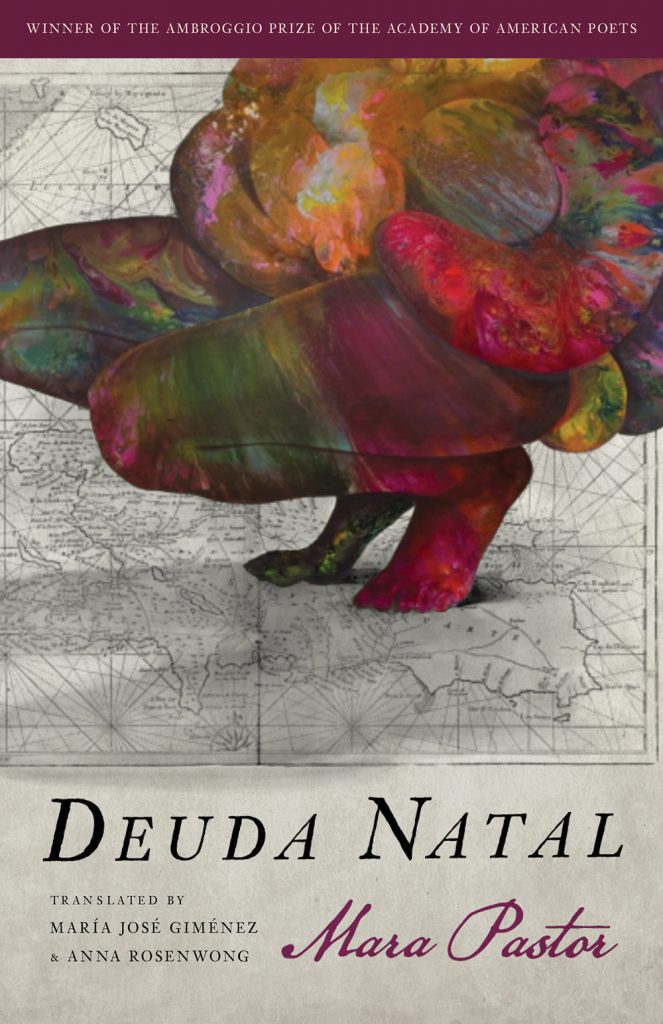
Pastor‘s new book with the University of Arizona Press with translators María José Giménez, and Anna Rosenwong, Deuda Natal, is the winner of the 2020 Ambroggio Prize of the Academy of American Poets. The poems in Deuda Natal propose new ways of understanding as they traverse a thematic landscape of women’s labor, the figure of the nomad and immigrant, and the return from economic exile to confront the catastrophic confluence of disaster and disaster capitalism.

Watch: Tsim Schneider Discusses New Book on Indigenous Peoples of California

November 25, 2021

The University of California, Santa Cruz’s American Indian Resource Center recently celebrated Tsim Schneider’s new book, The Archaeology of Refuge and Recourse: Coast Miwok Resilience and Indigenous Hinterlands in Colonial California, in a virtual event.

Schneider, a member of the Federated Indians of Graton Rancheria, is an assistant professor of anthropology at the University of California, Santa Cruz. He discussed his book and its examination of the critical and ongoing relationships Indigenous peoples maintained to their homelands despite colonization and systematic destruction of their cultural sites. Schneider was joined by Peter A. Nelson and Nick Tipon, fellow citizens of his tribe.

Schneider was also interviewed recently on KSQD, a Santa Cruz community radio station. You can find the interview here.

Watch: Creechan Talks ‘Drug Wars and Covert Netherworlds’ with OLLI Members

November 24, 2021

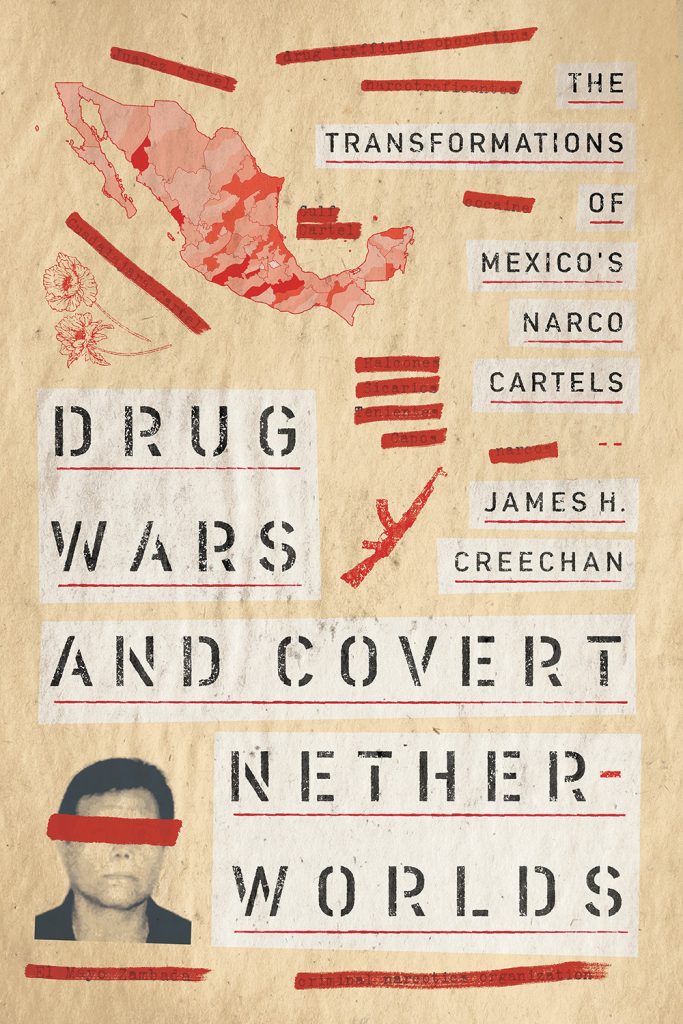
The University of Arizona’s Osher Lifelong Learning Institute recently hosted University of Arizona Press authors James H. Creechan to talk about his new book, Drug Wars and Covert Netherworld: The Transformations of Mexico’s Narco Cartels.

In Drug Wars and Covert Netherworlds, Creechan draws on decades of research to paint a much more nuanced picture of the transformation of Mexico’s narco cartels. A sociologist and criminologist, Creechan details narco cartel history, focusing on the decades since Richard Nixon declared the War on Drugs. With sobering detail, he unravels a web of government dependence, legitimate enterprises, covert connections, and violent infighting.

Watch: Book Launch Event Celebrating ‘Natural Landmarks of Arizona’

November 19, 2021

On Tuesday, November 9, fans of David Yetman and Arizona’s natural beauty gathered together at the MSA Annex for an event to celebrate Yetman’s new book, Natural Landmarks of Arizona, published by the University of Arizona Press.

David Yetman sharing stories during the Nov. 9 event at the MSA Annex

The event, co-sponsored by Why I Love Where I Live, The Southwest Center and the Press, included a book signing, as well as a lifetime of stories from Yetman on the natural landmarks he first saw as a child, and those he explored as a social scientist, author, and host of his Emmy award-winning shows, The Desert Speaks and In the Americas with David Yetman.

Alex Tovar, co-owner of Why I Love Where I Live, welcoming folks to the Nov. 9 event and book signing.

Big thanks to The Southwest Center’s Carlos Quintero Herrera, outreach coordinator, for his assistance promoting and filming the events, and Jeffrey Banister, director, for sharing the publishing history of the organization and introducing Yetman. Additional thanks to Alex Tovar, co-owner of Why I Love Where I Live, for hosting the book signing.

If you didn’t have a chance to attend, please watch this event video from The Southwest Center:

AAA 2021: New and Recent Anthropology Titles, Conference Discounts, and More

November 17, 2021

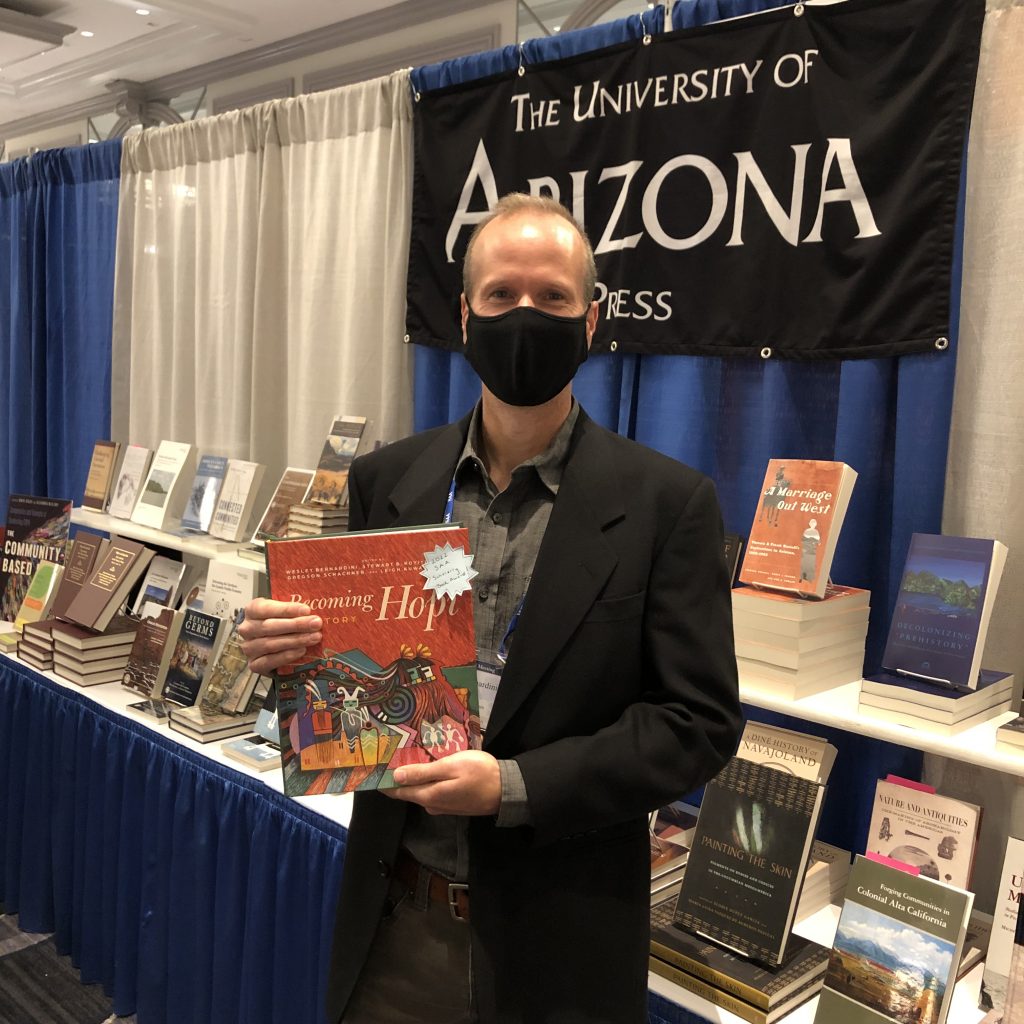
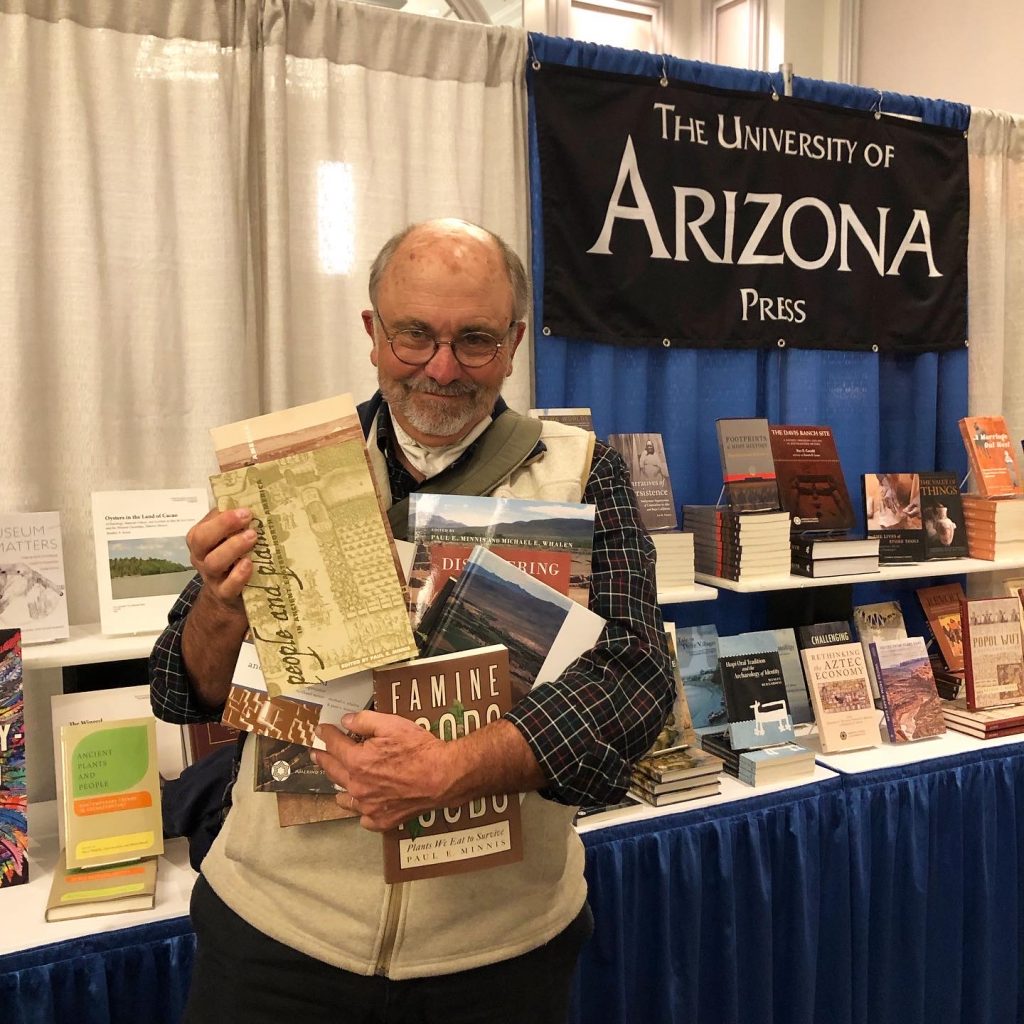
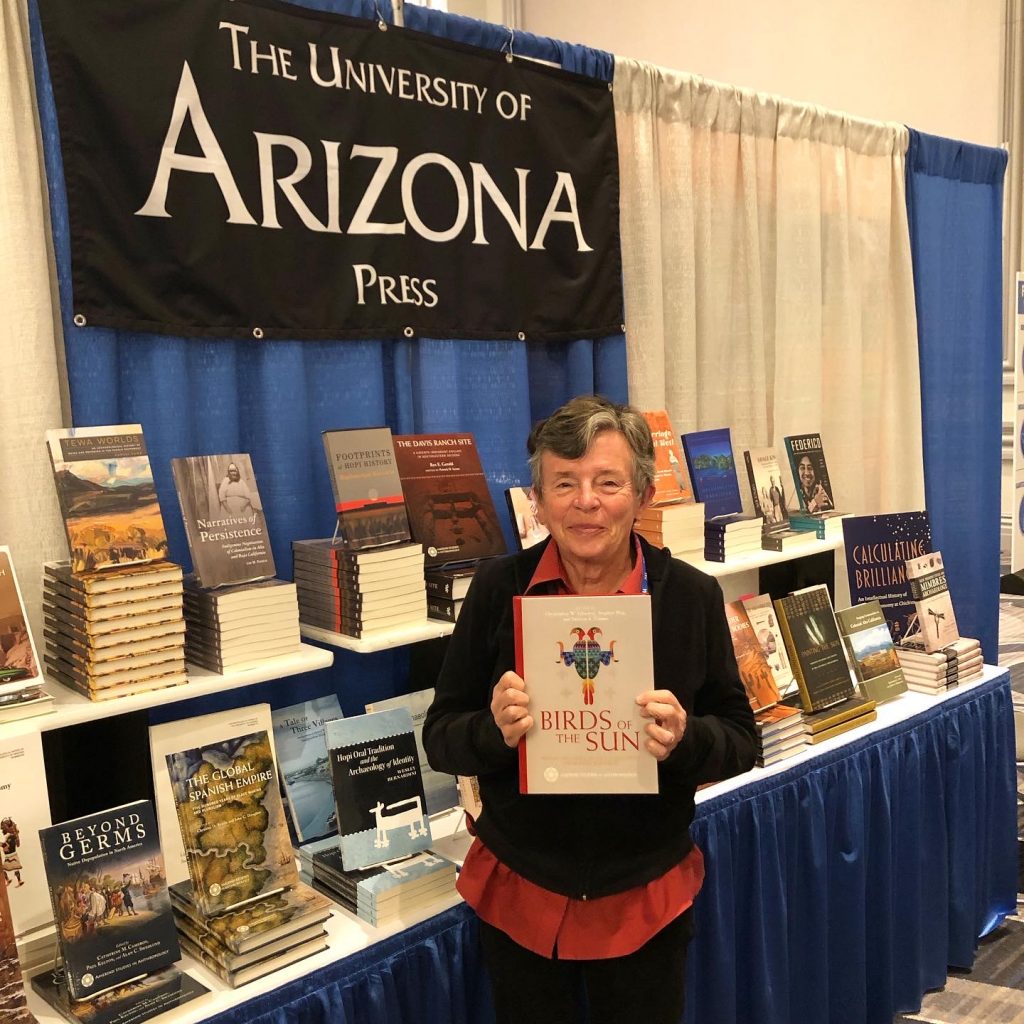
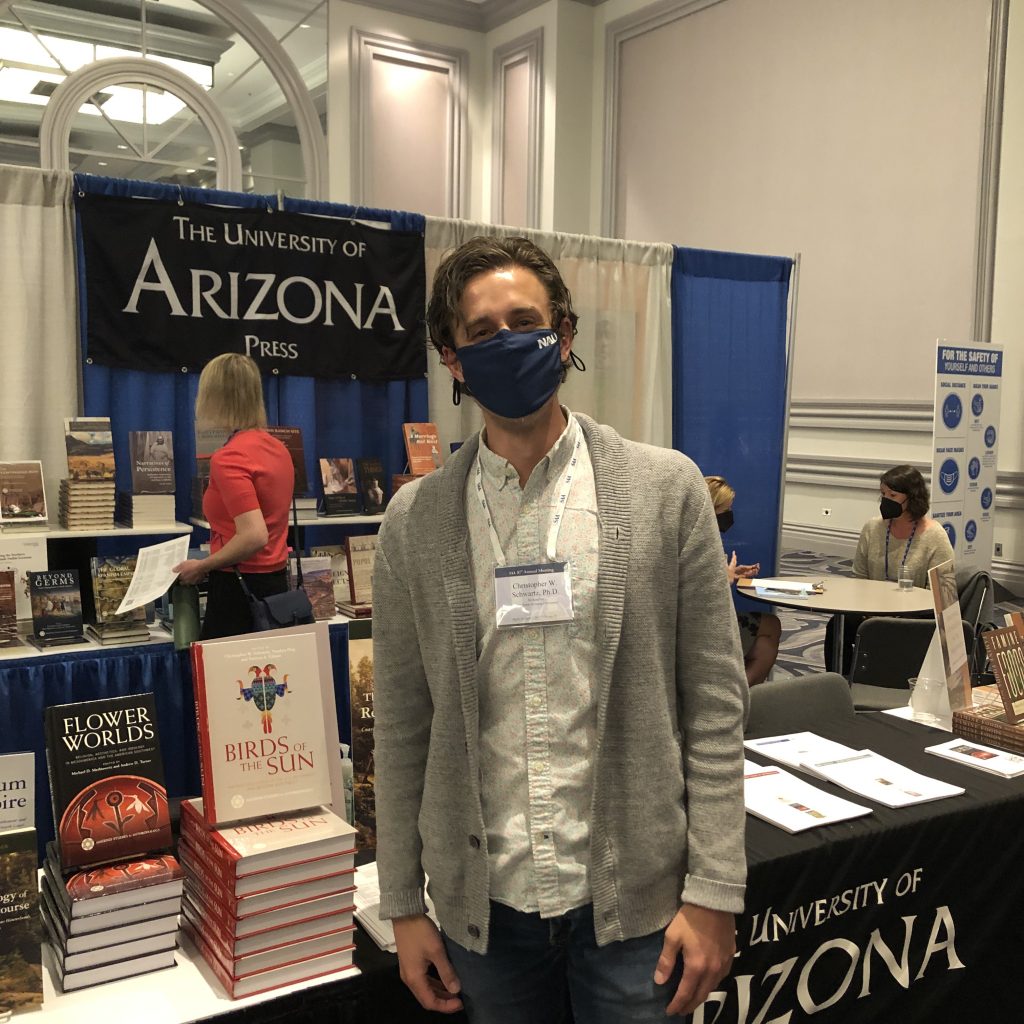
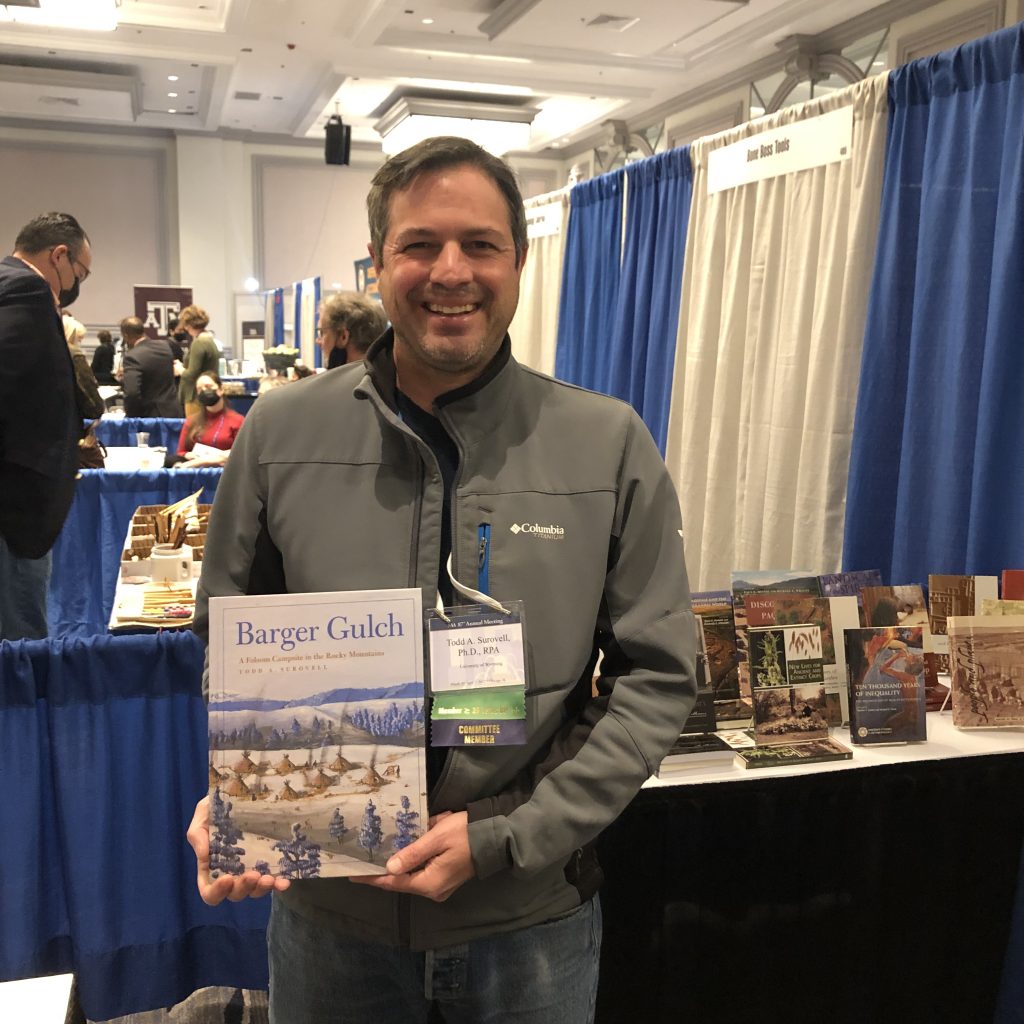
We are thrilled to be participating in the virtual component of the AAA meeting! We have an incredible selection of new and recent titles that we hope you will enjoy. Use the code AZAAA21 at checkout on our website to receive 40% off all titles, plus free U.S. shipping, through December 30, 2021.

If you have any questions about our publishing program, please read our guidelines here, and feel free to contact our Senior Editor Allyson Carter at ACarter@uapress.arizona.edu.

We put together a video of a few of our recent authors highlighting their new and recent anthropology books. We hope you enjoy the video, and we are looking forward to seeing you all again in the future.

New From the University of Arizona Press

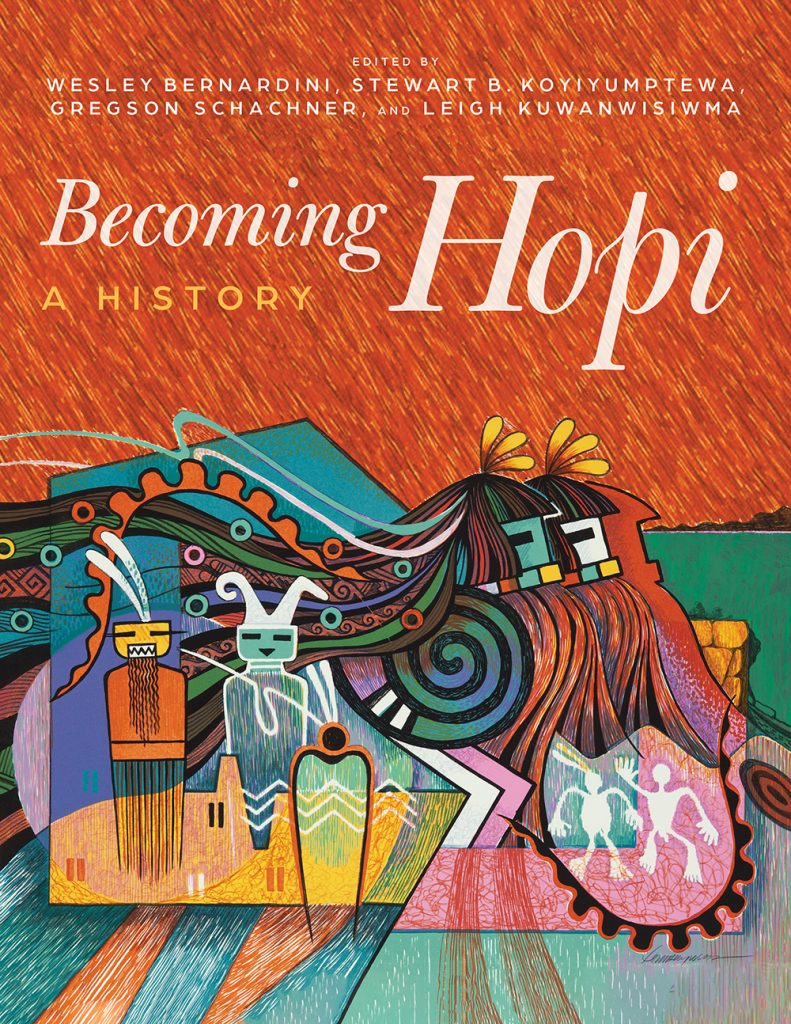
Becoming Hopi is a comprehensive look at the history of the people of the Hopi Mesas as it has never been told before. The product of more than fifteen years of collaboration between tribal and academic scholars, this volume presents groundbreaking research demonstrating that the Hopi Mesas are among the great centers of the Pueblo world.

Becoming Hopi brilliantly combines Hopi and non-Hopi voices in helping to rewrite Hopi history and the process of becoming Hopi. The coverage is extensive—both for Hopi as well as for wide swaths of the northern Southwest—and each chapter has something new to offer in terms of innovative data collection and interpretation. The combination and use of traditional, archaeological, and documentary histories unfolds a rare perspective on what it means to be Hopi.”—Barbara Mills, co-editor of The Oxford Handbook of Southwest Archaeology

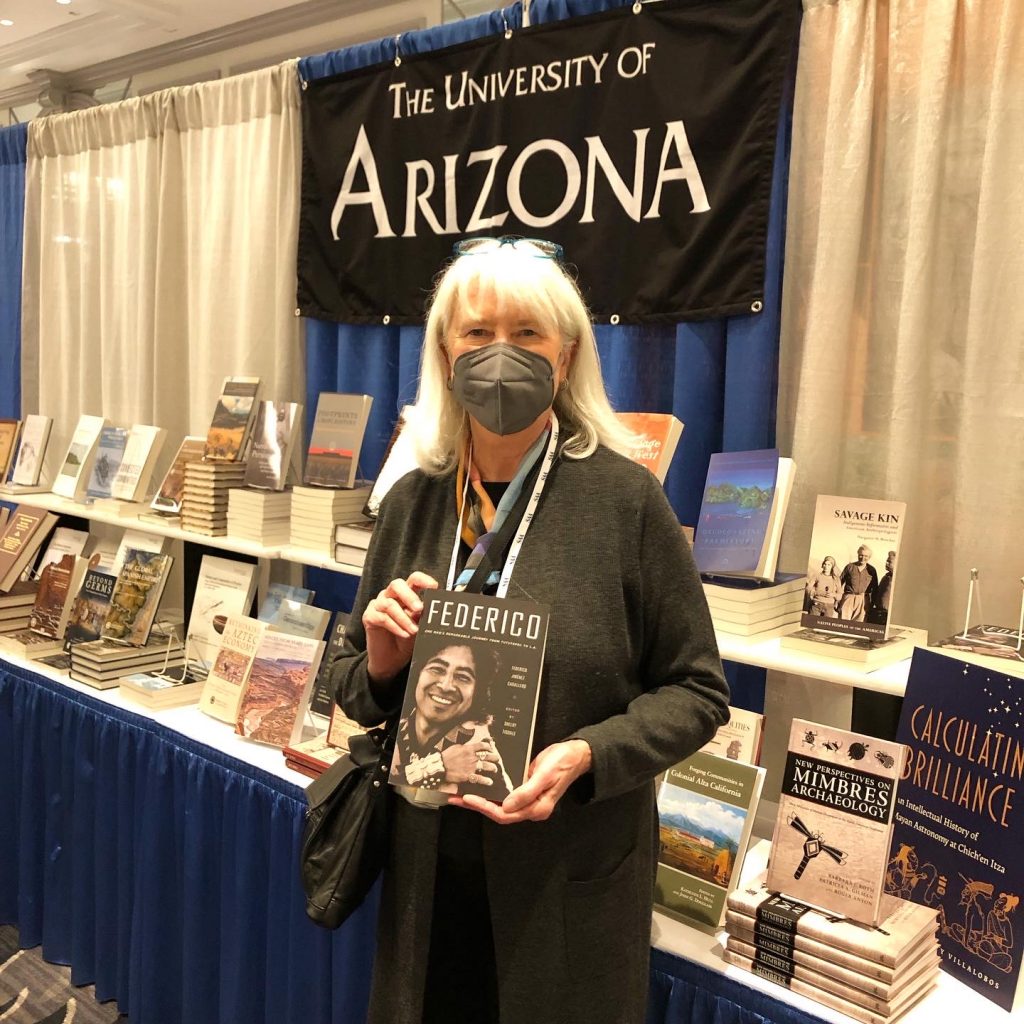
From the day he was born, Federico Jiménez Caballero was predicted to be a successful man. So, how exactly did a young boy from Tututepec, Oaxaca, become a famous Indigenous jewelry artist and philanthropist in Los Angeles? Federico tells the remarkable story of willpower, curiosity, hard work, and passion coming together to change one man’s life forever.

Watch a recording of a virtual book celebration for Federico here. We’re thrilled that Federico received an honorable mention for the International Latino Book Awards!

Decolonizing “Prehistory” critically examines and challenges the paradoxical role that modern historical-archaeological scholarship plays in adding legitimacy to, but also delegitimizing, contemporary colonialist practices. Using an interdisciplinary approach, this volume empowers Indigenous voices and offers a nuanced understanding of the American deep past.

Decolonizing “Prehistory” carries readers to the rugged landscapes of the Pacific Northwest to hear how they are known by communities with millennial depth as residents. The book adds breadth with chapters on the Penobscot River People, Maya communities living at tourist destinations Coba and Tulum, and Mammoth Cave. Philip Deloria concludes the book with a reading of his father’s no-holds-barred assertion of flaws in Western science, a position that time has brought closer to anthropologists’ own critiques seen in this volume.”—Alice Beck Kehoe, author of Traveling Prehistoric Seas: Critical Thinking on Ancient Transoceanic Voyages

The recognition of Flower Worlds is one of the most significant breakthroughs in the study of Indigenous spirituality in the Americas. Flower Worlds is the first volume to bring together a diverse range of scholars to create an interdisciplinary understanding of floral realms that extend at least 2,500 years in the past.

Read an excerpt from the book here.

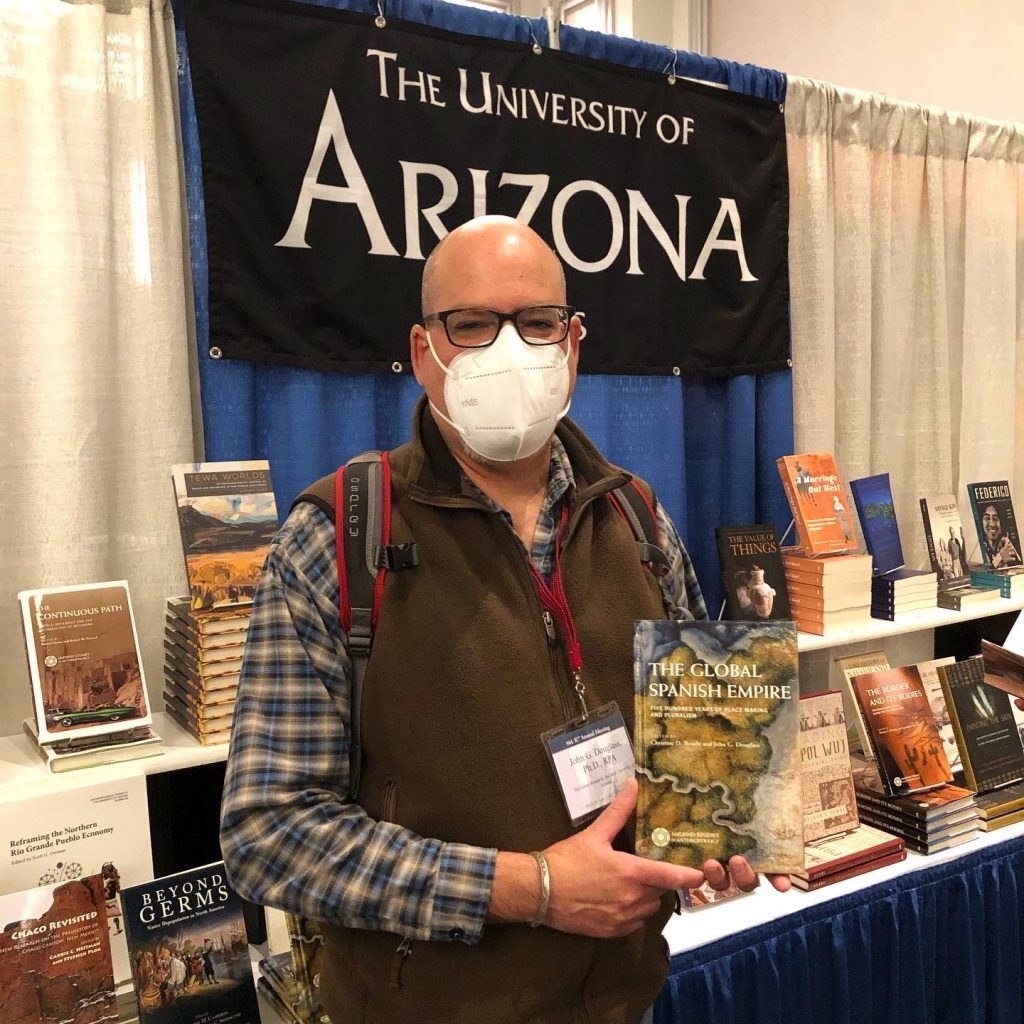
“The authors are coming at Flower World concepts from different directions and perspectives, and these different ideas and perspectives speak together in a way that helps further the conversation. This volume is not about concluding ideas but about continuing the conversation. I was impressed by the multitude of strong voices—both past and present—representing elements of the Flower World. This volume will be of lasting importance in the cross-cultural study of Flower Worlds.”—John G. Douglass, co-editor of The Global Spanish Empire: Five Hundred Years of Place Making and Pluralism

How people eat today is a record of food use through the ages—and not just the decadent, delicious foods but the less glamorous and often life-saving foods from periods of famine as well. In Famine Foods, Paul E. Minnis focuses on the myriad plants that have sustained human populations throughout the course of history, unveiling the those that people have consumed, and often still consume, to avoid starvation. For the first time, this book offers a fascinating overview of famine foods—how they are used, who uses them, and, perhaps most importantly, why they may be critical to sustain human life in the future.

Watch a recording of a virtual book release celebration for Famine Foods here, then read a review of the book on the Savor the Southwest blog here. We’re thrilled that Famine Foods author Paul E. Minnis Receives the Society of Ethnobiology’s 2021 Distinguished Ethnobiologist Award!

In Tourism Geopolitics, contributors show enacted processes such as labor migration, conservation, securitization, nation building, territorial disputes, ethnic cleansing, heritage revitalization, and global health crisis management, among others. These contended societal processes are deployed through tourism development initiatives that mobilize deeply uneven symbolic and material landscapes. The chapters reveal how a range of experiences are implicated in this process: museum visits, walking tours, architectonical evocations of the past, road construction, militarized island imaginations, gendered cultural texts, and official silences. Collectively, the chapters offer ethnographically rich illustrations from around the world that demonstrate the critical nature of tourism in formal geopolitical practices, as well as the geopolitical nature of everyday tourism encounters. This volume is a vital read for critical geographers, anthropologists, and political scientists, as well as scholars of tourism and cultural studies.

Read an excerpt from the book here.

Moveable Gardens explores the ways people make sanctuaries with plants and other traveling companions in the midst of ongoing displacement in today’s world. This volume addresses how the destruction of homelands, fragmentation of habitats, and post-capitalist conditions of modernity are countered by the remembrance of tradition and the migration of seeds, which are embodied in gardening, cooking, and community building.

Read an excerpt from the book here.

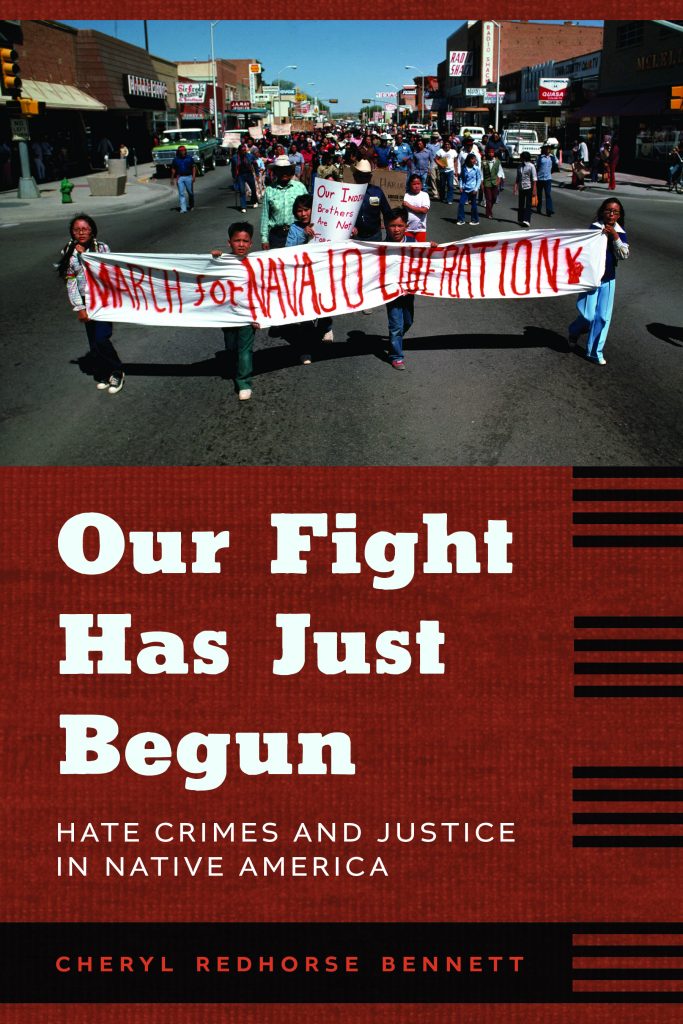
Indigenous Women and Violence offers an intimate view of how settler colonialism and other structural forms of power and inequality created accumulated violences in the lives of Indigenous women. The chapters in this book are engaged, feminist, collaborative, and activism focused, conveying powerful messages about the resilience of Indigenous women in the face of violence and systemic oppression.

“Bringing together leading Indigenous and non-Indigenous scholars, this volume explores the connections between structural, extreme, and everyday violence against Indigenous women across time and borders. It makes important contributions to current debates about gender violence and research methods.”—Rachel Sieder, editor of Demanding Justice and Security: Indigenous Women and Legal Pluralities in Latin America

Alluvium and Empire examines the archaeology of Indigenous communities and landscapes that were subject to Spanish colonial forced resettlement during the sixteenth century. Written at the intersections of history and archaeology, the book critiques previous approaches to the study of empire and models a genealogical approach that attends to the open-ended—and often unpredictable—ways in which empires take shape.

“This book represents a much-welcome approach to the archaeology of empire. It combines a sophisticated theoretical framework with rigorous archival and archaeological methods to shed valuable new light on the history of Spanish empire building in Peru.”—Craig Cipolla, author of Foreign Objects: Rethinking Indigenous Consumption in American Archaeology

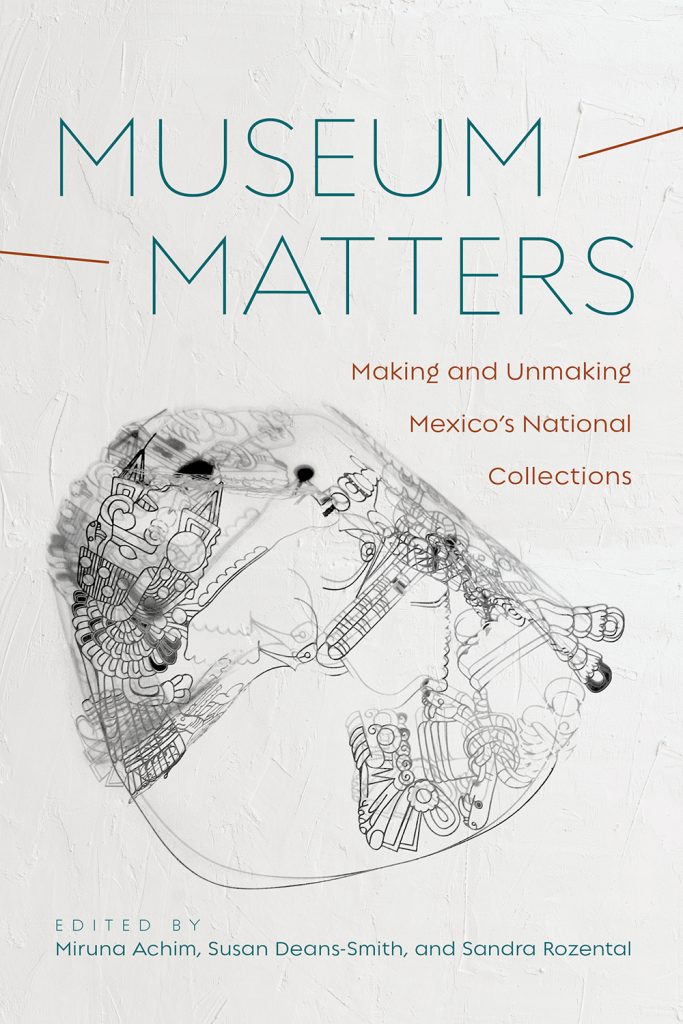
Museum Matters traces the emergence, consolidation, and dispersal of this national museum complex by telling the stories of its objects. Objects that have been separated over time are brought back together in this book in order to shed light on the interactions and processes that have forged things into symbols of science, aesthetics, and politics. The contributors to this volume illuminate how collections came into being or ceased to exist over time, or how objects moved in and out of collections and museum spaces. They explore what it means to move things physically and spatially, as well as conceptually and symbolically.

“This exciting new volume gathers penetrating new studies on the formation of Mexico’s national collections, from antiquities to natural history specimens. The volume is essential reading for anyone interested in the formation of museums, particularly how such institutions participate in the production of knowledge over time. Filled with strikingly original and important contributions, the volume will be widely read by scholars in history, anthropology, museum studies, art history, archaeology, and other related fields.”—Joanne Pillsbury, The Metropolitan Museum of Art

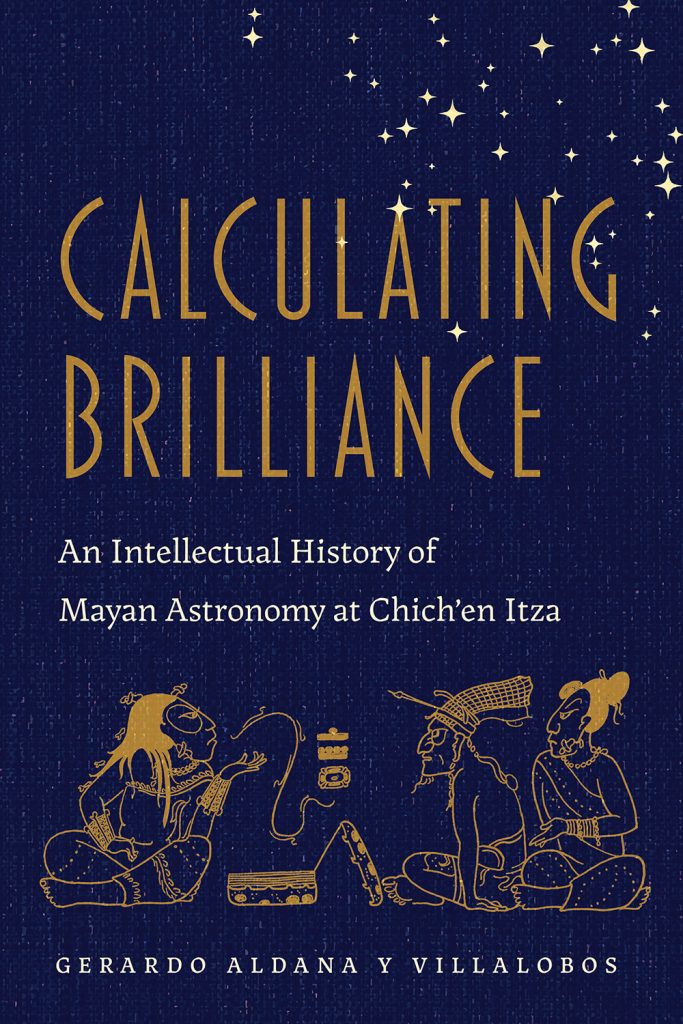
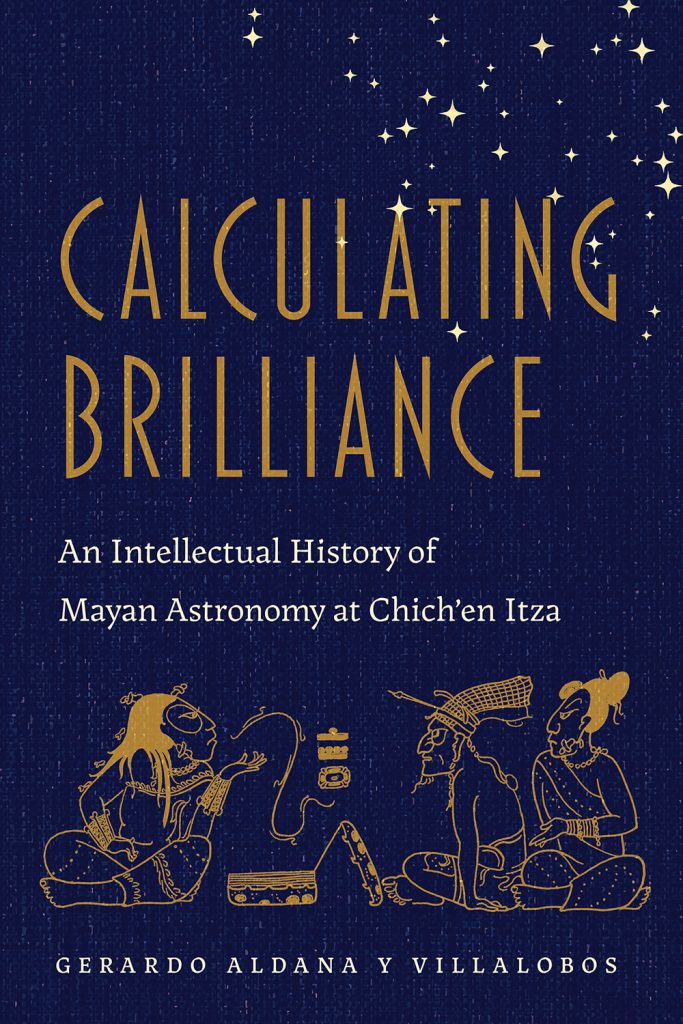
This book contextualizes the discovery of a Venus astronomical pattern by a female Mayan astronomer at Chich’en Itza and the discovery’s later adaptation and application at Mayapan. Calculating Brilliance brings different intellectual threads together across time and space, from the Classic to the Postclassic, the colonial period to the twenty-first century to offer a new vision for understanding Mayan astronomy.
“A truly decolonial work that strips away the Eurocentric presuppositions of a century of Mayan studies scholarship to relate new openings and possibilities in the field. Aldana masterfully crafts a new methodology and approach for understanding the development of a unique Mayan science that weaves together hieroglyphic writing, mathematics, history, and astronomy.”—Roberto D. Hernández, author of Coloniality of the U-S///Mexico Border: Power, Violence, and the Decolonial Imperative

Voluntourism and Multispecies Collaboration is a lively ethnographic exploration of the world of conservation voluntourism and its engagement with marine and terrestrial biodiversity on the Honduran Bay Island of Utila, located in the ecologically critical Mesoamerican Barrier Reef.

Anthropologist Keri Vacanti Brondo provides a pioneering theoretical framework that conceptualizes conservation voluntourism as a green industry. Brondo argues that the volunteer tourism industry is the product of coloniality and capitalism that works to produce and sustain an economy of affect while generating inequalities and dispossession. Readers journey through the mangroves and waters alongside voluntourists, iguanas, whale sharks, turtles, lionfish, and islanders to build valuable research experience in environmental management while engaging in affective labor and multispecies relations of care.

Once Upon the Permafrost is a longitudinal climate ethnography about “knowing” a specific culture and the ecosystem that culture physically and spiritually depends on in the twenty-first-century context of climate change. Through careful integration of contemporary narratives, on-site observations, and document analysis, Susan Alexandra Crate shows how local understandings of change and the vernacular knowledge systems they are founded on provide critical information for interdisciplinary collaboration and effective policy prescriptions.

“The Sakha people of Siberia live far from most of us in a forbidding and changing land of extreme cold and heat, underlain with permafrost. Through many years of research with them, Susan Crate brings to life how the knowledge and narratives of local people, explorers, and scientists reveal the interplay between culture and environment and why, in a profound sense, we all do ‘live on permafrost.’”―Bonnie McCay, author of Oyster Wars and the Public Trust

Naturalizing Inequality discusses the reproduction and legitimization of racial inequality in post-apartheid South Africa. Michela Marcatelli unravels this inequality paradox through an ethnography of water in a rural region of the country. She documents how calls to save nature have only deepened and naturalized inequality.

“This book takes us past generalizations about inequality to delve into the complex realities of the Waterberg. While South Africa is lauded for increasing water access, Marcatelli shows how the government’s prioritization of economic growth means that the apartheid history of unequal access to water is not only perpetuated but legitimated.”—Mary Galvin, University of Johannesburg

As an Indigenous scholar researching the history and archaeology of his own tribe, Tsim D. Schneider provides a unique and timely contribution to the growing field of Indigenous archaeology and offers a new perspective on the primary role and relevance of Indigenous places and homelands in the study of colonial encounters.


The Archaeology of Refuge and Recourse makes a powerful and convincing case that ‘a sense of place formed the glue for reassembling shattered lives.’ During the colonial era, Coast Miwoks found recourse by traveling across the water and gathering within ancient shell middens, coastal villages, and trading posts, renewing kinship ties and reconnecting with deep traditions along the way. The study offers an innovative and compelling amalgam of theory building, storytelling, and archaeological analysis.”—Martin Gallivan, Department Chair of Anthropology at the College of William and Mary

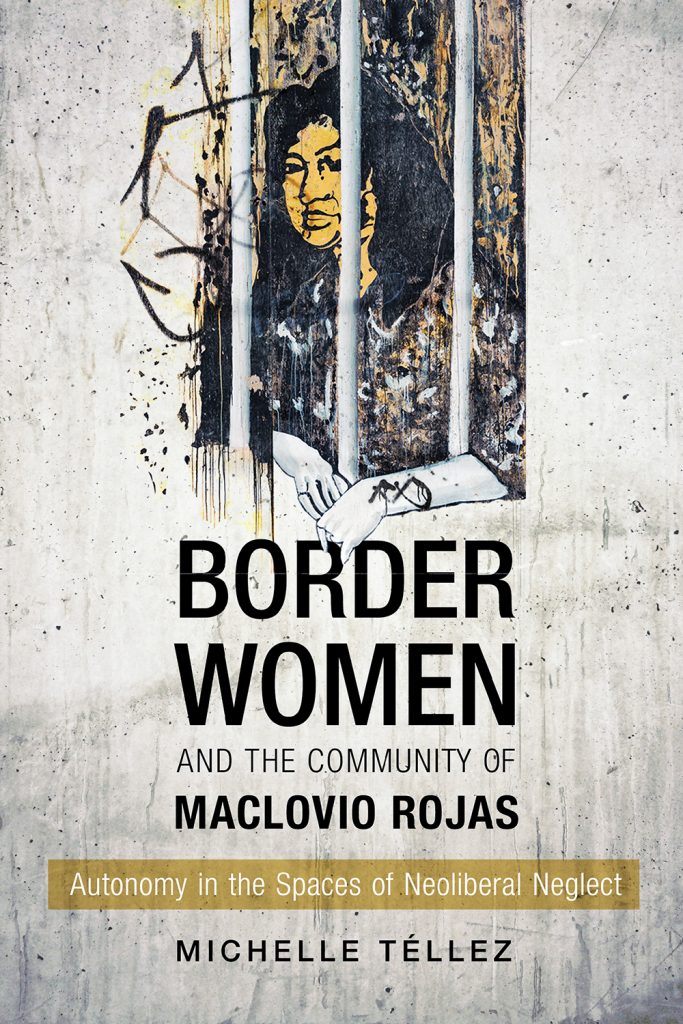
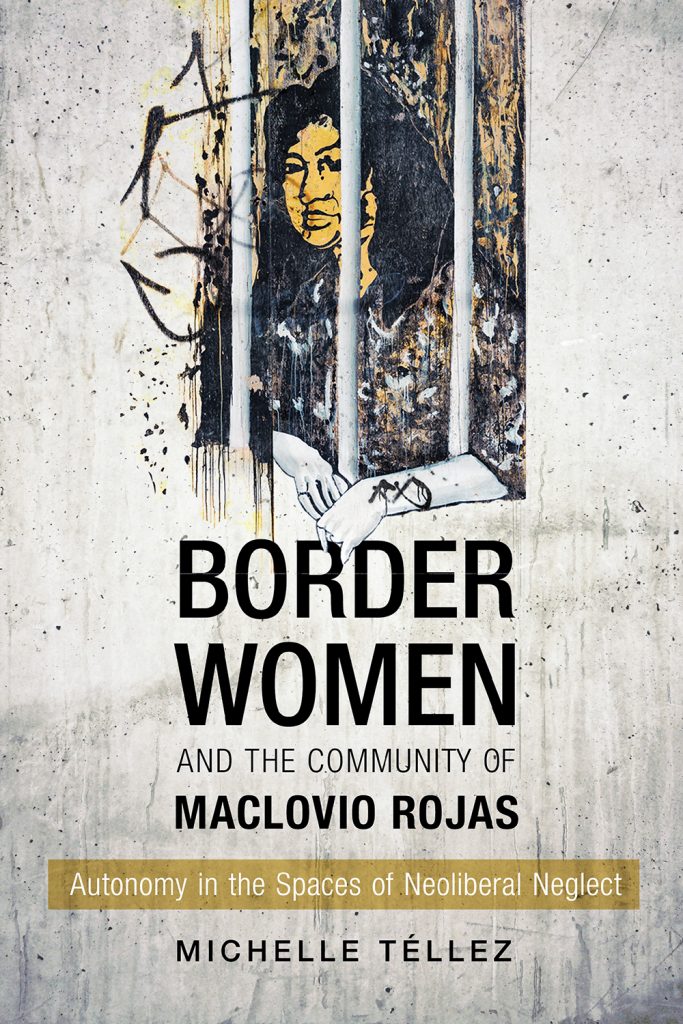
Border Women and the Community of Maclovio Rojas tells the story of the community’s struggle to carve out space for survival and thriving in the shadows of the U.S.-Mexico geopolitical border. This ethnography by Michelle Téllez demonstrates the state’s neglect in providing social services and local infrastructure. This neglect exacerbates the structural violence endemic to the border region—a continuation of colonial systems of power on the urban, rural, and racialized poor. Téllez shows that in creating the community of Maclovio Rojas, residents have challenged prescriptive notions of nation and belonging. Through women’s active participation and leadership, a women’s political subjectivity has emerged—Maclovianas. These border women both contest and invoke their citizenship as they struggle to have their land rights recognized, and they transform traditional political roles into that of agency and responsibility.

Read about a wonderful local event that celebrated the release of Border Women and the Community of Maclovio Rojas here.
Reflections of a Transborder Anthropologist shows how both Carlos Vélez-Ibáñez and anthropology have changed and formed over a fifty-year period. Throughout, he has worked to understand how people survive and thrive against all odds. Vélez-Ibáñez has been guided by the burning desire to understand inequality, exploitation, and legitimacy, and, most importantly, to provide platforms for the voiceless to narrate their own histories.

We are so thrilled that Carlos Vélez-Ibáñez was honored with the 2020 Franz Boas Award, the inaugural AAHHE Distinguished Scholar Award, as well as the Society for the Anthropology of North America’s 2021 Distinguished Achievement Award in the Critical Study of North America. Congratulations, Carlos!

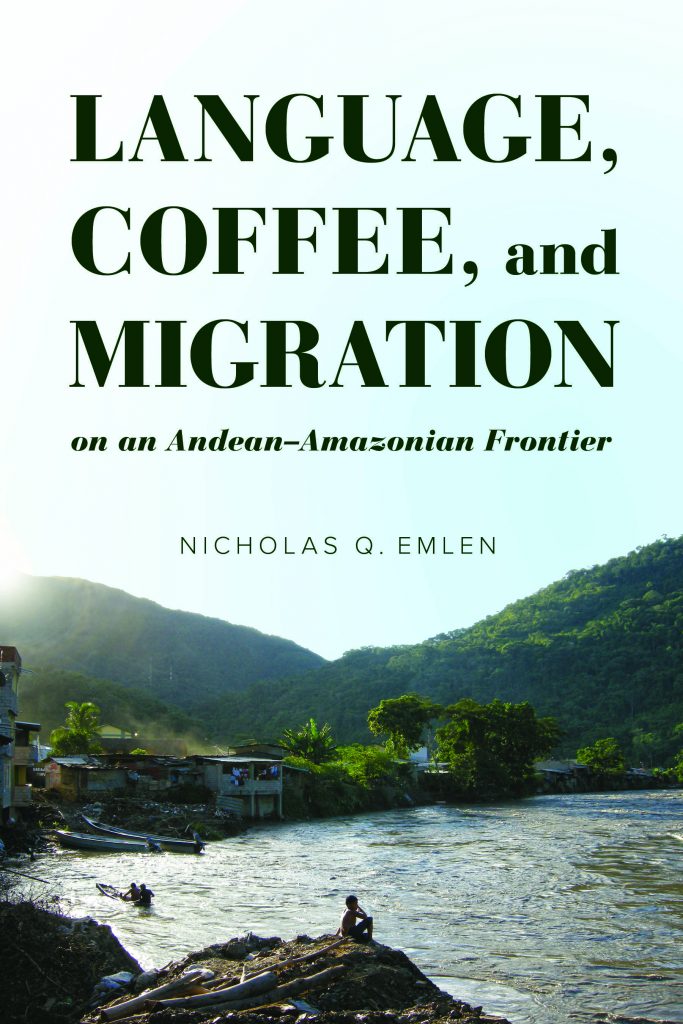
Language, Coffee, and Migration on an Andean-Amazonian Frontier takes us to remote Amazonian villages, dusty frontier towns, roadside bargaining sessions, and coffee traders’ homes to offer a new view of settlement frontiers as they are negotiated in linguistic interactions and social relationships. The book brings together a fine-grained analysis of multilingualism with urgent issues in Latin America today. It is a timely on-the-ground perspective on the agricultural colonization of the Amazon, which has triggered an environmental emergency threatening the future of the planet.

Read a Q&A with author Nicholas Q. Emlen here.
Be sure to check out our wonderful open access titles, made available through the support of the Andrew W. Mellon Foundation. Read more about Open Arizona and browse titles here.
‘Border Women’ Event Celebrated Michelle Téllez’s Work and Community

October 12, 2021

Hortensia Hernández never got a chance to hold the book, Border Women and the Community of Maclovio Rojas: Autonomy in the Spaces of Neoliberal Neglect, but she knew the book on the community she helped lead and organize would be published in October. In August, Hernández died after a short battle with cancer, and despite her absence she was everywhere during the book celebration on Wednesday, October 8 at EXO Roast Co. in Tucson.

The book’s cover features Hernández’s likeness from a mural in the autonomous community in Baja California. Author Michelle Téllez, standing before friends, colleagues, and book lovers at the event, recalled what Hernández wrote after seeing the cover:

“You stirred my heart. It was sad, bitter, because for years I was persecuted by police and politicians. Without being a criminal, my crime was to seek a dignified life, education, health, sport. But it was worth it, today more than 12,000 inhabitants have benefited, and I am happy that my compañeros and I came out almost triumphant as we await the titles of our property. And thank you, Michel [sic], for you were part of our marginalized and you supported us to get ahead. We love you very much. And this cover moved me, but it also made me reflect and think with satisfaction that it was worth it.”

Much thanks to EXO Roast co-owners Amy and Doug Smith for hosting the event, which featured music from the Son Jarocho Collective.
Téllez, an associate professor in the Department of Mexican American Studies at the University of Arizona, is coeditor of The Chicana M(other)work Anthology, also published by the University of Arizona Press. The anthology weaves together emerging scholarship and testimonios by and about self-identified Chicana and Women of Color mother-scholars, activists, and allies who center mothering as transformative labor through an intersectional lens. 
Border Women tells the story about the autonomous community of Maclovio Rojas near Tijuana, and how it demonstrates what is possible for urban place-based political movements. More than a community, Maclovio Rojas is a women-led social movement that works for economic and political autonomy to address issues of health, education, housing, nutrition, and security. Téllez shows that in creating the community of Maclovio Rojas, residents have challenged prescriptive notions of nation and belonging.

Watch: Virtual Book Celebration and Reading with Valerie Martínez

September 23, 2021

The University of Arizona Press hosted a virtual book launch and reading on Wednesday, September 22 with poet Valerie Martínez for her book-length poem Count. Martínez was joined by Rigoberto Gonzaléz, University of Arizona Press’ Camino del Sol Series editor.

About Count: Forty-three sections of myth-gathering, flora and fauna, accounts of climate devastation, personal narratives, witnessing, references to works of eco-art, and evocations of children unfold over the course of the book, creating a deeply nuanced image of the current climate crisis. Central to this vital work of ecopoetry is the idea of counting—counting down to the extinction of a species, counting the wonders of the natural world, counting our way back to the balance that is required to save ourselves from climate destruction. Filled with a sense of grief and sorrow for the current state of the planet, Count also offers a glimmering hope that future generations will restore our damaged environment.

Watch: Mara Pastor Read from New Poetry Collection ‘Deuda Natal’

September 13, 2021

The University of Arizona Press, in partnership with the Academy of American Poets, presented poet Mara Pastor, who read from her new collection, Deuda Natal, in a virtual book celebration on Wednesday, September 9, 2021.

Deuda Natal won the Academy of American Poets’ 2020 Ambroggio Prize, the only annual award of its kind in the United States that honors American poets whose first language is Spanish. The poems in Deuda Natal were translated from Spanish to English by María José Giménez and Anna Rosenwong.

During this virtual book celebration, Pastor, and translators Giménez and Rosenwong, were introduced by Nicole Cecilia Delgado, a poet, translator, and book artist. Pastor read her poems in Spanish, while Giménez and Rosenwong read the same poems in English. Delgado interviewed the poet and translators about the project, and how they delicately worked together to capture the poet’s words, spirit, and motivations.

Deuda Natal finds the beauty within vulnerability and the dignity amidst precariousness. As one of the most prominent voices in Puerto Rican poetry, Pastor uses the poems in this new bilingual collection to highlight the way that fundamental forms of caring for life—and for language—can create a space of poetic decolonization. The poems propose new ways of understanding as they traverse a thematic landscape of women’s labor, the figure of the nomad and immigrant, and the return from economic exile to confront the catastrophic confluence of disaster and disaster capitalism.

For Authors

The University of Arizona Press publishes the work of leading scholars from around the globe. Learn more about submitting a proposal, preparing your final manuscript, and publication.

Inquire

Requests

The University of Arizona Press is proud to share our books with readers, booksellers, media, librarians, scholars, and instructors. Join our email Newsletter. Request reprint licenses, information on subsidiary rights and translations, accessibility files, review copies, and desk and exam copies.

Request

Support the Press

Support a premier publisher of academic, regional, and literary works. We are committed to sharing past, present, and future works that reflect the special strengths of the University of Arizona and support its land-grant mission.

Give