Field Notes: Nathaniel Morris on Fiestas in the Mountains of Mexico

December 1, 2020

Leafing through documents in the archives could only ever tell historian Nathaniel Morris half of the story he was trying to piece together. He wanted to reconstruct the way in which the Mexican Revolution of 1910-1940 had unfolded in the remote, mountainous Gran Nayar region of western Mexico, and the effects this had had on the identities of its inhabitants. But few of the bandits, teachers, generals, politicians, agronomists or rebel guerrillas active there during that turbulent era left detailed records of their activities. And most of the local population – mostly Indigenous Náayari (Cora), Wixárika (Huichol), O’dam (Tepehuano) and Mexicanero people – had been illiterate, which meant their voices were also largely missing from the documentary record. It was vital, then, for Morris to travel to the Gran Nayar itself, to track down the area’s oldest remaining inhabitants and hear directly from them about how, and why, their forebears (and, in some cases, they themselves) had taken part in the peasant uprisings, military revolts, coups, agrarian reforms and radical cultural projects that swept Mexico during the first half of the twentieth century. These interviews form the core of Morris’ new book, Soldiers, Saints and Shamans, which explores the complex and often conflictive relations between Náayari, Wixárika, O’dam and Mexicanero communities and the revolutionary Mexican state.

Today we share a few of Morris’ photos and extended captions from his fieldwork, which offer insight into the stories and methods that have informed his work.

All photos and captions by Nathaniel Morris.

1: To carry out my research in the Gran Nayar – a region of mountains, canyons, pine forests and scrubland with a scattered population and few paved roads – I had to walk, hike, ride horses, and hitch rides in the backs of pick-up trucks. This sort of travel – often gruelling, sometimes scary, but always eye-opening – enabled me to track down many of the region’s surviving eyewitnesses to the revolution; and it also helped me to understand the diverse landscapes and climates in which they and their forebears have made their lives, and the routes and connections between places and people. The beliefs, practices, and the very ethnic identity of the Náayari, Wixárika, O’dam and Mexicanero peoples is completely tied up with the lands in which they live, which the gods brought into being to replace previous worlds destroyed as part of an ongoing “cosmic battle” between light and darkness, order and chaos, aridity and fertility. The story of this creation is inscribed in the geography of the Gran Nayar, which is strewn with thousands of sites identified with the gods and ancestors and their stories. In the Gran Nayar, land is simultaneously culture, identity, and history.

2: Here you can see the great-grandson of Mariano Mejía – one of the central characters in my book, and the single most powerful man in the whole Gran Nayar during the 1920s – showing me Mejía’s sword. Meeting the relatives of the historical figures I was investigating, hearing the stories that had been passed down within their families, and – as in this case – seeing and even being able to hold artefacts from the Revolutionary era, really helped me to connect to my research. While gathering this oral testimony I lived with Náayari, Wixárika, O’dam, Mexicanero and mestizo families. I ate their food, slept on their floors, learned a little (far too little) of their languages, and listened to their own stories — often sad, sometimes hilarious — of their own lives in the region. And so it became almost a personal quest for me to fill in this gaping hole in our records of the Revolution where the Gran Nayar should’ve been.

3: You can’t understand politics in the Gran Nayar – even today – without understanding local ceremonial practices, such as the Semana Santa (Holy Week) festival pictured here. Religious beliefs, rituals, prayers, fiestas and thanksgivings still permeate every aspect of Náayari, Wixárika, O’dam, and Mexicanero life, from farming and hunting to politics and warfare. And so the Mexican Revolution was locally experienced—and is today remembered—as both a political and a supernatural event: an era of widespread intercommunal and factional conflict, when the still-unfinished agrarian reform that today divides the region was first begun; but also a time when local warlords channelled occult forces to defend their communities from raiders, and when miraculous statues of Catholic saints resisted the attacks of bandits or soldiers, or even took on human form to lead the charge against their enemies. It is natural, then, to find historical narratives of the Mexican Revolution embedded in the modern ceremonial practices of the Gran Nayar’s inhabitants, whether in the form of bandolier-draped dancers demanding gold from village elders in Tuxpan de Bolaños; painted “devils” shouting their allegiance to the Carrancistas, Villistas, or cristeros in Santa Teresa; or glazed-eyed peyote pilgrims in Santa Catarina irreverently yelling “Long live the supreme government!” as they romp around their ritual dance grounds. Many of the political outcomes of the revolution are also conceived of in terms of their effects on local ethno-religious identities.

4: In order to try and really understand the relationship between rituals, politics, and history, I had to try and be an ethnologist as well as a historian. And that meant helping to prepare ritual feasts, dancing, praying, drinking, and in Santa Teresa running laps and fighting other stick-wielding “devils” during Semana Santa – here you can see me in my clay- and ash-painted finest at the climax of that exhausting four-day fiesta. Taking part in, rather than just watching, helped me to understand how local rituals express both collective memories and more far-reaching mythical-historical narratives, all of which have been inflected to some degree by local experiences of the revolution.

5: It wasn’t just strictly religious, Indigenous festivals that I found myself taking part in – here you can see cockfight – which is about as secular an event as it gets – in Huajimic, a mestizo, rather than Indigenous, community in the mountains of Nayarit. Spanish-speaking mestizo people are a minority in Gran Nayar, but make up the majority of the population in Mexico as a whole. For that reason mestizo people born and raised in the Gran Nayar often played key roles in linking the region to the rest of the country, and so have had an influence on the history of the region that belies their limited numbers. During the Revolution, political violence, exile, political manoeuvring by pro-agrarian reform factions, state-promoted shifts from subsistence agriculture to extractive industry, and the arrival of mestizo settlers from elsewhere in Mexico, also transformed a few originally Indigenous communities into mestizo settlements. And so ethnic tensions between mestizos and Indigenous people that have roots in the Revolution continue to shape politics in the Gran Nayar today.

6: As well as interviews and what ethnologists would call ‘participant observation,’ music was also essential to my research in the Gran Nayar. Here you can see a group of Náayari musicians laying down some tunes in the open air just after a fiesta. During the Revolutionary era – and still, to an extent, today – ballads known as ‘corridos’ functioned almost like newspapers in much of rural Mexico, spreading the word about important happenings, the rise and often violent fall of key local leaders, new political movements and much else of interest to a population that was largely illiterate. Today, ballads celebrating—or condemning—the paramount caciques, or telling of important battles, personal tragedies or political victories of the Revolution in the Gran Nayar, endure as popular entertainments during communal fiestas. These songs often contain key details that helped me better piece together not only the local events of the Revolution, but also the ways in which these were perceived and later remembered by the people of the Gran Nayar.

Nathaniel Morris is a historian of modern Mexico. He is currently a Research Fellow at University College London, where he is studying the participation of Indigenous militias in both the Mexican Revolution of 1910-40, and the ‘Drug War’ wracking the country today. Soldiers, Saints, and Shamans is Morris’s first book.

A Look Inside A Marriage Out West

November 23, 2020

A Marriage Out West is an intimate biographical account of two fascinating figures of twentieth-century archaeology. Frances Theresa Peet Russell, an educator, married Harvard anthropologist Frank Russell in June 1900. They left immediately on a busman’s honeymoon to the Southwest. Their goal was twofold: to travel to an arid environment to quiet Frank’s tuberculosis and to find archaeological sites to support his research.

Below, read an excerpt from Nancy J. Parezo and Don D. Fowler’s A Marriage Out West.

We have long studied how women overcame economic and social barriers as they strove to be successful anthropologists. We have emphasized the hard work, perseverance, and resilience this required, given the asymmetrical reality in what was always considered the most welcoming of the sciences. Anthropology had its limits to the welcome, of course. Interested in the rise of professorships as a form of professional occupation in America, elsewhere we have looked at how anthropological careers compared to those of women who became professionals in the hard sciences, the natural sciences, sociology, and history, but we have never studied someone who pursued a career in English and philosophy, intentionally leaving anthropology behind. This is one reason Theresa Russell’s story is important.

Like several of our colleagues, we have focused primarily on the careers of women with a passion for anthropology who succeeded. We have used grounded methods to identify their strategies to overcome societal and professional obstacles, generate resources, and find interesting problems to tackle. This is one reason why we have both been fascinated with how women have thrived at disciplinary boundaries and margins, often espousing theories and writing programs that would take years for men to discover and exploit. From these biographies we have discovered patterns that reflect access and participation in American professions as a form of specialized work based on esoteric knowledge. One was that women gained initial recognition by writing popular accounts of their adventures in the field— that is, travelogues— and getting paid well for these works. Theresa employed this option to establish a new scholarly path, but it was not a path to an archaeological career. It is one where anthropological exploratory research was used as the entry into English, philosophy, and psychology. We welcome other scholars to look for similar instances. We are sure they exist.

_______________________________________________________________________________

Also critical for understanding the Russells’ fieldwork were the development of anthropology as a national discipline and the growth of physical anthropology/ anthropometry as a distinct subdivision of the multifaceted endeavor to understand humanity’s development and variability. This involved more than expounding interpretations and developing framing theories. Striving for professional status included demonstrating that anthropology was a natural science, with original data that could be standardized and measured. Frank was concerned with improving anthropometric and osteological techniques, inventing precise measuring tools, and standardizing methodologies as well as with how anthropology would be taught in universities.

When they made their first trip, the Russells had intended to return to Harvard University, where Frank would pursue the institutionalized academic year of teaching and a summer fieldwork schedule. Theresa could continue to study philosophy and have stimulating conversations with her peers. They did not think they would spend the next two years surveying Arizona and participating in ethnographic field work full time. They covered a phenomenal area. Frank estimated that by October 1902, they had traveled 4,000 miles exclusive of train travel each year. The undertaking was comparable to the areas covered by European scholar explorers Adolph Bandelier, who looked for sites in Arizona between 1880 and 1885; and Alphonse Pinart, who searched for sites in 1876, traveling from San Diego to Tucson and around central and southern Arizona. As J. Jefferson Reid and Stephanie Whittlesey discuss in their excellent history of Arizona archaeology, archaeologists in the 1880s and 1890s did not attempt to survey the entire state as they searched for suitable sites. Most men and women worked in a single region each season. This in itself makes Theresa and Frank’s stories memorable.

Nancy J. Parezo is a professor emerita of American Indian studies at the University of Arizona. In addition to teaching at the institution for almost forty years, she was curator of ethnology at the Arizona State Museum and loaned executive to the Arizona Board of Regents. She also participated for ten years in the Smithsonian Institution summer training program in museum anthropology. The author of more than two hundred books and articles, she is currently working through the nine large four-drawer file cabinets that are full of data for more histories of anthropologies and museums, collecting behavior, and Native American repatriation. Her next project documents missionary Henry Voth’s collecting and ethnographic activities among the Hopi and Cheyenne. With her dear friend Don D. Fowler, she is dedicated to honoring the invisible female scholars who helped develop anthropology in the American Southwest.

Don D. Fowler is the Mamie Kleberg Distinguished Professor of Anthropology and Historic Preservation, Emeritus, at the University of Nevada, Reno (UNR). In 2019 the Don Frazier & Don Fowler Endowed Chair in Archaeology was established at UNR in his honor. His PhD is from the University of Pittsburgh. He has taught anthropology and historic preservation at UNR for forty years. He was a postdoctoral fellow in anthropology at the Smithsonian Institution in 1967–68, a research associate in anthropology for the Smithsonian Institution from 1970 to 2004, a past president of the Society for American Archaeology. He received the SAA’s Lifetime Achievement Award in 2003 and the Byron Cummings Award from the Arizona Archaeological & Historical Society in 1998, among other honors. He is the author or co-author of dozens of papers and reports on southwestern and Great Basin archaeology and cultural resources management, and, with co-author and great friend Nancy Parezo, publications on the history of European and American archaeology and ethnology.

KJZZ Interview with Alberto Álvaro Ríos on ‘A Good Map’

November 17, 2020

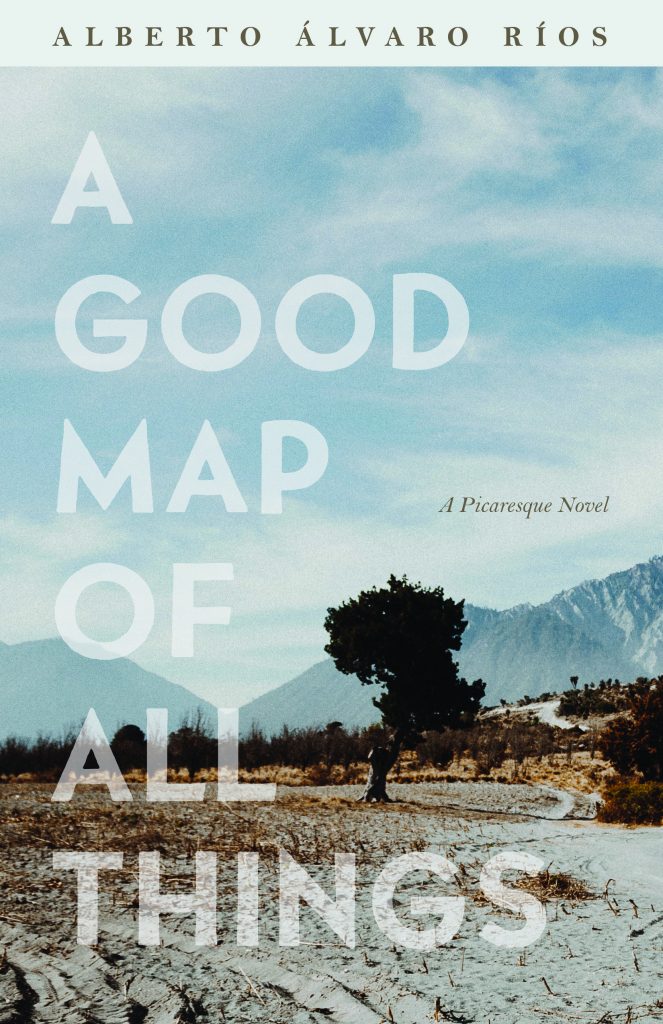
If you didn’t have a chance to join in the Virginia G. Piper Center for Creative Writing’s recent book celebration for Alberto Álvaro Ríos’s new picaresque novel, A Good Map of All Things, listen to this interview with KJZZ’s Steve Goldstein on creating art during a pandemic and his new book.

A Good Map tells stories of a Mexican town and its unique inhabitants that feel familiar to all who love and live in Arizona-Sonora borderlands.

From the interview:

You know, I think this particular book is about quiet in its own way, and quiet is not an easily told story. You know, loud — everybody turns toward loud, and we’re living in very loud times. Loud is a magnet. Loud, you know, people are drawn to it. Quiet — that’s a much harder sell. And while I use guise or the setting of the mid-20th century, I think really what I’m trying to write is to the quiet, to the dark side of the moon, if you will — you know, equally there, absolutely there. But getting little attention. And what I’m especially trying to, to make a point of is saying that all of the loud around the border. Well, it’s just loud. The 98% of the rest of people’s lives is this quiet, everyday kind of experience. I was on a panel many years ago with Ursula Le Guin, the great science-fiction writer, and she said something that has always stayed with me. She said, “You know, science fiction,” She said. “It’s, it’s 98% regular, everyday. And 2% on Mars.” And what she was trying to say is the 2% on Mars got all the attention, but it wasn’t accurate to the actual way that we live. And I think in this book, I’m trying to get to the depth of the everyday, which is that 98% of how we actually get through life. And the ’50s happens to be  — you know, I was born in the ’50s. That’s when I was growing up. These, the particular adventures, if I can call them that, came from all of the towns that I grew up visiting and spending time in, and that my grandmother and her sisters had been teachers and mercantile workers in these towns. So they were always being talked about and remembered, and they were towns like Rayón and Cucurpe and Ímuris and especially Magdalena, all in the corridor of northern Sonora. And it’s a corridor that’s traditionally been called the Pimería Alta, and it extends from certainly Tucson, you could argue Phoenix — but certainly Tucson all the way to Hermosillo and Guaymas. That corridor, which was a longtime historic trading corridor. That ancientness, that oldness, that old-fashionedness is inherently in the place. And that’s what I’m trying to write to.

Listen here.

Aída Hurtado Receives Honorable Mention for the 2020 NWSA Gloria E. Anzaldúa Book Prize

November 10, 2020

We are thrilled to announce that Aída Hurtado received an honorable mention for the 2020 NWSA Gloria E. Anzaldúa Book Prize for her recent University of Arizona Press title, Intersectional Chicana Feminisms!

The 2020 NWSA Gloria E. Anzaldúa Book Prize offers recognition for groundbreaking monographs in women’s studies that make significant multicultural feminist contributions to women of color/transnational scholarship. The prize honors Gloria Anzaldúa, a valued and long-active member of the National Women’s Studies Association.

Advocating for and demonstrating the importance of an intersectional, multidisciplinary, activist understanding of Chicanas, Intersectional Chicana Feminisms provides a much-needed overview of the key theories, thinkers, and activists that have contributed to Chicana feminisms.

Aída Hurtado is the Luis Leal Endowed Chair and a professor in the Department of Chicana and Chicano Studies at the University of California, Santa Barbara. She is co-author of Chicana/o Identity in a Changing U.S. Society and co-author of Beyond Machismo: Intersectional Latino Masculinities.

Congratulations, Aída!

Radio Survivor Podcast Features ‘Mexican Waves’ Author Sonia Robles

November 6, 2020

Radio Survivor celebrated border radio in a recent podcast with Sonia Robles, author of Mexican Waves: Radio Broadcasting Along Mexico’s Northern Border, 1930-1950.

From the podcast:

Border radio is one of our favorite topics at Radio Survivor and on this week’s episode we dig into the history of radio broadcasting on the northern border of Mexico. Scholar Sonia Robles shares the stories of some of the lesser-known, small broadcasters whose histories are often overshadowed by the wild tales of higher power border blaster stations.

Listen to the interview.

AAA 2020: Browse Our Latest Anthropology Books, Discounts, and More

October 29, 2020

We are excited to be participating in the American Anthropological Association Raising Our Voices 2020 fall event series! As always, we are pleased to offer a conference discount. Use code AZAAA20 to receive 40% off all of our titles, and get free domestic shipping (good through 12/15/2020).

If you are participating in the virtual AAA event series, make sure to visit our virtual exhibit and chat with us. If you have questions about submitting a manuscript for our anthropology list, contact our senior editor Allyson Carter, Ph.D. at acarter@uapress.arizona.edu and view our guidelines here. To learn about requesting exam copies, visit here. We look forward to seeing all of you in person again in the future.

Taking us on a journey of remembering and rediscovery, anthropologist Carlos G. Vélez-Ibáñez shares important insights into his development as a scholar and in so doing the development of the interdisciplinary field of transborder anthropology.

We are thrilled to announce that Carlos Velez-Ibáñez is the recipient of the American Anthropological Association’s 2020 Franz Boas Award for Exemplary Service to Anthropology! This award is presented annually by the AAA to its members whose careers demonstrate extraordinary achievement that have well served the anthropological profession.

Read an excerpt from Reflections of a Transborder Anthropologist here.

Revitalization Lexicography is a unique look under the hood of lexicography in a small community, highlighting how the creation of the Tunica dictionary was intentionally leveraged to shape the revitalization of the Tunica language. Patricia M. Anderson details both the theoretical and the practical aspects that contributed to the Tunica dictionary in manner compelling to readers from all walks of life.

David Barton Bray has spent more than thirty years researching and studying Mexican community forest enterprises (CFEs). In Mexico’s Community Forest Enterprises he shares the scientific evidence for Mexico’s social and environmental achievements and how, in its most successful manifestations, it became a global model for common-property forest management, sustainable social-ecological systems, and climate change mitigation in developing countries.

Narrating Nature opens up dialogue that counters traditional conservation narratives. In this book, Mara J. Goldman offers conservation efforts that not only include people as beneficiaries but also demonstrate how they are essential and knowledgeable members of the conservation landscape itself.

The Prehispanic Ethnobotany of Paquimé and Its Neighbors is a major ethnobotanical study for the ancient U.S. Southwest and northwestern Mexico. The results reorient our perspective in the rise of one of the most impressive communities in the international region.

Check out some photos and field notes from the project here.

Based on prolonged engagement with this “virtuous” plant of southwestern Ethiopia, The Edible Gardens of Ethiopia provides a nuanced reading of the ensete ventricosum (avant-)garden and explores how the life in tiny, diverse, and womanly plots may indeed offers alternative visions of nature, food policy, and conservation efforts.

A Marriage Out West is an intimate biographical account of two fascinating figures of twentieth-century archaeology. Frances Theresa Peet Russell, an educator, married Harvard anthropologist Frank Russell in June 1900. They left immediately on a busman’s honeymoon to the Southwest. Their goal was twofold: to travel to an arid environment to quiet Frank’s tuberculosis and to find archaeological sites to support his research.

Chie Sakakibara shows how knots of connection came into being between humans and nonhuman others and how such intimate and intense relations will help humans survive the Anthropocene. Whale Snow offers an important and thought-provoking look at global climate change as it manifests in the everyday life of the Iñupiat in Arctic Alaska.

The Sovereign Street offers a rare look at political revolution as it happens, showing how mass street protest can change national political life.  It documents a critical period in twenty-first century Bolivia, when small-town protests made headlines worldwide, where a generation of pro-globalization policies were called into question, and where the indigenous majority stepped into government power for the first time in five centuries.

Listen to author Carwil Bjork-James discuss the topics in this book on the Howard Zinn Bookfair Podcast here.

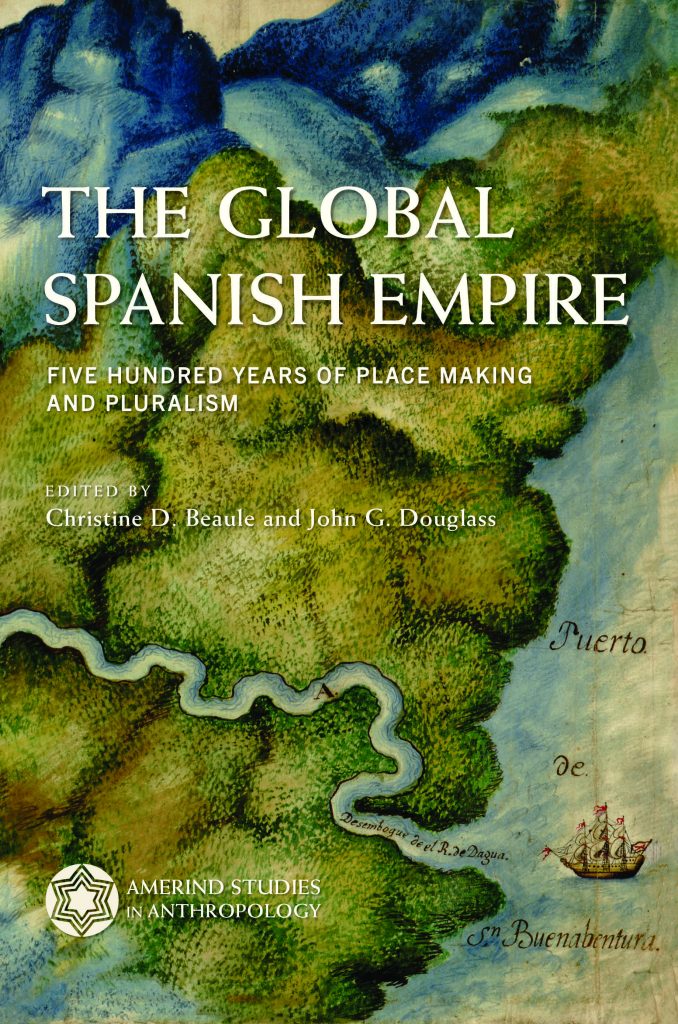
The Global Spanish Empire tackles broad questions about indigenous cultural persistence, pluralism, and place making using a global comparative perspective grounded in the shared experience of Spanish colonialism. Through an expansive range of essays that look at Africa, the Americas, Asia, the Caribbean and the Pacific, this volume brings often-neglected regions into conversation.

Watch a virtual Amerind Foundation lecture with editors Christine D. Beaule and John G. Douglass here. Then, read a brief interview with the editors here.

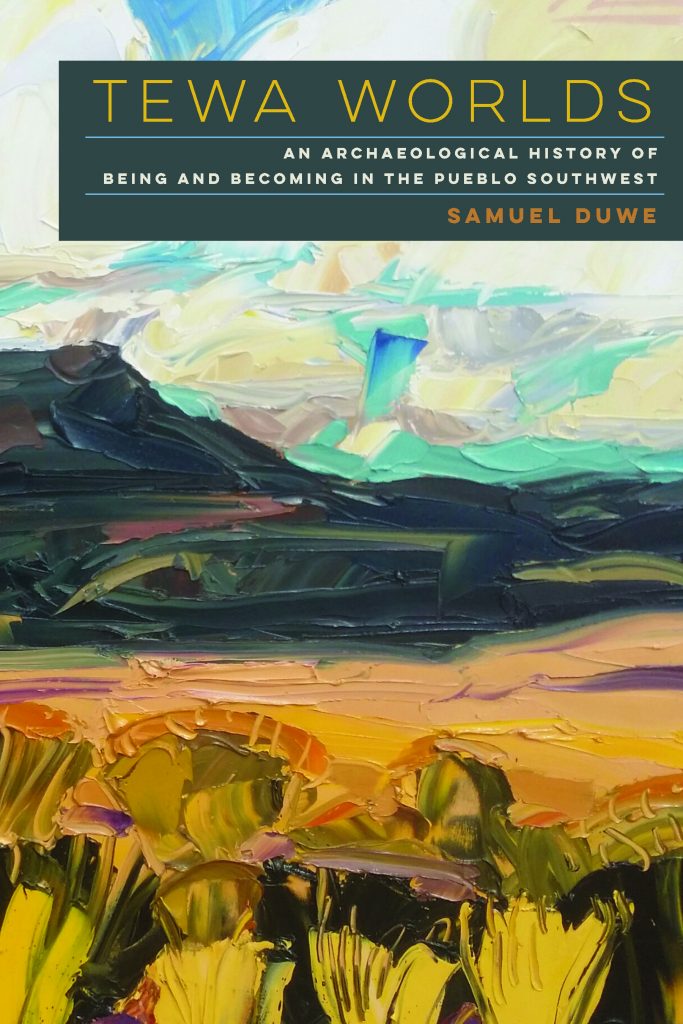
Tewa Worlds offers an archaeological history of eight centuries of Tewa Pueblo history in the Rio Chama Valley through the lens of contemporary Pueblo philosophical and historical discourse. The result gives weight to the deep past, colonial encounters, and modern experiences. It challenges archaeologists to both critically reframe interpretation and to acknowledge the Tewa’s deep but ongoing connection with the land.

Language, Coffee, and Migration on an Andean-Amazonian Frontier takes us to remote Amazonian villages, dusty frontier towns, roadside bargaining sessions, and coffee traders’ homes to offer a new view of settlement frontiers as they are negotiated in linguistic interactions and social relationships. The book brings together a fine-grained analysis of multilingualism with urgent issues in Latin America today. It is a timely on-the-ground perspective on the agricultural colonization of the Amazon, which has triggered an environmental emergency threatening the future of the planet.

State Formation in the Liberal Era transforms our understanding of post-colonial Latin America. The volume spans disciplinary and geographic boundaries and offers an insightful look at the tensions between disparate circuits of capital, claims of statehood, and the contested nature of citizenship.

Despite its tiny size and seeming marginality to world affairs, the Central American republic of Costa Rica has long been considered an important site for experimentation in cutting-edge environmental policy. The Ecolaboratory frames Costa Rica as an “ecolaboratory” and asks what lessons we can learn for the future of environmental governance and sustainable development both within the country and elsewhere.

Fighting for Andean Resources offers a singular contribution to the literature critiquing monolithic views of nation-state dynamics and globalization. Vladimir R. Gil Ramón examines the protocols of accountability and the social critique of the application of environmental impact assessments and safeguard policies. His analysis reveals the complex mechanisms for legitimizing decision-making and adds to an understanding of everyday state-nation conflicts and negotiations.

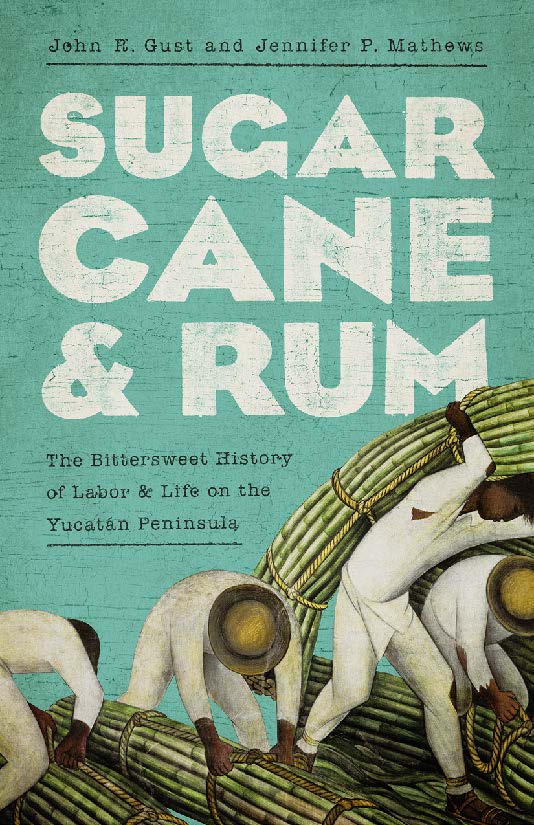
More than a history of coveted commodities, the unique story that unfolds in John R. Gust and Jennifer P. Mathews’s new history Sugarcane and Rum is told through the lens of Maya laborers who worked under brutal conditions on small haciendas to harvest sugarcane and produce rum in the Yucatan Peninsula of Mexico.

Read an excerpt from the book here.

In the fifteen-year span from 1990 to 2005 uprisings of the indigenous peoples of Ecuador and Bolivia changed their societies forever. The combination of mass mobilization, elections, and indigenous socialism created a new form of twenty-first-century revolution that applies to cultures far beyond the Andes. In Indigenous Revolution in Ecuador and Bolivia, 1990-2005, Jeffrey M. Paige’s interviews present the powerful personal experiences and emotional intensity of the revolutionary leadership.

The second of a two-volume series, Moquis and Kastiilam tells the story of the encounter between the Hopis, who the Spaniards called Moquis, and the Spaniards, who the Hopis called Kastiilam, from the Pueblo Revolt through 1781. Balancing historical documents with oral histories, it creates a fresh perspective on the interface of Spanish and Hopi peoples in the period of missionization.

Watch: Poets, Editors, & Flandrau Celebrate ‘Beyond Earth’s Edge’

October 19, 2020

Under the dome of the Flandrau Science Center‘s planetarium, co-editors Julie Swarstad Johnson and Christopher Cokinos introduced a virtual audience to Beyond Earth’s Edge: The Poetry of Spaceflight, a poetry anthology that celebrates spaceflight and vividly captures the violence of blastoff, the wonders seen by Hubble, and the trajectories of exploration to Mars and beyond through a wide array of lyric celebrations, somber meditations, accessible narratives, concrete poems, and new forms of science fiction.

During the virtual event, Swarstad Johnson and Cokinos social distanced aptly in the planetarium, reading sections of the book and explaining their own passions for space. Between their discussions, video clips were shown of contemporary poets.

Poets featured: Frank Paino, Forrest Gander reading his translation of Pablo Neruda, Alyse Bensel, Donna Kane, Dan Beachy-Quick reading a collaboration written with Srikanth Reddy, Alison Hawthorne Deming, Kyle Dargan, Tawahum Justin Bige, and C. S. E. Cooney.

Heartfelt thanks to the team at Flandrau for co-hosting this remarkable event, and to the book’s editors, for sharing their time with us to celebrate the wonders of space—through poetry.

Watch: Educators for Anti-Racism Interview ‘La Gente’ Author

October 16, 2020

University of Arizona Press author Lorena V. Márquez, was recently interviewed by Educators for Anti-Racism about her work and new book La Gente: Struggles for Empowerment and Community Self-Determination in Sacramento.

The grass-roots organization is committed to anti-racist and abolitionist teaching principles with the mission to learn, connect, and contribute. From their website: ‘You can learn by watching videos from our Anti-Racism conference and a soon to come video series of anti-racism conversations. You can connect by discussing the lessons in the comments section, or joining one of the groups listed on our website. You can contribute by sending us anti-racism lessons or resources. Visit us at www.edantiracism.com.”

Márquez’s book La Gente traces the rise of the Chicana/o Movement in Sacramento and the role of everyday people in galvanizing a collective to seek lasting and transformative change during the 1960s and 1970s. In their efforts to be self-determined, la gente contested multiple forms of oppression at school, at work sites, and in their communities.

Cultivate Community with Our Latest Latinx and Chicanx Studies Books

October 13, 2020

At the University of Arizona Press, we have published a wide range of books that celebrate Latinx and Chicanx communities, document community histories, and record the histories and lives of civil rights movements and activists. We want to share our most recent community and activism-focused titles with you, and invite you to use the discount code AZCOMMUNITY20 for 35% off these titles through 11/15/2020.

La Gente traces the rise of the Chicana/o Movement in Sacramento and the role of everyday people in galvanizing a collective to seek lasting and transformative change during the 1960s and 1970s. In their efforts to be self-determined, la gente contested multiple forms of oppression at school, at work sites, and in their communities.

On Thursday, October 15, 2020 join University of Arizona Press authors Josie Méndez-Negrete and Lorena V. Márquez for a virtual discussion on their recent University of Arizona Press books that focus on community and activist histories in San Jose and Sacramento, California. This event is currently full, but watch our website to see a recording of the event in coming days.

Challenging stereotypes, Activist Leaders of San José by Josie Méndez-Negrete book unearths and makes visible lived experiences of Chicana and Latino activists from San José, California, who made contributions to the cultural and civic life of the city. Through oral histories, we see a portrait of grassroots leadership in the twentieth century.

Don’t forget to check out the event mentioned above!

Cultura y Corazón is a cultural approach to research that requires a long-term commitment to community-based and engaged research methodologies. This book presents case studies in the fields of education and health that recognize and integrate communities’ values, culture, and funds of knowledge in the research process.

Teaching Gloria E. Anzaldúa provides pedagogical applications of Anzaldúa’s noted theories, including la facultad, the path of conocimiento, and autohistoria, among others. This text provides examples, lesson plans, and activities for scholars, professors, teachers, and community members in various disciplines—such as history, composition, literature, speech and debate, and more—and for those interested in teaching the theories of Gloria Anzaldúa.

On Thursday, October 22, 2020 we are hosting an event with the editors of this book! Registration is currently full, but be sure to check back on our website for a recording of the event. Listen to a recording of Gloria reading some of her uncollected and unpublished poems here.

Colonial Legacies in Chicana/o Literature and Culture traces the development of Chicana/o literature and cultural production from the Spanish colonial period to the present. In doing so, it challenges us to look critically at how we simultaneously embody colonial constructs and challenge their legacies.

Listen to an NPR interview with author Vanessa Fonseca-Chávez here. Then, read an excerpt from the book here.

With unity of heart and mind, the creative and the scholarly, Decolonizing Latinx Masculinities opens wide its arms to all non-binary, decolonial masculinities today to grow a stronger, resilient, and more compassionate new generation of Latinxs tomorrow.

Listen to Frederick Luis Aldama talk about the book on the New Books Network podcast here, then read an interview with editors Arturo J. Aldama and Frederick Luis Aldama here. On Thursday, October 22, 2020, there will be a virtual book release celebration for Decolonizing Latinx Masculinities. Register here.

Advocating for and demonstrating the importance of an intersectional, multidisciplinary, activist understanding of Chicanas, Intersectional Chicana Feminisms provides a much-needed overview of the key theories, thinkers, and activists that have contributed to Chicana feminisms.

“Hurtado once again offers a brilliant analysis of Chicana feminisms that is historically situated and honors the legacies of early Chicana feminists. She advocates for and demonstrates the importance of an intersectional, multidisciplinary, and activist understanding of Chicanas.”—Yvette G. Flores, author of Chicana and Chicano Mental Health: Alma, Mente y Corazón

Reclaiming and reconstructing one’s spirituality based on non-Western epistemologies is central to the process of decolonization. Voices from the Ancestors brings together reflective writings and spiritual practices by Chicanx, Latinx, and Afro-Latinx womxn and male allies in the United States who seek to heal from the historical traumas of colonization by returning to ancestral traditions and knowledge.

Watch a recording of an incredible panel with the editors and some of the contributors of this book here.

Yolqui, a Warrior Summoned From the Spirit World is a testimonio, a historia profoundo of the culture of extralegal violence against the Red-Black-Brown communities in the United States that operates with impunity. Framed by Roberto Cintli Rodríguez’s personal testimony of police violence, this book is a clarion call to end that violence and those philosophies that permit such violence to flourish.

Read about and view photos from a book release event for Yolqui here, and read about and view photos from a panel that features this author here.

The Chicana M(other)work Anthology is a call to action for justice within and outside academia. This volume brings together emerging scholarship and testimonios by and about self-identified Chicana and Women of Color mother-scholars, activists, and allies who, using an intersectional lens, center mothering as transformative labor.

Read an excerpt from the book here, and read about the Feminist Wire book series here.

Chicano Communists and the Struggle for Social Justice traces the early roots of the Chicano Movement. It follows the thread of radical activism of the 1930s and 1940s to today, showing thedepth of its influence on Mexican Americans struggling to achieve social justice and equality. 

“Buelna’s book adds another layer to our understanding of American communism at mid-century, as well as the labor fight, community, and race.”–R.D. Screws, Choice Reviews

Listen to a book review of Chicano Communists and the Struggle for Social Justice on Buelna News here.

The first of its kind, Community-Based Participatory Research: Testimonios from Chicana/o Studies is a trailblazing collection of personal testimonies that showcase how understandings of community empowerment are incomplete as they have dismissed the variety of ways communities themselves have created social change strategies. In first-person accounts, Chicana/o researchers share their experience doing community-based participatory research (CBPR) praxis to illustrate its complexity and how it might be implemented to create sustainable change and community empowerment.

Food Fight! contributes to urgent discussions around the problems of cultural misappropriation, labeling, identity, and imaging in marketing and dining establishments. Not just about food, restaurants, and coffee, this volume employs a decolonial approach and engaging voice to interrogate ways that mestizo, Indigenous, and Latinx peoples are objectified in mainstream ideology and imaginary. 

“Every essay will fill a reader—millennial mestizo or just plain old Chicano—with joyous smiles at the zingers. Advertencia! This book is not one for idle consumption, it’s not fast food. Paloma Martinez-Cruz dishes up a scholarly dissertation of substantial complexity with a heaping portion of humor, verbal sleight-of-hand, and barely-restrained ire.”—La Bloga

Silviana Wood’s teatro has elicited tears and laughter from audiences young and old. Barrio Dreams brings together for the first time the plays of Wood, one of Arizona’s foremost playwrights. Wood is acclaimed locally, regionally, and nationally as a playwright, actor, director, and activist.

We are excited that the Borderlands Theater in Tucson, Arizona will be hosting two events to honor the lifetime achievements of Silviana Wood. On Saturday, Oct. 17, 7 p.m., there will be a virtual reading of Wood’s play Amor de Hijua, live-streamed on Borderlands Theater’s Facebook and YouTube pages. On Tuesday, Oct. 20 – 6 p.m., A Tribute to Silviana Wood, will be live-streamed on Borderlands Theater’s Facebook and YouTube pages. You can also listen to Silviana Wood on a New Books Network podcast here.

WHA 2020: Browse Our Latest Books, Discounts, and More

October 9, 2020

We are excited to be participating in the first virtual Western History Association conference! As always, we are pleased to offer a conference discount. Use code AZWHA20 to receive 40% off all titles, and get free shipping.

If you are participating in the virtual WHA, make sure to visit our virtual exhibit and chat with us. If you have questions about submitting a manuscript for our history list, contact our editor-in-chief Kristen Buckles at kbuckles@uapress.arizona.edu and view our guidelines here. To learn about requesting exam copies, visit here. We look forward to seeing all of you in person again in the future.

La Raza Cosmética by Natasha Varner examines postrevolutionary identity construction as a project of settler colonialism that at once appropriated and erased indigeneity. In its critique of Indigenous representation, it also shows how Indigenous women strategically engaged with and resisted these projects as they played out in beauty pageants, films, tourism, art, and other realms of popular culture.

Colonial Legacies in Chicana/o Literature and Culture by Vanessa Fonseca-Chávez traces the development of Chicana/o literature and cultural production from the Spanish colonial period to the present. In doing so, it challenges us to look critically at how we simultaneously embody colonial constructs and challenge their legacies.

Listen to the author discuss the topics in this book on an NPR podcast here, then read an excerpt from the book here.

La Gente by Lorena V. Márquez traces the rise of the Chicana/o Movement in Sacramento and the role of everyday people in galvanizing a collective to seek lasting and transformative change during the 1960s and 1970s. In their efforts to be self-determined, la gente contested multiple forms of oppression at school, at work sites, and in their communities.

Watch an interview with the author here, and join the waitlist for an upcoming event featuring the author here.

Informed by personal experience and offering an inclusive view, Diné Identity in a Twenty-First-Century World by Lloyd L. Lee showcases the complexity of understanding and the richness of current Diné identities.

Watch a conversation with Lloyd Lee here.

A Marriage Out West is an intimate biographical account of two fascinating figures of twentieth-century archaeology. Frances Theresa Peet Russell, an educator, married Harvard anthropologist Frank Russell in June 1900. They left immediately on a busman’s honeymoon to the Southwest. Their goal was twofold: to travel to an arid environment to quiet Frank’s tuberculosis and to find archaeological sites to support his research.

Learn how to register for a program featuring the authors, Nancy J. Parezo and Don D. Fowler, here.

Challenging stereotypes, Activist Leaders of San José by Josie Méndez-Negrete unearths and makes visible lived experiences of Chicana and Latino activists from San José, California, who made contributions to the cultural and civic life of the city. Through oral histories, we see a portrait of grassroots leadership in the twentieth century.

Join the waitlist for an upcoming event that features this author here.

In North American Borders in Comparative Perspective leading scholars provide a contemporary analysis of how globalization and security imperatives have redefined the shared border regions of the United States, Canada, and Mexico.

Watch an interview with the editors, Guadalupe Correa-Cabrera and Victor Konrad here.

State Formation in the Liberal Era transforms our understanding of post-colonial Latin America. The volume spans disciplinary and geographic boundaries and offers an insightful look at the tensions between disparate circuits of capital, claims of statehood, and the contested nature of citizenship.

This anthology offers a unique and sweeping view of the nation’s fire scene by distilling observations on Florida, California, the Northern Rockies, the Great Plains, the Southwest, the Interior West, the Northeast, Alaska, the oak woodlands, and the Pacific Northwest into a single, readable volume. The essays offer a color-commentary companion to the play-by-play narrative offered in Pyne’s Between Two Fires: A Fire History of Contemporary America.

To the Last Smoke is Stephen J. Pyne’s way of “keeping with it to the end,” encompassing the directive from his rookie season as a wildland firefighter to stay with every fire “to the last smoke.”

Watch Stephen Pyne talk about his To the Last Smoke series here, and read an excerpt from the book here. Then, read Pyne’s recent op-ed in the Los Angeles Times here.

Binational Commons focuses on whether the institutions that presently govern the U.S.-Mexico transborder space are effective in providing solutions to difficult binational problems as they manifest themselves in the borderlands. The volume addresses key binational issues and explores where there are strong levels of institutional governance development, where it is failing, how governance mechanisms have evolved over time, and what can be done to improve it to meet the needs of the U.S.-Mexico borderlands in the next decades.

Learn how to register for a lecture featuring the editors, Tony Payan and Pamela L. Cruz, here.

Soldiers, Saints, and Shamans by Nathaniel Morris documents how and why the Indigenous Náayari, Wixárika, O’dam, and Mexicanero peoples took part in the Mexican Revolution as they struggled to preserve their cultures, lands, and political autonomy in the face of civil war, bandit raids, and radical political reform. In unpacking the ambiguities that characterize their participation in this tumultuous period, it sheds light on the inner contradictions of the revolution itself.

The second of a two-volume series, Moquis and Kastiilam tells the story of the encounter between the Hopis, who the Spaniards called Moquis, and the Spaniards, who the Hopis called Kastiilam, from the Pueblo Revolt through 1781. Balancing historical documents with oral histories, it creates a fresh perspective on the interface of Spanish and Hopi peoples in the period of missionization.

The book explores the ongoing effects of colonization and emphasizes Native American tribes as governments rather than ethnic minorities. Combining elements of legal issues, human rights issues, and sovereignty issues, Indigenous Environmental Justice creates a clear example of community resilience in the face of corporate greed and state indifference.

This volume of the Indigenous Justice series explores the global effects of marginalizing Indigenous law. The essays in Traditional, National, and International Law and Indigenous Communities argue that European-based law has been used to force Indigenous peoples to assimilate, has politically disenfranchised Indigenous communities, and has destroyed traditional Indigenous social institutions. The research in this volume focuses on the resurgence of traditional law, tribal–state relations in the United States, laws that have impacted Native American women, laws that have failed to protect Indigenous sacred sites, the effect of international conventions on domestic laws, and the role of community justice organizations in operationalizing international law.

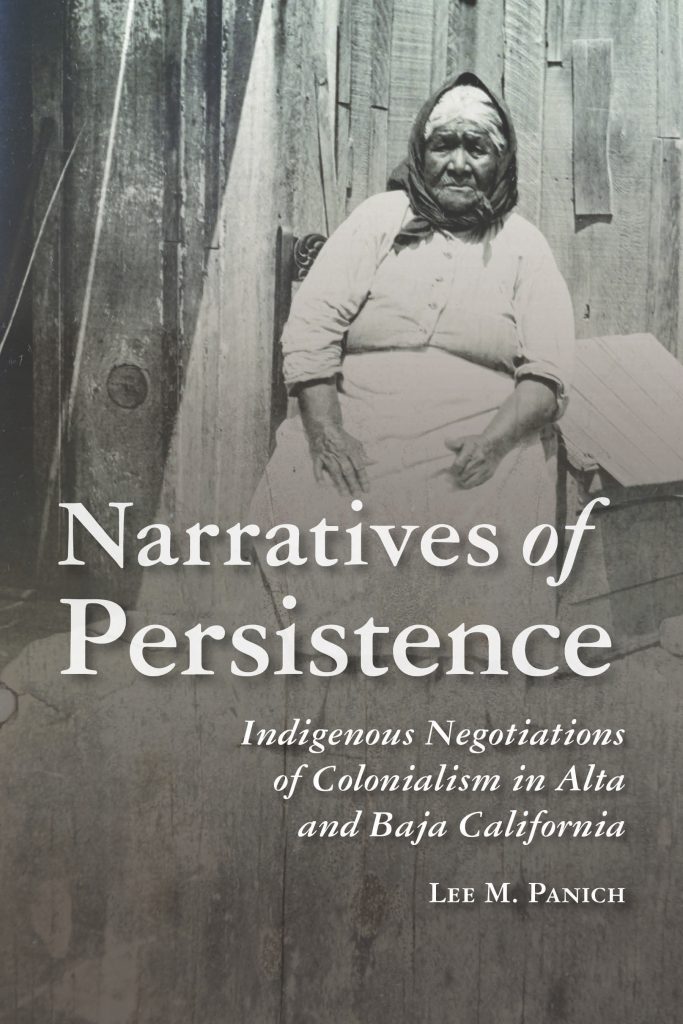
Narratives of Persistence charts the remarkable persistence of California’s Ohlone and Paipai people over the past five centuries. Lee M. Panich draws connections between the events and processes of the deeper past and the way the Ohlone and Paipai today understand their own histories and identities.

Read an interview with the author here.

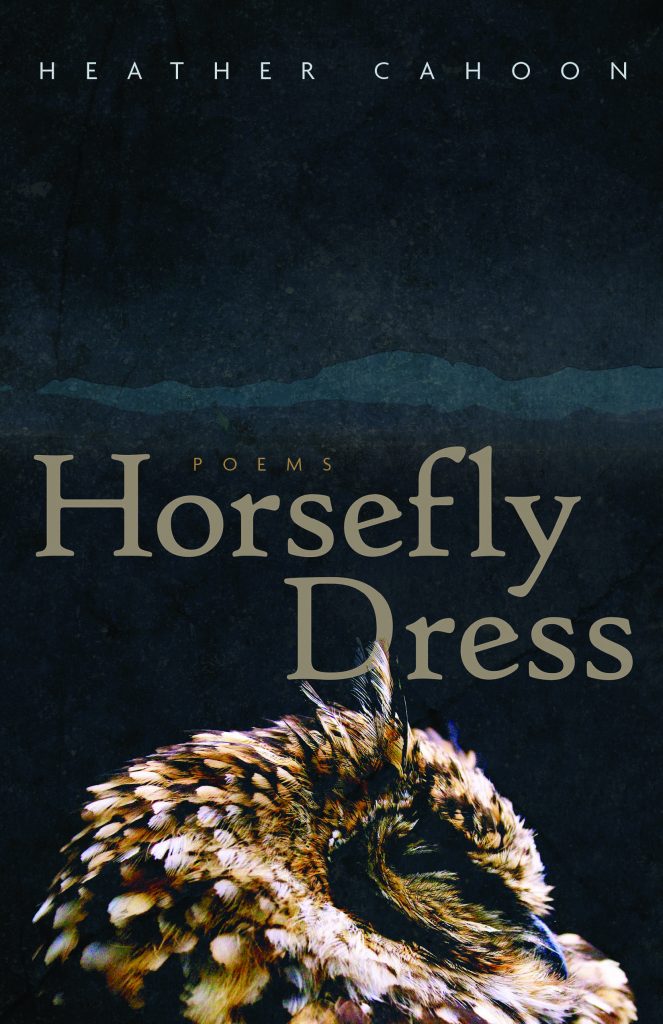
Horsefly Dress is a meditation on the experience and beauty of suffering. Rich in the imagery of autumnal foliage, migrating birds, and frozen landscapes, Heather Cahoon’s collection calls forth the sensory experience of grief and metamorphosis. The transformative powers associated with the human experience of loss belong to the past, present, and future, as do the traditional Salish-Pend d’Oreille stories that create the backbone of these intricate poems.

Watch a virtual book release recording of Heather here, and read a short interview with her here.

For Authors

The University of Arizona Press publishes the work of leading scholars from around the globe. Learn more about submitting a proposal, preparing your final manuscript, and publication.
Inquire

Requests

The University of Arizona Press is proud to share our books with readers, booksellers, media, librarians, scholars, and instructors. Join our email Newsletter. Request reprint licenses, information on subsidiary rights and translations, accessibility files, review copies, and desk and exam copies.
Request

Support the Press

Support a premier publisher of academic, regional, and literary works. We are committed to sharing past, present, and future works that reflect the special strengths of the University of Arizona and support its land-grant mission.

Give